
- By Aditi Priya Singh
- Wed, 22 Jan 2025 02:00 PM (IST)
- Source:JND
Top 10 Largest Moons In Solar System: The Universe is made up of millions of solar systems and innumerable planets, asteroids, comets and moons. Our solar system, which consists of one sun and eight planets, is surrounded by many moons and asteroids. Among the hundreds of moons orbiting planets, the largest are notable for their astounding size and fascinating properties. These gigantic moons are more than simply bits of rock and ice; they contain clues about planet formation and evolution, and some may even house life.
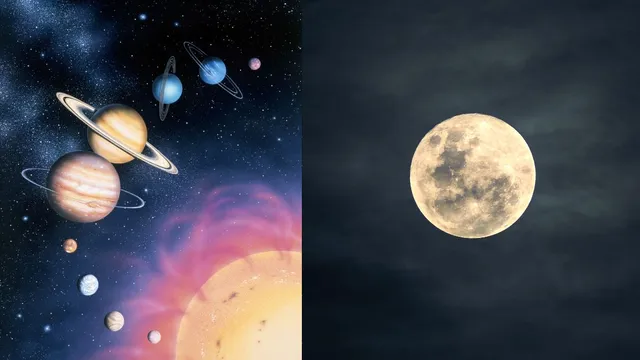
In late February, the world will see the seven-planet alignment, a rare sighting in the sky. The BBC said that for a single night, the following planets would be visible together in the sky: Venus, Mars, Jupiter, Saturn, Uranus, Neptune, and Mercury.
List Of Top 10 Largest Moons In The Solar System
Here is the list of the top 10 largest moons in the solar system and what they are made up of. Also, know which planet has how many moons.
1. Ganymede
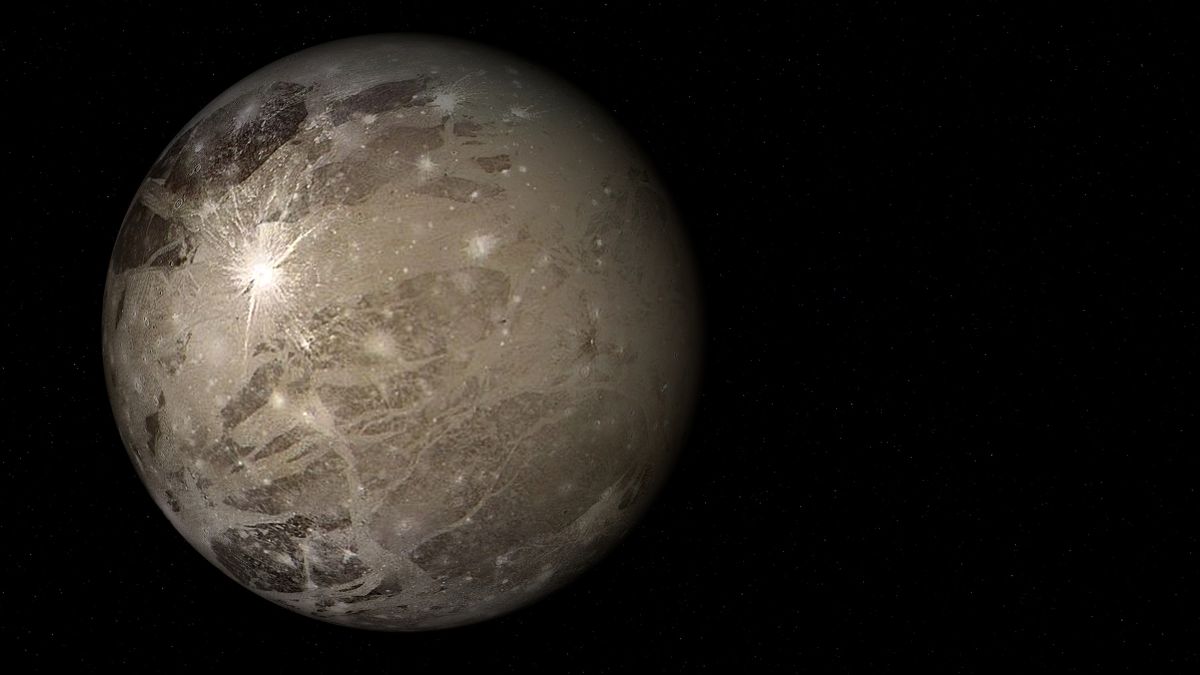 Ganymede, Largest moons of solar system (Image: Canva)
The largest moon in the solar system is Ganymede and it is the moon closest to Jupiter. It is even larger than the planet Mercury, with a diameter of roughly 5,270 kilometres. Ganymede has a metallic core and is composed of a mixture of rock and water ice. Its surface is a mix of lighter, grooved topography and darker, cratered portions, suggesting prior geological activity.
2. Titan
Titan is the second-largest moon in terms of diameter, measuring 5,150 kilometres. Tidal is a moon of Saturn planet and the atmosphere here is very thick, which is mostly made up of nitrogen with some methane. It is one of the solar system's most Earth-like bodies, with liquid hydrocarbon lakes hidden beneath its frozen surface.
3. Callisto
With a diameter of 4,820 kilometres, Callisto, another moon of Jupiter, is the third biggest in the solar system. It is made of almost equal parts ice and rock. Callisto’s surface is severely cratered and has been geologically inactive for billions of years.
4. Lo
Lo, another moon of Jupiter, is the fourth biggest moon with a diameter of 3,643 kilometres. It is made up mostly of silicate rock and an iron sulfide core. With lava flows and sulfur covering its surface, Io is the solar system's most volcanically active body.
5. Earth's Moon
-1737533911806.jpg) Top 10 largest moons of the solar system (Image: Canva)
Top 10 largest moons of the solar system (Image: Canva)
With a diameter of 3,475 kilometres, the Moon is the fifth largest in the solar system. It contains a tiny metallic core and is made of silicate rock. Its surface features highlands, craters and enormous plains that are shaped by impacts of over billions of years.
6. Europa
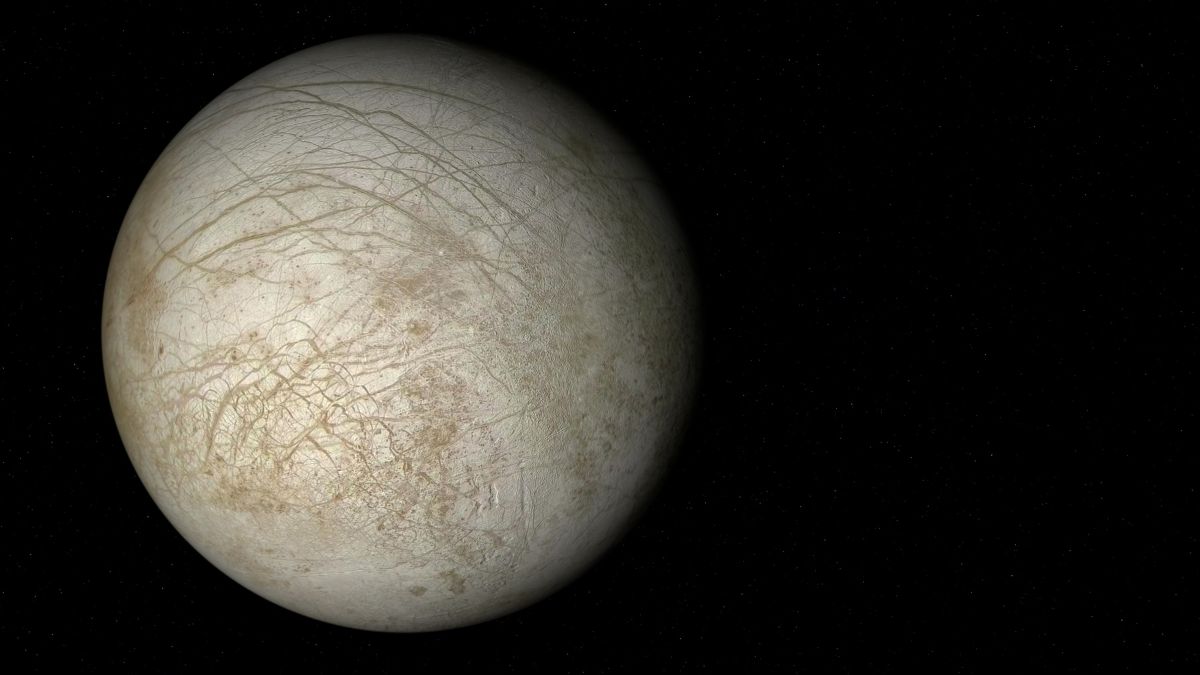
The sixth-largest moon of the solar system is Europa, which is also a Jupiter’s moon. It has a diameter of 3,122 kilometres. With a water-ice crust, silicate rock makes up the majority of its composition. Scientists think that beneath its frozen surface is a liquid ocean that might support life.
7. Triton
Triton, the largest moon of Neptune is 2,710 kilometres in diameter and is the 7th largest moon in the solar system. It has a thin nitrogen atmosphere and is composed of rock and water ice. The fact that Triton circles Neptune in the opposite direction of the planet's spin makes it special and raises the possibility that it was taken from the Kuiper Belt.
8. Titania
With a diameter of 1,578 kilometres Titania, Uranus's biggest moon is the eighth largest in the system. Its surface is characterised by massive canyons and impact craters, and it is made of equal parts rock and ice. The geology of Titania provides evidence of previous tectonic action.
9. Rhea
Rhea is the second-largest moon of Saturn and 9th largest in the solar system with a diameter of 1,527 kilometres. It has a little rocky core and is mostly composed of water ice. There are faint, wispy marks on its highly cratered surface that are thought to be ice cliffs.
10. Oberon
 Largest moons in the solar system (Image: Canva)
Oberon is the 10th-largest moon of Uranus and the second-largest moon of Uranus. With a diameter of 1,523 kilometres, it is made of rock and ice, just like Titania. It has a highly cratered surface, and there are indications of previous liquid-water volcanic activity in some places.
How Many Moons Does Each Planet Have?
Here's a table showing the eight planets of our solar system and the number of moons each has:
| Planet | Number Of Moons |
| Mercury | 0 |
| Venus | 0 |
| Earth | 1 |
| Mars | 2 |
| Jupiter | 95 |
| Saturn | 145 |
| Uranus | 27 |
| Neptune | 14 |