
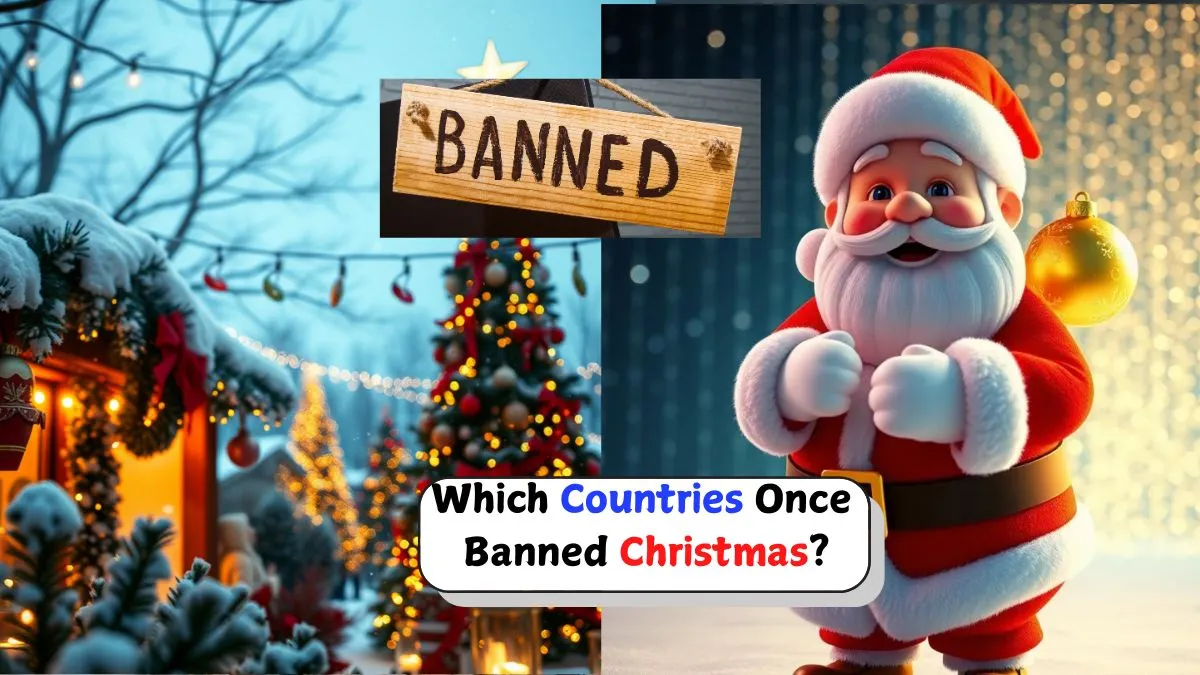
Countries Once Banned Christmas: December comes with Christmas joy that fills homes with happiness, cosiness, feasts, family time and whatnot. From decorated trees and lights to gifts and festive meals, the month is filled with deep cultural and emotional value for millions of people. However, history shows that Christmas was not always welcomed everywhere around the world. The two famous countries once banned the Christmas celebration in their country, believing that it could harm the social order, religious and political ideology.
The governments in these countries felt that festivals could encourage unwanted traditions, distractions or beliefs that went against their rules. As a result, holiday celebrations were severely restricted in several locations. Open Christmas activities were shut down, and fines were imposed if caught celebrating and decorating.
Let’s explore the two famous countries where Christmas celebrations were once completely banned and understand the reasons behind these historic decisions.
England Banned Christmas Under Puritan Rule In 1647
-1766484566998.jpg) Countries where Christmas was once banned (Image: Canva)
Countries where Christmas was once banned (Image: Canva)
In 1647, Christmas celebration was banned in England when the Puritans (16th & 17th-century English Protestants who sought to "purify" the Church of England of Catholic practices) took control. They saw it as a pagan, Catholic-influenced event with no biblical foundation that was full of wicked excess, intoxication and gambling.
Recommended For You
It was outlawed by a Parliamentary act. Shops were forced to remain open on December 25, and churches were ordered not to hold any festive gatherings. Following them, America also banned Christmas under the same Puritan Law.
ALSO READ: Where Is The World's Tallest Living Christmas Tree? Location, Height And Fun Facts
Why Was Christmas Banned in England?
The Puritans thought that Christmas was associated with:
* Excessive consumption of alcohol and festivities
* Pagan customs, which are not clearly stated in the Bible
* Laziness and moral instability
Effects on Humans:
* Christmas celebrations were prohibited
* Feasts and decorations were banned
* The restriction was enforced by soldiers.
The ban ended in 1660 when the monarchy was restored, and Christmas celebrations returned.
Soviet Union (USSR): Ban Due To Anti-Religion Policy
-1766484578465.jpg) Countries where Christmas was once banned (Image: Canva)
Countries where Christmas was once banned (Image: Canva)
Christmas was outlawed under Soviet control after the 1917 revolution. Easter and other religious holidays were banned as well. Places of worship closed one by one. Open celebration puts people at risk for serious consequences. The Soviet government followed an atheist ideology and believed that:
* Religion weakened communist beliefs
* Festivals distracted people from work and productivity
* Faith opposed state control
Instead of Christmas, New Year's festivities were advertised there. Figures like Santa Claus appeared without any religious significance. Following the collapse of the Soviet Union in the late 20th century, the prohibition gradually came to an end.
ALSO READ: Do You Know Your Favourite Christmas Song 'Jingle Bells' Was Written For Thanksgiving?
Did Christmas Return Later? How do England and the Soviet Union celebrate Christmas today?
Yes, after the political shift, Christmas returned in both countries. However, former Soviet nations now freely observe Christmas according to their own customs. Christmas, a significant religious and familial holiday in England, is observed on December 25th with roast turkey, crackers, and presents from Father Christmas.
On the other hand, the Soviet Union replaced religious Christmas celebrations with secular New Year's. Grandfather Frost (Ded Moroz) and his granddaughter brought gifts in place of Santa, and decorated "New Year trees" took the place of customary Christmas evergreens.