
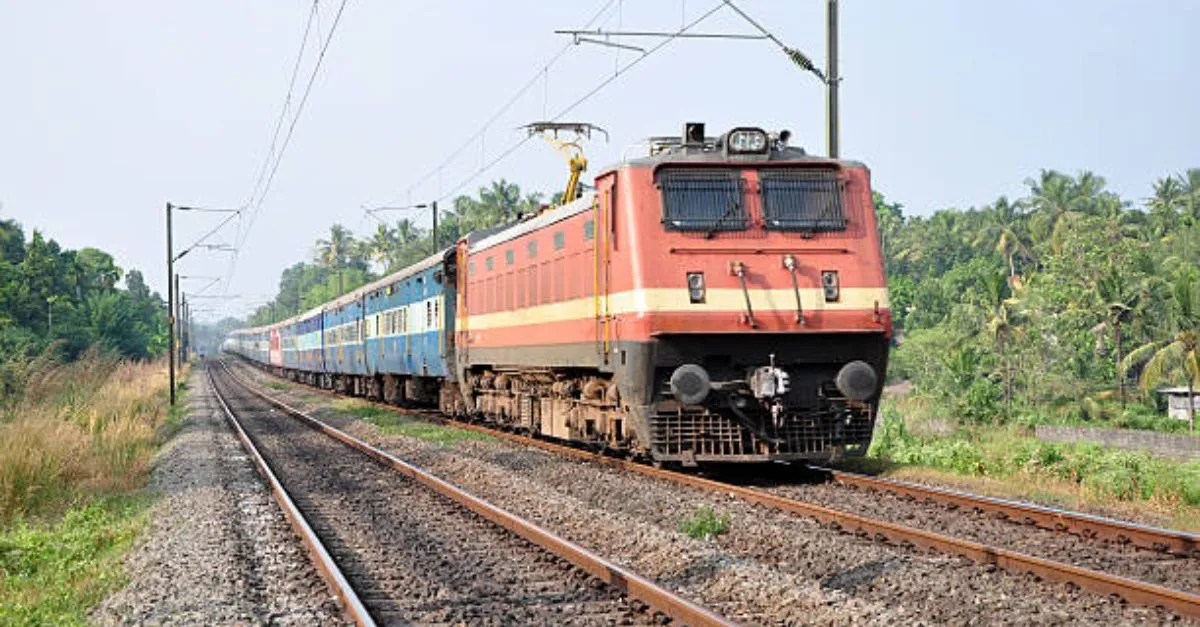
The names of the Diesel Electric Multiple Unit (DEMU) and Mainline Electric Multiple Unit (MEMU) trains operating within the North Eastern Railway (NER) are set to change. These trains will now be known as "Intercity" trains, as they connect one city to another and typically complete a round trip between morning and evening. The railway administration has already initiated the renaming process, and final approval is expected soon.
According to experts, the North Eastern Railway currently operates 13 pairs of DEMU trains (including the Gorakhpur-Nautanwa route) and 18 pairs of MEMU trains (including the Bhatni-Ayodhya route).
Passengers often face confusion regarding these specific train classifications. Since these trains serve the same purpose as Intercity trains—connecting various cities and towns—the railway administration has decided to reclassify them to eliminate this confusion.
This move aims to provide greater convenience to passengers traveling on local routes. Currently, over a dozen Intercity trains operate within the NER, covering routes like Gorakhpur-Lucknow, Gorakhpur-Varanasi, and Gorakhpur-Chhapra. The number of Intercity trains will increase significantly once the DEMU and MEMU trains are renamed. Furthermore, following the 100 per cent electrification of the North Eastern Railway, MEMU trains rebranded as Intercity—will essentially replace existing Passenger and DEMU trains on local routes.
The NER administration has requested additional MEMU trains from the Railway Board. These new trains will be deployed in sufficient numbers across local routes such as Gorakhpur-Deoria-Bhatni-Chhapra, Gorakhpur-Basti-Gonda, Gorakhpur-Kaptanganj-Thawe, Gorakhpur-Anandnagar-Nautanwa, and Gorakhpur-Anandnagar-Barhni. Maintenance and overhauling of these trains are conducted at the Aunrihar Shed and the Gorakhpur Mechanical Workshop. Additionally, modern LHB coaches are being implemented.
Also Read: Ghaziabad News: Trans-Hindon Residents Face Daily Power Cuts Despite 'No-Tripping' Status
Increased Speed And Time Savings
The transition to MEMU trains offers several operational advantages:
- MEMU trains operate at a speed of 100 km per h.
- Engines are located at both the front and rear of the train.
- There is no need to detach or change engines at terminal stations.
- The trains accelerate rapidly immediately after starting.
- These features save time and increase the capacity of the railway line.
- The shift reduces diesel consumption, helping to conserve the environment.
- Washing, cleaning, and maintenance are required only once a week.