
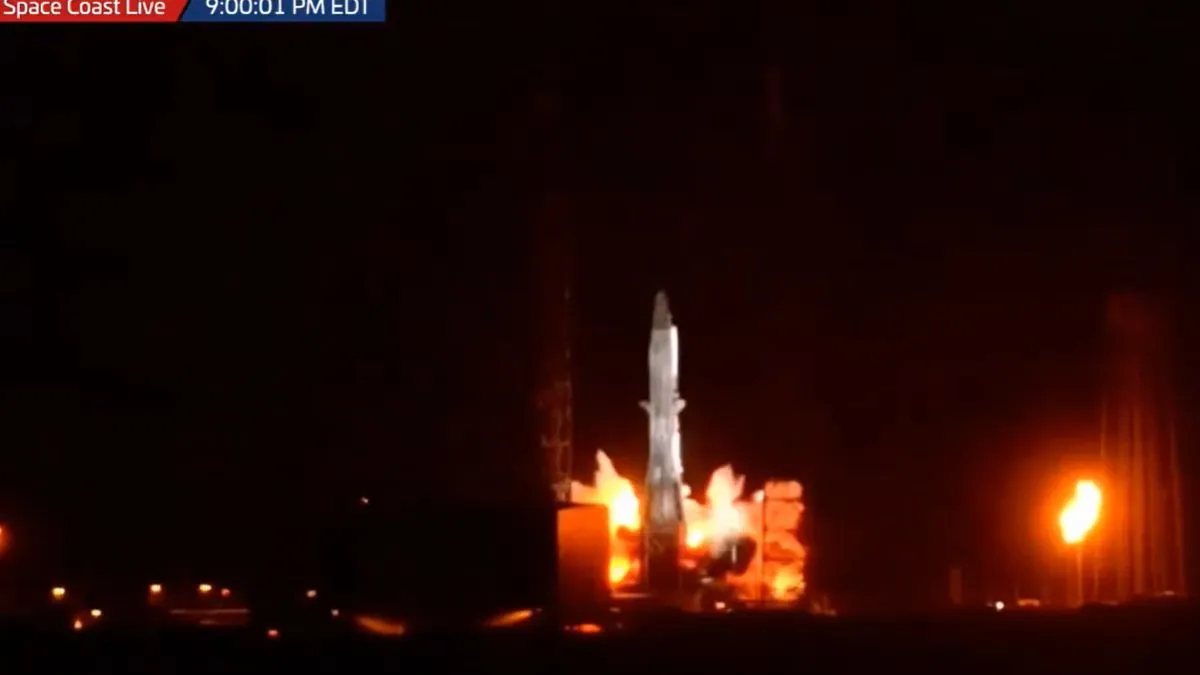
During a “hotfire test" in Florida, a Blue Origin New Glenn rocket went up in flames just after the test began on Thursday night. The dramatic explosion sent a massive fireball into the sky, Reuters reported
Blue Origin, which is a Jeff Bezos-owned space company, said no injuries were reported during the incident at Space Launch Complex 36 at around 9 pm.
“We experienced an anomaly during today’s hotfire test," Blue Origin posted on X. “All personnel have been accounted for. We will provide updates as we learn more,” it added.
ALSO READ: US-Iran Peace Deal Confirmed? Trump's Nod Awaited, Tehran Keeps Mum As Mojtaba Urges National Unity
WATCH VIDEO
Blue Origin's New Glenn just blew up at LC-36 while attempting to Static Fire ahead of NG-4.https://t.co/tANS0dWyIH pic.twitter.com/PztxFoBqIw
— NSF - NASASpaceflight.com (@NASASpaceflight) May 29, 2026
The New York Post reported that requests for comment had been sent to both the company and the Federal Aviation Administration, though neither had immediately responded.
Founded by Amazon billionaire Jeff Bezos, the company had only recently completed the successful launch of its third New Glenn mission.
The rocket that exploded on Thursday was intended for the upcoming fourth New Glenn flight, which was tentatively scheduled for launch on June 4. The mission was set to deploy 48 satellites.
Officials confirmed that the satellites were not attached to the rocket during the test procedure. Authorities are still assessing the full scale of the damage to the launch infrastructure and support equipment.
In November last year, Blue Origin’s heavy-lift New Glenn rocket completed a landmark mission, placing two NASA satellites on their 22-month journey to Mars while achieving its first successful booster landing at sea. The flight, launched from Cape Canaveral after days of delay, marked a turning point as it seeks to close the gap with industry leader SpaceX.
The mission lifted off under clear Florida skies after a week of uncertainties caused by weather fluctuations and an unusual geomagnetic storm. NASA, concerned about increased radiation levels, had earlier paused the Mars mission but cleared the rocket for launch once solar conditions stabilised.