
- By Mayukh Debnath
- Tue, 25 Jun 2024 04:02 PM (IST)
- Source:Reuters
Chang'e-6 Probe: China's Chang'e-6 lunar mission returned to Earth on Tuesday, landing in the Chinese region of Inner Mangolia while carrying samples from the Moon's unexplored far side. By bringing home samples from the lunar far side, China achieved a historic first. The lunar probe's reentry capsule made a touch down at 2:07 pm Beijing time, (0607 GMT), as per Chinese state broacaster CCTV.
The extraterrestrial sample, comprising a mass of lunar soil, was collected by Chang'e-6 earlier this month after successful landing on the South Pole-Aitken Basin, an impact crater on the side of the Moon that always faces away from Earth. Lauding the successful conclusion of the mission, Chinese President Xi Jinping described it as "landmark achievement" in China's quest to become a space and scientific powerhouse.
Chang'e-6 Mission Overview
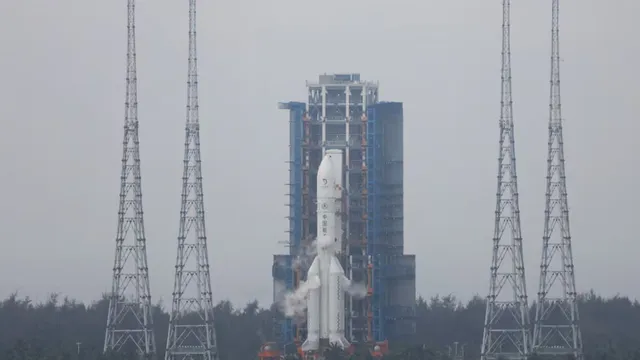
The Chang'e-6 probe blasted off onboard a Long March 5 launch vehicle on May 3 from the Wenchang Satellite Launch Center on the island of Hainan. The lunar samples will be airlifted to Beijing for analysis, CCTV reported. While it is yet not known whether the planned 2kg of samples were successfully returned, whatever the amount, the samples will be closely analysed by Chinese and foreign scientists, who believe that they will reveal new details about the formation of the Earth, moon, and solar system.
Samples from the Chang'e-5 mission, which brought back lunar samples from the near side of the moon, led to the discovery of new minerals and more accurate ranges for the moon's geological age. The success of the Chang'e-6 mission could give China's lunar and space exploration program, already in close competition with the United States, greater pull among foreign governments and scientists.
China's retrieval of samples from the moon's far side comes as the exploration of lunar resources and the militarisation of space are becoming increasingly pressing questions shaped by geopolitical tensions. NASA administrator Bill Nelson this year expressed concern at China's lunar exploration program and described an intensifying "space race" between the two superpowers.
(With inputs from Reuters)