
- By Supratik Das
- Sun, 07 Dec 2025 12:36 PM (IST)
- Source:JND
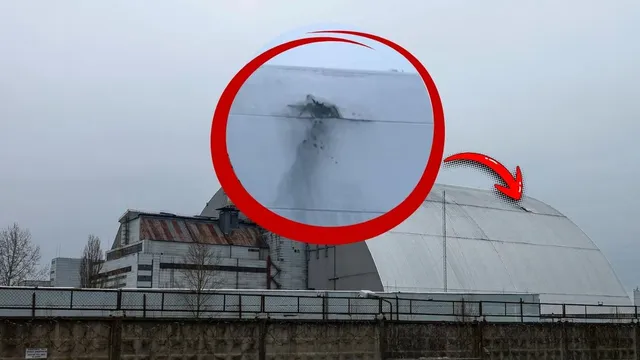
Chernobyl nuclear shield damage: Almost 40 years after the world’s worst nuclear disaster, Chernobyl is again at the centre of global concern. The International Atomic Energy Agency has confirmed that the massive steel shield built to contain radioactive debris at destroyed Reactor No. 4 has suffered heavy damage following a drone attack earlier this year.
The agency now says that the New Safe Confinement, a steel structure designed to confine radioactive material from the 1986 disaster, has "lost its primary confinement function" following the attack on February 14. The strike was blamed by Ukrainian authorities on Russian forces; Moscow denied involvement.
Current Situation And Key Risks
The NSC is the largest movable land-based structure ever built. Construction began in 2010 and completion occurred in 2019 at a cost of almost €2.1 billion, financed by more than 45 donor nations through the Chernobyl Shelter Fund.
The 108-metre-high, 260-metre-long arched steel shield covers the shattered Reactor No. 4 that exploded in April 1986. It was designed to safely contain radioactive debris for at least 100 years and allow the gradual dismantling of the original concrete sarcophagus.
⦁ The drone strikes, which burned under freezing conditions for over two weeks, destroyed about 200 square meters of the roof at NSC.
⦁ The internal pressurised air system, which prevents radioactive dust from escaping into the atmosphere, has lost its core containment function.
⦁ Although temporary patchwork repairs have been carried out to seal visible openings, but the airtight protective layer remains compromised.
⦁ Continuous exposure to rain, snow, and temperature extremes could accelerate corrosion and structural weakening.
⦁ Although radiation levels remain stable, IAEA experts warn that future leaks cannot be ruled out if degradation continues.
IAEA Director General Rafael Grossi said that while radiation monitoring equipment remains functional, the overall protective capability of the structure has been compromised. “Timely and comprehensive restoration is essential to prevent further degradation,” he said.
What May Happen Next
• Ukrainian authorities are preparing detailed structural assessments with international experts.
⦁ Complete restoration of the original airtight design is unlikely with current technology.
⦁ Engineers may introduce alternative methods of containment to prolong the life of the structure.
⦁ Decommissioning work aimed at removing nuclear fuel is likely to face further delays.
⦁ International funding support may be reopened when safety risks increase.
ALSO READ: Mysterious Bright Blue Dogs Spotted Near Chernobyl Nuclear Plant In Shocking Viral Video | WATCH
Ever since the outbreak of the Russia-Ukraine war in 2022, Chernobyl has remained strategically sensitive, as the Russian troops briefly occupied the exclusion zone. Heavy military movement in radioactive areas disrupted years of careful clean-up work, including in the so-called Red Forest. Although control was later returned to Ukraine, the site has faced repeated power outages, staff shortages, and now direct structural damage.
Thus, for now, there has not been a release of radiation from this latest incident. But IAEA warned that the real challenge lies ahead. Chernobyl's shield still stands, wounded but holding. How long it can continue to do so is now a question the world is once again forced to confront.