

- By Shivangi Sharma
- Thu, 01 Jan 2026 07:56 PM (IST)
- Source:JND
Bangladesh Jamaat-e-Islami chief Shafiqur Rahman has dismissed reports suggesting he held a “secret meeting” with Indian diplomats, clarifying that while the interaction was not publicly disclosed at the time, it was never intended to be confidential in nature. Rahman’s clarification came after sections of Bangladeshi media cited a Reuters interview in which he appeared to suggest that a meeting with an Indian diplomat had been kept secret at the diplomat’s request.
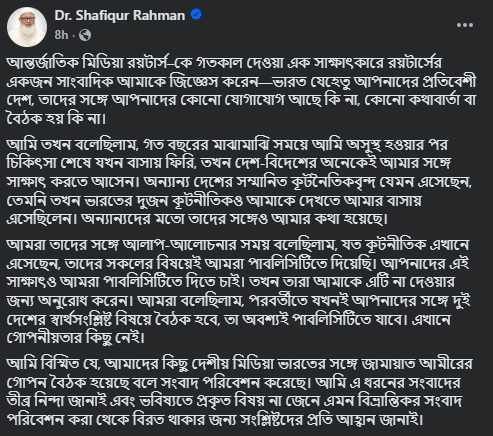
The reports triggered speculation about behind-the-scenes political outreach amid shifting dynamics in Bangladesh’s foreign relations. In a Facebook post on Thursday, Rahman explained that he met two Indian diplomats around the middle of last year, shortly after returning to Bangladesh following medical treatment abroad. He said the meetings were held at the diplomats’ request and were not made public only because the Indian side preferred discretion.
“We told them that meetings with diplomats are usually made public and that we wanted to do the same in this case. They requested that it not be publicised. We agreed. There is nothing secret about it,” Rahman wrote in Bengali.
ALSO READ: Air India Chaos In Canada: Pilot Caught Drunk Before Long-Haul Flight To India | What Happened Next?
Timing Of Report Coincides With Jaishankar’s Dhaka Visit
In the Reuters interview, conducted at his residence earlier this week, Rahman spoke broadly about Jamaat-e-Islami’s foreign policy outlook, stressing the need for balanced relations with all countries. He expressed concern over strained India–Bangladesh ties following the fall of former Prime Minister Sheikh Hasina, saying her continued presence in India remains a significant hurdle in restoring bilateral trust.
“We have to be open to everyone. There is no alternative to improving mutual relations,” Rahman said, adding that political leaders across Bangladesh regularly meet diplomats from various countries.
On relations with Pakistan, Rahman stated that Jamaat-e-Islami does not wish to align itself too closely with any single country and instead seeks pragmatic and mutually respectful ties with all nations.
India’s Ministry of External Affairs has not issued an official statement on the matter. However, a senior Indian government source told Reuters that New Delhi maintains communication with multiple political parties in Bangladesh as part of routine diplomatic engagement.
The controversy emerged on the same day External Affairs Minister S Jaishankar visited Dhaka to pay respects to former Prime Minister Khaleda Zia, who passed away on December 30, 2025. During the visit, Jaishankar also met Khaleda Zia’s son, Tarique Rahman, widely viewed as a potential future prime minister, and delivered a condolence message from PM Modi.