
- By Aalok Sensharma
- Thu, 31 Oct 2019 10:39 AM (IST)
- Source:JND
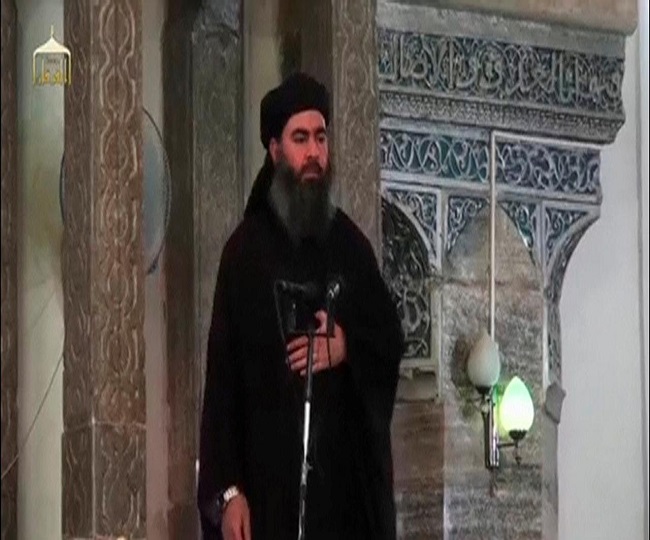
New Delhi | Jagran News Desk: The daring raid by the US special forces that led to the end of Islamic State founder Abu Bakr al-Baghdadi is being touted as a major victory by the White House. There is no denying the fact that Baghdadi became the world’s most feared terrorist and his death is a big blow to the ISIS. Although they are now left without an obvious leader, the ISIS still poses an imminent threat.
Islamic State of Iraq and Syria (ISIS), which is also known as ‘Daesh’, arose from the leftovers of Al-Qaida in Iraq (AQI) after they were defeated by the US-led NATO forces in 2008. Reports suggest that the militant group however has ambitions to regenerate yet again, implying that it remains a dangerous threat in the middle-east.
“The bottom line is: This puts the enemy on its heels, but the ideology -- and this sounds so cliched -- it is not dead,” AP quoted Chris Costa, a former senior director for counter-terrorism for the National Security Council in the Trump administration, as saying.
Many analysts also fear that ISIS or Daesh would now look to sneak an alliance with other militant groups like Al-Qaeda, Hayat Tahrir al-Sham and other Sunni terror groups and would try to launch a fresh series of attacks against the coalition forces present there.
“ISIS is first and last an ideology so, we're under no illusions that it's going to go away just because we killed Baghdadi. It will remain,” said the head of US Central Command, General Kenneth McKenzie.
Also Watch | US releases video, images of Baghdadi raid, warns of likely retribution attack by ISIS
“They will be dangerous. We suspect they will try some form of retribution attack, and we are postured and prepared for that. But we should recognise that, again, since it's an ideology, you're never going to be able to completely stamp it out,” he added.
ISIS is also trying to expand its wings outside the middle-east. The group has already carried out deadly attacks in Paris (2015), Brussels (2016) and the Easter Bombing in Sri Lanka (2019) and is looking to carry out more such attacks.
ISIS’s key is its ‘kill where you are’ philosophy which encourages a far-flung network of followers to commit violence however and wherever they can. Even with the death of Baghdadi, that message is likely to live on.
Baghdadi may be gone but the fears of an ISIS resurgence due to the withdrawal of US forces from Syria are well-founded. US President Donald Trump also believes that the ISIS -- which he often calls ‘100 per cent’ defeated -- still poses a significant threat in the middle-east and has ambitions to make a comeback. “The group is very, very strongly looking to build it again,” Trump had said earlier.
Globally, Baghdadi’s death will demoralise the ISIS but he was just a leader in a sequence of leaders of ISIS and its previous avatars – Al-Qaida in Iraq, Islamic State of Iraq. The group will soon name its successor and he too will spread the venom of wiping out the ‘infidels’.
This clearly means one thing that the US war against extremists is far from finished. Counterterrorism experts also believe that Baghdadi’s death is a significant loss for the terror group that has lost the vast stretches of the physical caliphate in Iraq and Syria which it once controlled but they also cautious about the group's ideology enduring beyond Baghdadi.