
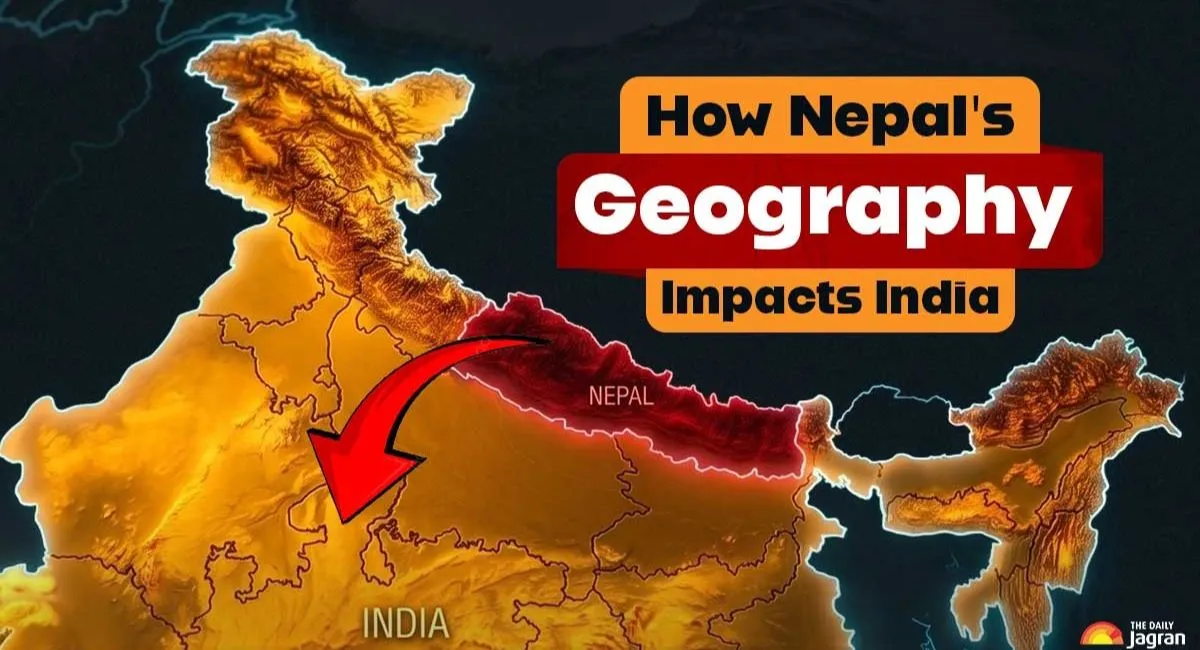
- Nepal floods underscore India's vulnerability to transboundary disasters.
- Shared rivers like Kosi, Gandak directly impact Indian plains.
- Joint mechanisms crucial for India-Nepal flood prediction, management.
The devastating flash floods in Nepal that have caused over 270 deaths, with nearly 400 people still missing near the Tibet border has once again highlighted the close connection between the Himalayan nation and India’s northern plains. The recent flooding affected parts of Nepal after a sudden surge in the Bhote Koshi and Trishuli river systems, causing widespread destruction in several areas.
The impact of the flood was also being monitored in India because Nepal’s rivers eventually enter the plains through major river systems. Authorities in Bihar and Uttar Pradesh were placed on alert, with special focus on the Gandak River, which is known as Narayani in Nepal.
Nepal Flash Flood (Image: Reuters)
Sharing a border of around 1,770 km, India and Nepal are connected through five Indian states: Uttarakhand, Uttar Pradesh, Bihar, West Bengal and Sikkim. The open border between the two countries allows people to travel, work and maintain family and social relationships across both sides.
Recommended For You
Major Rivers Connecting The Two Nations
The shared river systems have made both countries dependent on cooperation, especially during floods, as water flowing downstream from Nepal directly impacts several Indian states.
Kosi River
One of India and Nepal's principal rivers is the Kosi River, which rises from Nepal's Himalayas and enters Bihar, passing through one of the country's most flood-affected areas.
The Kosi River is known to create a massive flooding issue for the north Bihar districts as it continuously changes its course with the monsoon floods. This poses an impact on the life and culture of agricultural-based districts, with livelihoods and habitat being disrupted.
In 1954, the two states signed the Kosi Agreement, which was amended in 1966. The Kosi Agreement is centred on flood control, irrigation and river management.
Gandak River
The Gandak River (or Narayani, as it is known in Nepal) is another large transboundary river. It originates in the Nepalese Himalayas, flowing into India, traversing parts of Uttar Pradesh and Bihar, before meeting the Ganga.
In Uttar Pradesh, the river has an impact on places like Maharajganj, Kushinagar and Deoria, while in Bihar, its trajectory is through West Champaran, East Champaran, Gopalganj, Muzaffarpur, Siwan and Vaishali. 
Gandak River (Image: ANI)
The Gandak Agreement (signed between India and Nepal in 1959, revised in 1964) deals with issues related to irrigation and utilisation of the water resources.
Mahakali/Sharda River
The Mahakali, also known as Sharda in the northern parts of Uttarakhand, marks a significant part of India’s western boundary with Nepal. Besides flowing through the border for some length, it is also connected to a level of water cooperation among the two countries.
The India-Nepal Treaty concerning Integrated development of Mahakali, comprising Sharda Barrage, Tanakpur Barrage, Purnagiri Barrage, and Multipurpose project at Purnagiri, among others, was signed in 1996.
Meanwhile, some other rivers originating from Nepal enter India and affect northern states like Uttar Pradesh, Bihar and Uttarakhand. They include Ghaghara (Karnali) River, Rapti River, Bagmati River, Kamla River and Mahananda River.
Why Nepal’s Rivers Matter To India
Given the mountainous landscape, Nepal serves as the source of many rivers that flow down to the Indian plains. When heavy rains or flash floods occur in Nepal, downstream Indian states, particularly Bihar, eastern UP and Uttarakhand, are prone to inundation.
This is precisely why India and Nepal utilise joint mechanisms and approaches for the prediction of floods along with water resource management and river projects. A flood warning system has been operational between the two countries using monitoring centres in both states so as to give warnings if common rivers flood.
Beyond Rivers: Culture, Religion And People-To-People Links
The connection between India and Nepal goes beyond geography. Both countries share deep religious and cultural ties.
Important pilgrimage links include:
- Pashupatinath Temple in Kathmandu, Nepal
- Janaki Mandir, Janakpur, associated with Goddess Sita-1787822429942.webp)
Janaki Temple (Image: Social Media)
- Muktinath Temple, Mustang district, Nepal
Trade And Economic Partnership
India remains one of the largest economic partners for Nepal. Cooperation in various fields, including trade, infrastructure, energy, transport, water resources, etc has been carried out between the two states.
Nepal is dependent on India for accessing global markets, oil resources, and transit facilities; whereas India is dependent on Nepal for economic and energy cooperation and connectivity with the Himalayan State.
Major India-Nepal Border Checkpoints
Raxaul-Birgunj: Located between East Champaran district, Bihar and Parsa district, Madhesh Province (Nepal), it is one of the busiest trade points between the two nations.-1787822655914.webp)
Raxaul-Birgunj Border (Image: X)
Sonauli-Bhairahawa: Located between Maharajganj district, Uttar Pradesh and Rupandehi district, Lumbini Province (Nepal), this is a major route for tourists and pilgrims travelling towards Kathmandu and Lumbini.
Rupaidiha-Nepalgunj: Located between Bahraich district, Uttar Pradesh and Banke district, Lumbini Province (Nepal), it is an important trade and transport link.
Jogbani-Biratnagar: Located between Araria district, Bihar and Morang district, Koshi Province (Nepal), this crossing connects India with Nepal’s major industrial city.
Panitanki-Kakarbhitta: Located between Darjeeling district, West Bengal and Jhapa district, Koshi Province (Nepal), it links eastern Nepal with India’s northeastern corridor.
Banbasa-Mahendranagar: Located between Champawat district, Uttarakhand and Kanchanpur district, Sudurpashchim Province (Nepal), it is a key western border crossing.
These checkpoints serve as important gateways for trade, tourism, cultural exchange and movement of people between India and Nepal.
You May Also Like To Watch: