
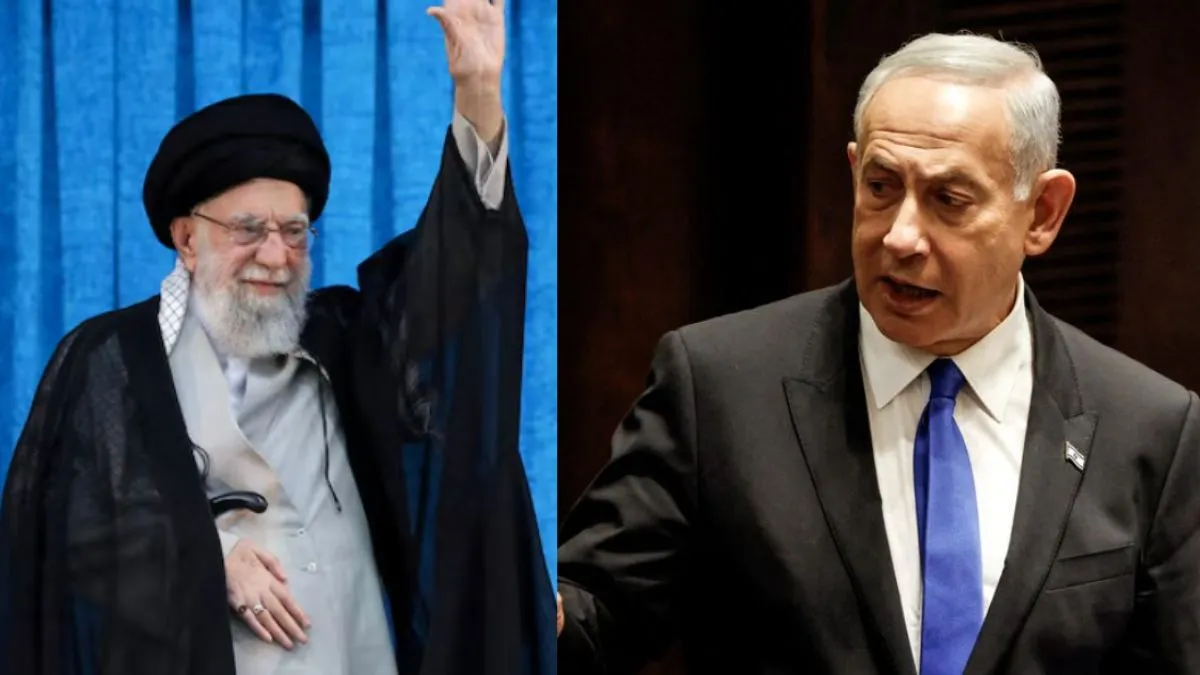
The United States and Israel have been jointly carrying out repeated attacks on Iran for the third day today, which saw killings of top Iranian leaders, including Supreme Leader Ayatollah Ali Khamenei. In retaliation, Iran has fired missiles at several countries, including Israel, Saudi Arabia, Qatar, the United Arab Emirates, Oman, and Kuwait, opening a wider theatre of conflict.
Iran and Israel are fighting as they both see each other as an existential threat to themselves. However, the two countries were not always archrivals.
The roots of today's hostility between Israel and Iran lie deep in history. At the time of Israel's founding in 1948, Iran was the second Muslim-majority country, after Turkey, to recognise Israel as a state. Relations between the two countries were cordial at that time, but over time, things have turned sour.
The beginning of a rift
Israel and Iran had friendly relations until 1979. Iran was then a monarchy under the Shahs of the Pahlavi dynasty and a major ally of the United States. Israel's founder, David Ben-Gurion, established a friendship with Iran, despite the displeasure of its Arab neighbours. Although Iran opposed the 1948 Palestine Partition Plan, it recognised Israel.
Recommended For You
But the advent of the Islamic Republic under Ayatollah Ruhollah Khomeini after the Islamic Revolution in 1979 changed everything. The revolutionaries overthrew the Shah and established the Islamic Republic. Khomeini declared himself "defender of the oppressed" and rejected US and Israeli "imperialism."
ALSO READ: Iran Supreme Leader Succession: Hassan Khomeini Emerges As Key Face Against Khamenei's Son Mojtaba
The new government severed all ties with Israel, invalidated Israeli passports, and handed over the Tehran embassy to the Palestine Liberation Organisation (PLO), which was fighting for a Palestinian state.
Deep hostility to the Palestinian issue
Anti-Israel sentiment became part of the core policies of the new Iranian government. Many Iranian leaders at the time had been involved in the guerrilla war in Lebanon with the Palestinians, and their sympathies were deep.
As the new Iran wanted to present itself as an Islamic power, it took up the Palestinian cause, which most Arab Muslim countries had abandoned at the time. Khomeini asserted his claim to the Palestinian cause, and large demonstrations became common in Tehran.
On the other hand, anti-Iran sentiment in Israel didn't gain strength until the 1990s, when Saddam Hussein's Iraq posed a greater threat. Israel also played a role in the "Iran-Contra" deal, where the US provided weapons to Iran for the Iraq War. But later, Israel viewed Iran as an existential threat.