

- Great Resignation reversed; employees now prioritize job stability.
- Economic uncertainty, layoffs, AI drive 'job hugging' trend.
- Cold job market reduces incentives for switching jobs.
The COVID-19 pandemic triggered the "Great Resignation," a massive wave of voluntary departures that put global companies on their toes. However, this workplace dynamic has shifted sharply in recent years. According to recent workplace studies, such as MetLife's Employee Benefit Trends Report, over half of the employees staying at their current jobs report doing so out of sheer necessity and a desire for stability rather than genuine engagement.
Anthony Klotz, an author and professor of organisational behaviour at University College London who coined the term "The Great Resignation," recalled during a special BBC show how the balance of power initially shifted from employers to employees during the pandemic. A year into the crisis, reports confirmed that the percentage of people quitting their jobs in the US had reached its highest level in decades, solidifying the trend's moniker.
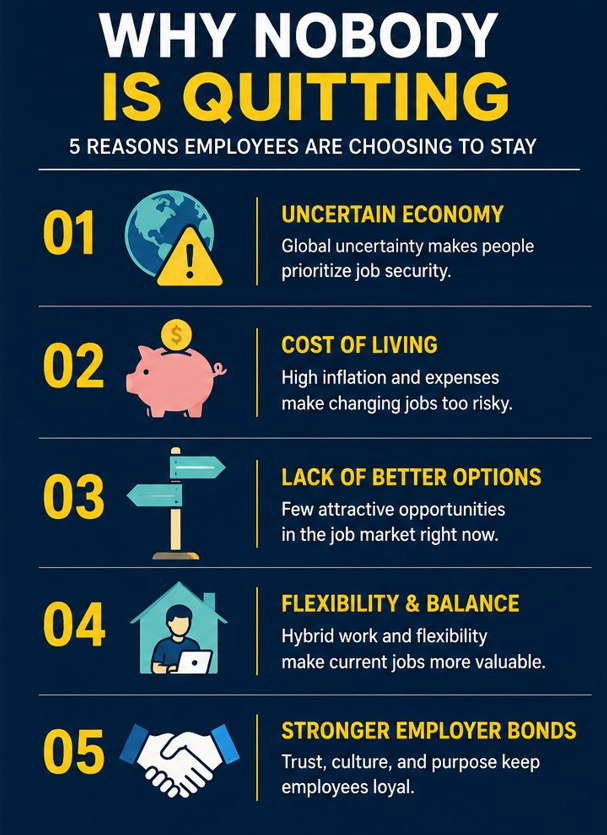
Volatility in global job market
However, amid current job market volatility and economic turbulence, that trend has completely reversed. Employees who previously complained of toxic workspaces, and were once warned by employers to quit if they felt pressured by extended shifts are now quietly managing long hours at the office.
Indian IT, media sectors hit badly
A similar trend has emerged in India over the past few years. The year 2025 witnessed some of the largest layoffs in recent history, with major IT and tech giants like Infosys, Tata Consultancy Services (TCS), Meta, Amazon, and Microsoft cutting down their workforces. The media sector experienced a similar fate; several major television networks and digital publications laid off employees following a recent Google core update. Ironically, many of these companies had successfully avoided layoffs even during the worst phases of the pandemic.
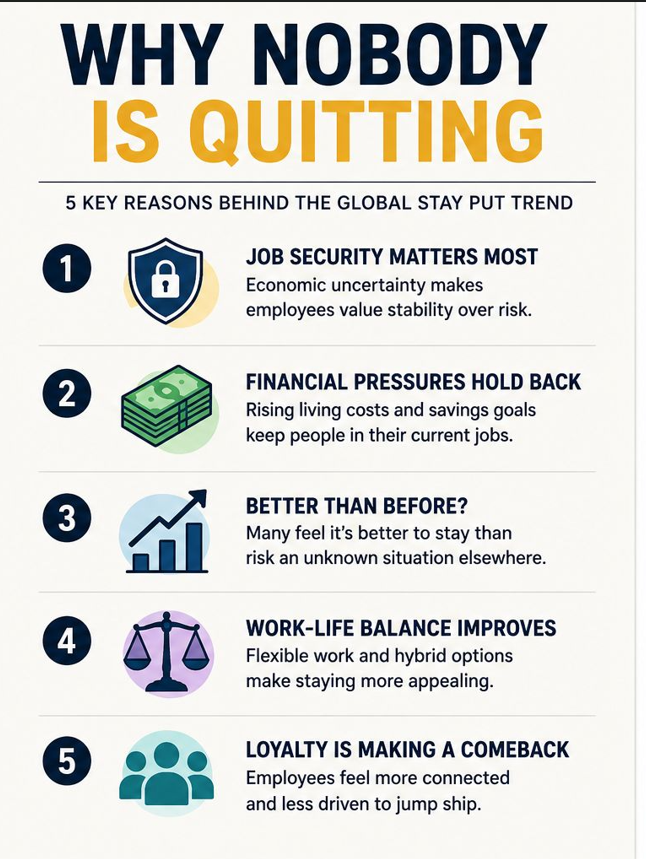
What does the global trend show?
Quitting rates globally have dropped drastically, and workers are choosing to stay in their positions far longer. Economic data and workplace trend reports highlight several key reasons for this shift:
1. Economic uncertainty and shifting power dynamics
During the pandemic, a massive labour shortage shifted the balance of power to employees, who could easily leverage competing offers for higher pay. Today, that market has cooled down. With high interest rates, persistent inflation, and tightening corporate budgets, the power dynamic has swung back toward employers. Workers are choosing the safety of a predictable paycheck over the risk of an uncertain job hunt.
2. Fear of layoffs and the rise of "job hugging"
The wave of corporate restructuring and high-profile layoffs, particularly in tech, media, and finance, has created an atmosphere of caution. Instead of job-hopping, many professionals are actively practising "job hugging", deliberately staying put to prioritise job security.
According to workplace studies like MetLife's Employee Benefit Trends Report, over half of employees staying at their current jobs report doing so out of sheer necessity and a desire for stability rather than genuine engagement.
3. The AI and automation factor
The rapid integration of generative AI and automation tools has injected an element of unpredictability into career planning. Many professionals are hesitant to jump to a new company or role while the long-term impact of AI on specific job functions is still shaking out. Staying in a familiar environment allows workers time to adapt and upskill without the added pressure of navigating a probation period at a new firm.
ALSO READ: Tech Layoff 2026: Amazon Slashes 16,000 Jobs Globally, Citing AI Adoption And Restructuring; Details
4. A cold job Market for new hires
It simply isn't as easy to find a better job as it was a few years ago. Open job postings are down, hiring processes have lengthened, and companies are being far more selective. When the "quit premium", the salary bump you get from switching jobs shrinks, the incentive to go through the gruelling process of interviewing disappears.
You may also like to watch