
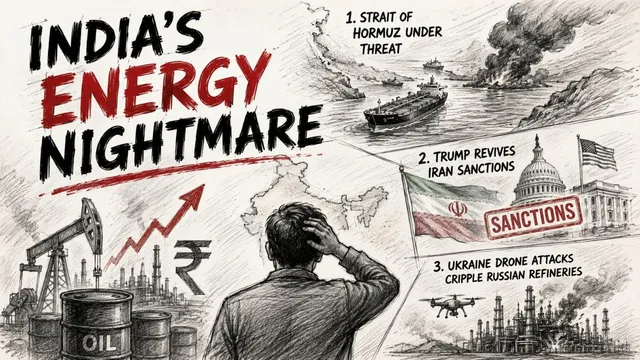
- Strait of Hormuz, Iran sanctions, Ukraine war threaten India's oil.
- Geopolitical crises risk soaring crude prices and weakening rupee.
- India diversifies oil sources to mitigate energy security risks.
Merely days after India’s brief relief in the energy sector following the Iran-US ceasefire, the situation has turned volatile again, with experts dubbing it the toughest test in recent months. India, a desperate, energy-hungry state, has been facing threats from three geopolitical developments-- the renewed threat to the Strait of Hormuz, fresh US sanctions on Iran under President Donald Trump, and Ukraine's escalating drone campaign against Russian oil infrastructure. The amalgam is converging into a perfect storm for the world's third-largest oil importer.
The immediate impact may not be visible at Indian fuel stations. But if the crisis deepens, it could push up crude prices, inflate import bills, weaken the rupee, and complicate New Delhi's carefully balanced foreign policy.
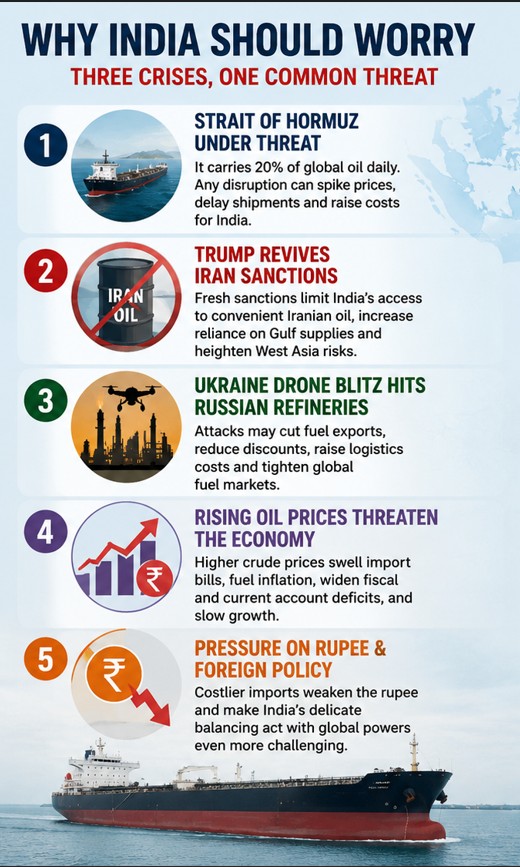
Three Crises, One Common Threat
1. Strait of Hormuz: The World's Most Critical Oil Chokepoint
The Strait of Hormuz carries roughly one-fifth of global oil supplies every day. Any military action, blockade, or disruption can send global crude prices soaring within hours. Recent attacks and warnings from Iran's leadership that Hormuz will operate only under "Iranian arrangements" have once again raised fears over the security of this narrow waterway.
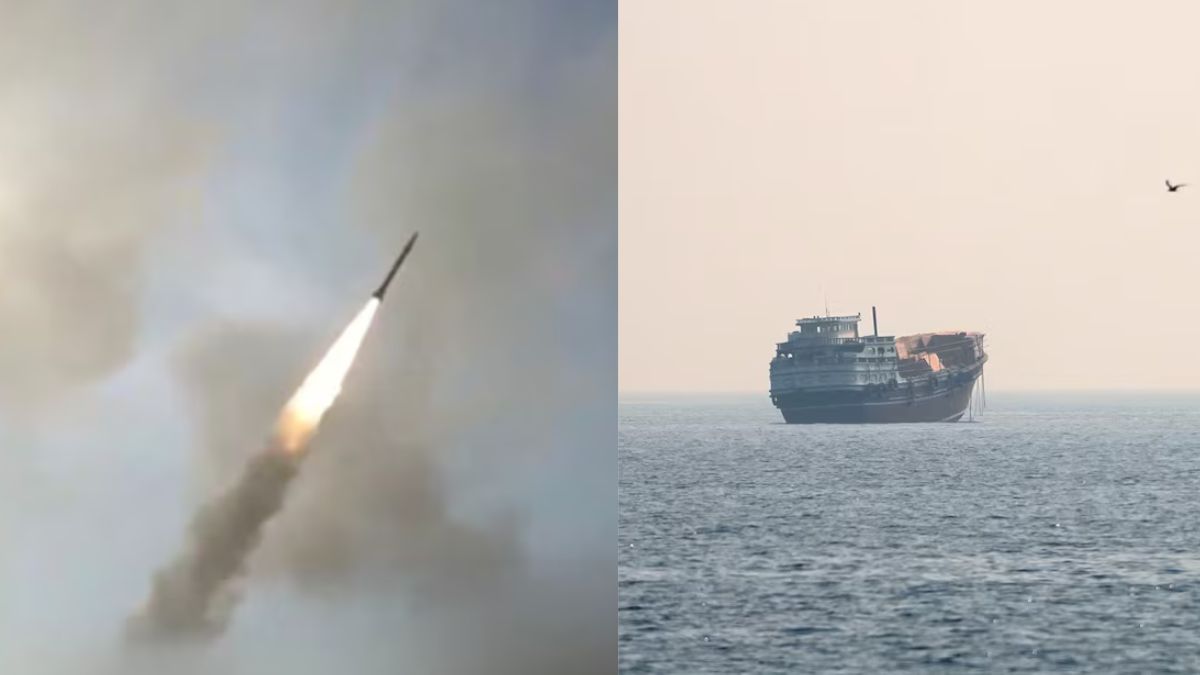
(Credit: Reuters)
For India, the stakes are enormous. Around 40 per cent of its crude imports come from Gulf producers such as Saudi Arabia, Iraq, Kuwait, and the UAE, all of which rely heavily on Hormuz for exports.
A prolonged disruption would force tankers to reroute, increase insurance premiums, delay shipments, and significantly raise transportation costs.
2. Trump's Iran Sanctions Return
President Donald Trump's decision to reimpose stringent sanctions on Iran aims to reduce Tehran's oil revenues and pressure its economy. Although India drastically reduced Iranian oil purchases after previous US sanctions, Tehran remains geographically one of India's most convenient and cost-effective suppliers.
Recommended For You
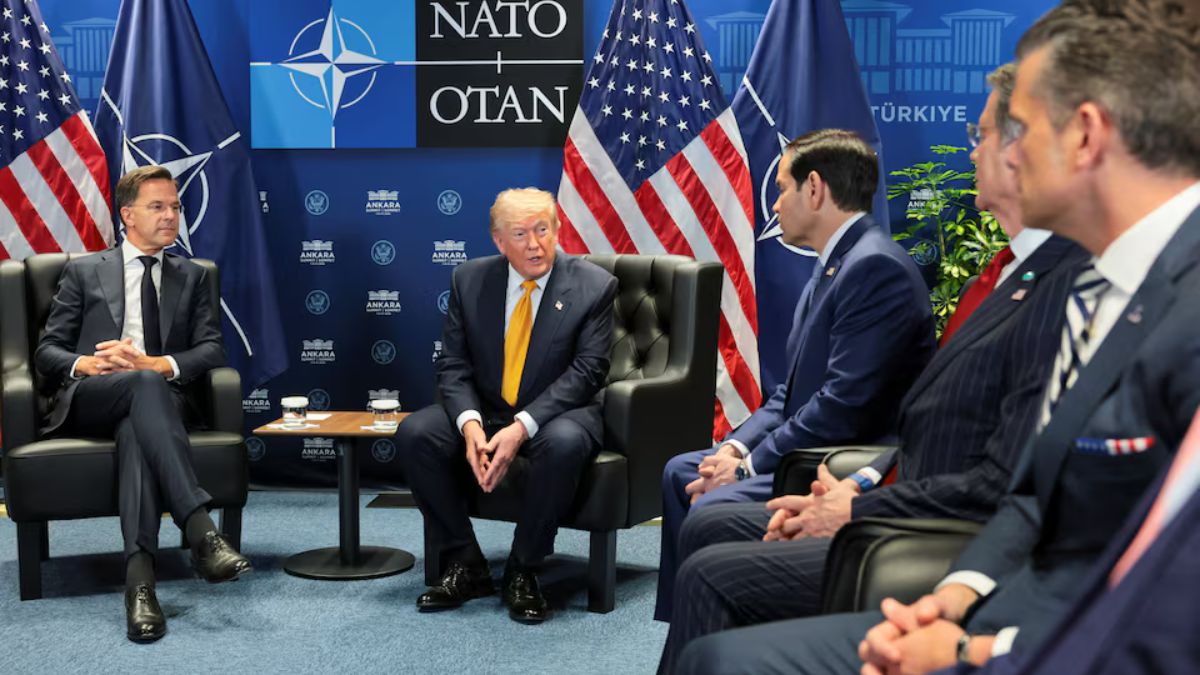
(Credit: Reuters)
Fresh sanctions mean limited chances of reviving Iranian oil imports, higher dependence on Gulf suppliers, reduced flexibility in India's energy sourcing and greater exposure to geopolitical risks in West Asia.
3. Ukraine's Drone Attacks on Russian Refineries
Russia has become India's largest crude supplier since the Ukraine war began, largely because of discounted prices. However, Ukraine's increasingly sophisticated drone attacks on Russian refineries and fuel infrastructure are creating fresh uncertainty. If refinery damage continues, Russia may export less refined fuel, domestic Russian demand could rise, discounts offered to India may shrink, and shipping routes and logistics could become more expensive. Even if Russia continues exporting crude, refining disruptions can tighten global fuel markets.

(Credit: Reuters)
Why This Matters for India
India imports nearly 85 per cent of its crude oil requirements. Every increase in international crude prices directly affects its import bill, inflation, fiscal deficit and current account deficit. Higher oil prices also increase government spending on fuel subsidies and can put pressure on economic growth.
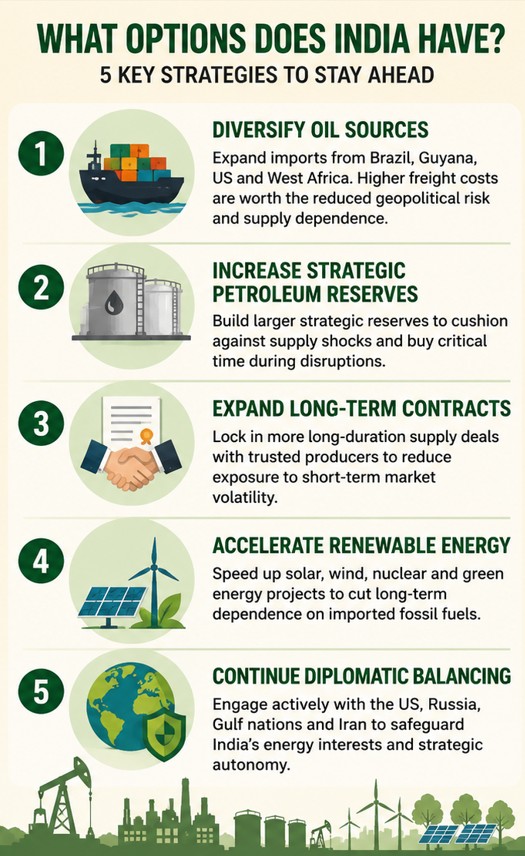
What Options Does India Have?
India is already increasing purchases from Brazil, Guyana, the US and West African producers. Although transportation costs are higher, diversification reduces dependence on any single region.
(With inputs from agency)