
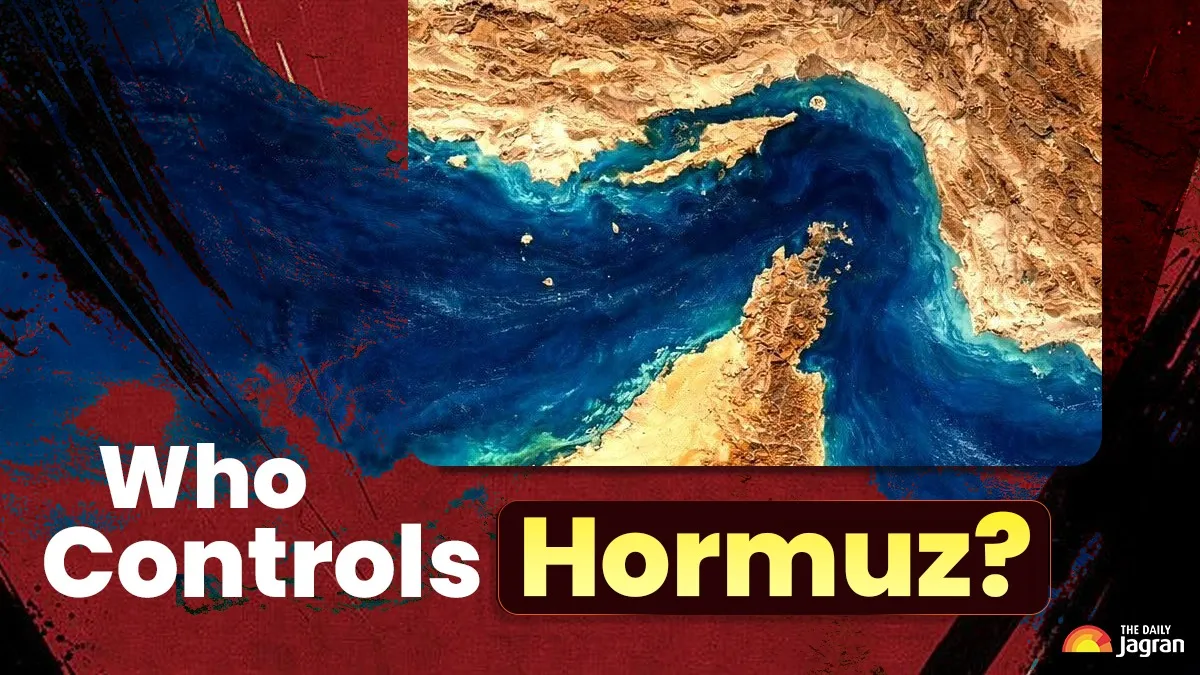
- IRGC closed Strait of Hormuz, defying Iranian government.
- Closure due to US not lifting naval blockade.
- Exposes deep power struggle within Iran's leadership.
The cracks between the powerful Iran's Revolutionary Guard and Iranian government is now clearly visible over the control of Strait of Hormuz- a critical narrow passage crucial for the oil flow. On Saturday, IGC announced that Hormuz will remain closed from April 18. The statement came after Iranian government signalled to open Hormuz amid global pressure.

In a statement, the IRGC said several vessels passed through the Strait of Hormuz on Friday, but "due to the violation of the ceasefire conditions, the American enemy did not lift the naval blockade of Iranian vessels and ports", according to CNN.
"Therefore, from this evening, the Strait of Hormuz will be closed until this blockade is lifted," the statement read. "We warn that no vessel should move from its anchorage in the Persian Gulf and the Sea of Oman, and approaching the Strait of Hormuz will be considered cooperation with the enemy, and the violating vessel will be targeted", the statement continued.
Recommended For You
ALSO READ: Iran Plans 'Four-Stage' Airspace Reopening After 50 Days Of Conflict Disruption: Reports
Earlier, Iran said it would prioritise vessels that agree to pay fees for crossing the Strait of Hormuz, a senior Iranian official told CNN on Saturday, amid new restrictions on maritime traffic.
1. Power struggle exposed in Tehran
The crisis around the Strait of Hormuz has highlighted a deep divide between Iran’s civilian leadership and the powerful Islamic Revolutionary Guard Corps, with both sending conflicting signals on whether the waterway is open or closed.
2. Diplomacy vs military control
Iran’s Foreign Minister Abbas Araghchi indicated openness to negotiations and even suggested the strait could reopen, but the IRGC quickly overruled him, asserting full military control and shutting it again.
ALSO READ: Strait Of Hormuz Shut Again? Iran Reverses Reopening As US Blockade Persists | What Lies Ahead
3. Trigger: US blockade and war pressure
The closure is tied to the ongoing US-Iran conflict, with Tehran demanding an end to the US naval blockade before allowing normal maritime movement.
4. Escalation hits global shipping
Iranian forces, particularly the IRGC, have fired on commercial vessels—including Indian-linked ships-forcing tankers to turn back and disrupting one of the world’s busiest oil routes.
5. Uncertainty fuels global risk
Conflicting decisions within Iran’s leadership, combined with ongoing military tensions, have created uncertainty over the strait’s status, raising fears of prolonged disruption to global energy supplies and shipping.