
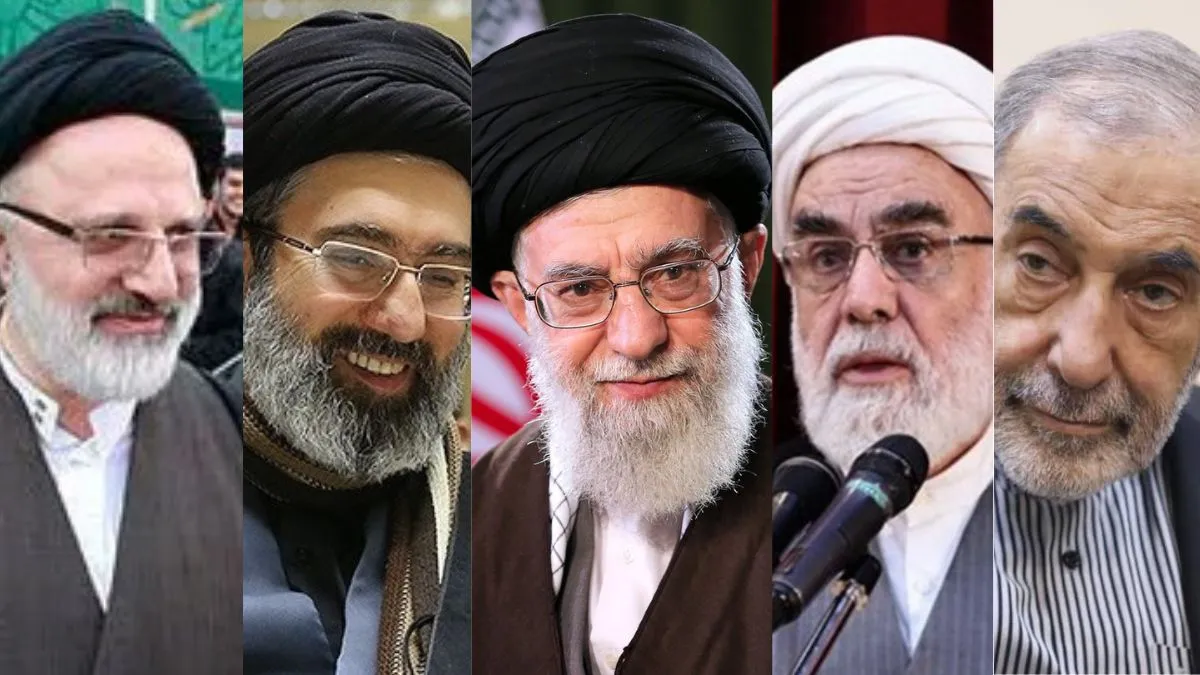
Iran Live News: Iran’s state TV confirmed on Sunday that Ayatollah Ali Khamenei has died following recent joint US and Israeli strikes, a development that has cast uncertainty over the nation's political direction and Supreme Leader's possible successor. Meanwhile, the Iranian government has announced a period of 40 days of national mourning in his memory.
How Is Iran's Supreme Leader Chosen
Role Of Clerical Council
The authority to select Iran’s supreme leader rests with the 88-member Assembly of Experts. This body also holds the constitutional power to dismiss the leader, though it has never exercised that option.
ALSO READ: Supreme Leader Ayatollah Khamenei Killed In US-Israel Strikes, Confirms Iran's State TV
Temporary Leadership Likely
Under Iranian law, the Assembly of Experts is required to "must, as soon as possible" select a successor to the supreme leader. In the interim period, a leadership council is allowed to "temporarily assume all the duties of leadership" until a permanent appointment is made.
Recommended For You
The council would comprise Iran’s president, the head of the country's judiciary , and a representative from the Guardian Council appointed by the Iran’s Expediency Discernment Council, which guides the supreme leader and mediates disputes with parliament.
If the mechanism is applied at present, it would include President Masoud Pezeshkian and judiciary chief Gholamhossein Mohseni Ejei as members of the leadership council.
Khamenei's Son A Frontrunner?
Discussions over succession occur behind closed doors, away from public scrutiny, making it difficult to identify likely frontrunners. One potential candidate is Khamenei’s son, Mojtaba, a 56-year-old Shiite cleric who has never held a formal government position. Mojtaba however has close affinities with the Islamic Revolutionary Guard Corps (IRGC) and is said to set key security and political strategies.
However, a direct transfer of power from father to son could invite backlash, not just from Iranians already skeptical of clerical authority, but also from loyalists of the current system.
Mohammad Golpayegani
Mohammad Golpayegani, the long-serving chief of staff to Khamenei, is another trusted aide with potential influence in the succession process. Known for his loyalty and discretion, Golpayegani has a detailed understanding of how the Supreme Leader’s office functions and has been instrumental in shaping Khamenei’s day-to-day leadership. While he has largely remained out of public view, his seniority within the system makes him a possible candidate or kingmaker in the transition.
Ali Akbar Velayati
Ali Akbar Velayati, former foreign minister and senior adviser to Khamenei on foreign policy, offers both religious credibility and extensive diplomatic experience. As a long-time member of the Expediency Council, he has been central to shaping Iran’s foreign alliances. However, Velayati’s advancing age and recent health issues may weaken his candidacy.
Ali Asghar Hejazi
Ali Asghar Hejazi, another key figure in Iran's security structure, is another serious contender for this role. As the deputy for political-security affairs in the Supreme Leader's office, Hejazi has a strong oversight of national intelligence and strategic policy. Although not a cleric himself, his close relationship with Khamenei and extensive connections with both the IRGC and clerical establishment have established him as one of the most influential behind-the-scenes players in the Islamic Republic.
A Transition Similar To 1989?
Since the 1979 Islamic Revolution, the position of Iran’s supreme leader has changed hands only once. In 1989, when Grand Ayatollah Ruhollah Khomeini died at 86, having guided the revolution and led the country through the devastating eight-year conflict with Iraq.