
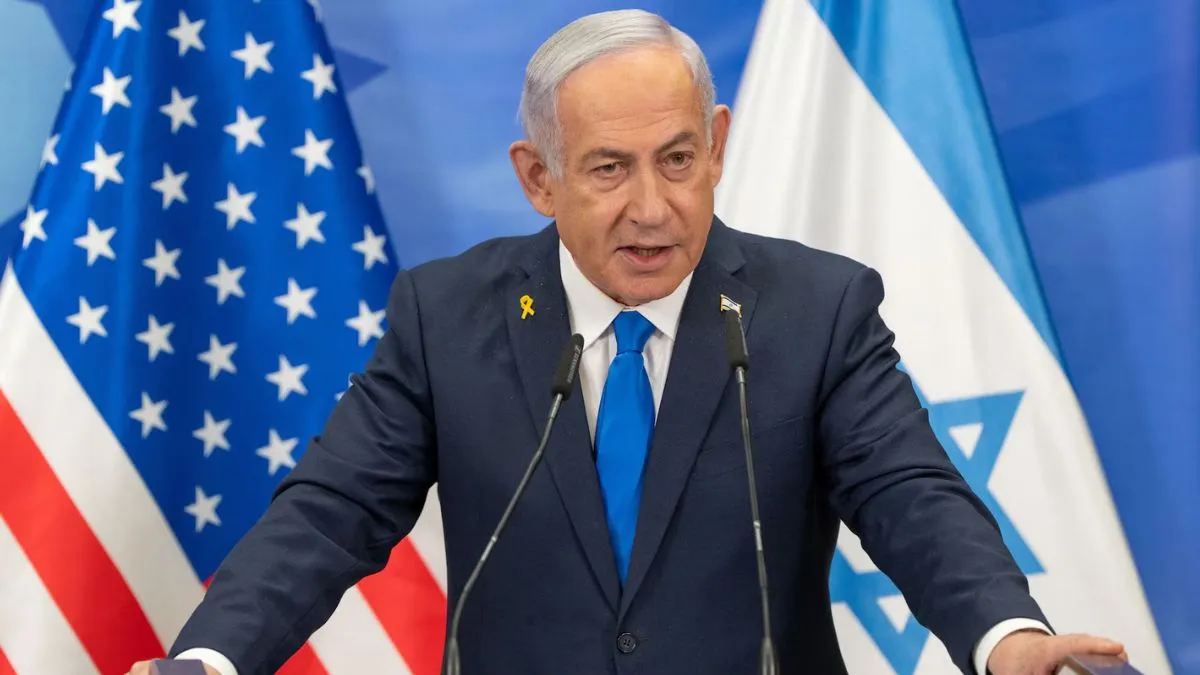
- No party secured majority in Israel's 2026 parliamentary election.
- Opposition leaders began coalition talks as Netanyahu's bloc falls short of majority.
- Arab-led parties hold key seats, complicating government formation.
Israel Election Results: Israel’s 2026 parliamentary election results are out and no party has won enough seats to form a government on its own. Prime Minister Benjamin Netanyahu’s right-wing bloc has secured 53 seats, while the opposition has won 48 and Arab-led parties have secured 19 seats. With 61 seats needed for a majority in the 120-member Knesset, leaders have now started meeting to discuss possible alliances and decide who could form Israel’s next government.
Netanyah's Likud Wins 27 Seats
According to final results released by the Central Elections Committee (CEC), Likud, led by Netanyahu has emerged as the largest party with 27 seats. Gadi Eisenkot’s Yashar party finished second with 21 seats, followed by Naftali Bennett’s B’Yachad with 12 seats. The election body also noted that voter turnout reached 77.9 per cent, the highest level in decades, and a total of 5,716,665 votes were cast in the election.
Likud: 27 seats
Yashar: 21 seats
B’Yachad: 12 seats
Joint List: 11 seats
The Democrats: 8 seats
Ra’am: 8 seats
Yisrael Beytenu: 7 seats
United Torah Judaism: 7 seats
Otzma Yehudit: 7 seats
Shas: 6 seats
Religious Zionism: 6 seats
Recommended For You
Netanyahu's Bloc Falls Short Of A Majority
The results have made government formation difficult as none of the party has secured a majority. Netanyahu’s bloc is eight seats short of a majority, while the Jewish-led opposition needs 13 seats. The result is also a major setback for the current governing parties, which held 68 seats in the outgoing Knesset.
The Arab-led parties, including the Joint List and Ra’am have achieved their strongest result ever, almost doubling their existing strength of 10 seats. Their support could help the opposition reach a majority as they have secured 19 seats together. However, most Jewish-led opposition parties have ruled out forming a government with Ra’am or the Joint List, making this option difficult.
Eisenkot Plans To Move Ahead
Eisenkot has emerged as a leading opposition candidate for the next government. He said that his party is preparing to introduce important legislation as soon as the new Knesset begins its work. He also clarified that he does not want to join a unity government with Netanyahu, stating that the results showed rejection of his government. Acknowledging the difficult political situation, Eisenkot said, “Remain patient; there is hope. We will bring it about. I give you my word.”
Opposition Leaders Begin Coalition Discussions
As the final results were announced, several opposition leaders have started meeting to discuss whether they can work together and form the next government. According to Times of Israel, Eisenkot met Naftali Bennett, head of B’Yachad and a former prime minister, at Bennett’s home in Ra’anana. Their discussion focused on finding a way to establish a new government quickly.
Similarly, Yair Golan, head of The Democrats, also held meetings with opposition leaders. He first met Opposition Leader Yair Lapid and then Eisenkot. After his meeting with Eisenkot, Golan said the two leaders understand the responsibility facing them because of their years of service in Israel’s security establishment.
יוצא מפגישה טובה עם חברי, יאיר לפיד. אני נחוש לעשות כל מאמץ, להפוך כל אבן ולפעול עם כל שותפינו כדי להציל את ישראל. נמשיך לעבוד בתיאום. לא נוותר על ההזדמנות לשינוי. נעשה ונצליח 🇮🇱 https://t.co/jQLZgv69Iz
— Yair Golan - יאיר גולן (@YairGolan1) October 29, 2026
Golan also met Mansour Abbas, the leader of the Arab-led Ra’am party to discuss the political situation. He is the only leader from the Jewish-led opposition bloc who has openly supported working with Ra’am to form a government. Meanwhile, Abbas has also expressed doubts about the possibility of forming a minority government under Eisenkot, with Arab lawmakers providing support from outside the government.
According to Channel 12, Abbas told party members that the chances of such a government being formed were very low. Yisrael Beytenu leader Avigdor Liberman has also made his position clear, stating that his party will not join a government led by Netanyahu or one that includes the Joint List as a partner.
What Happens Next?
The election process will now move towards the next stage which includes the CEC presenting the complete official results to President Isaac Herzog on Wednesday. After receiving the results, Herzog will meet the leaders of the different political parties. During these meetings, party leaders will recommend the person they believe should be given the opportunity to form the next government.
ALSO READ: Israel Elections: Netanyahu, Eisenkot's Future Hangs In Balance As Arabs Emerge As Kingmakers
You May Also Like To Watch: