
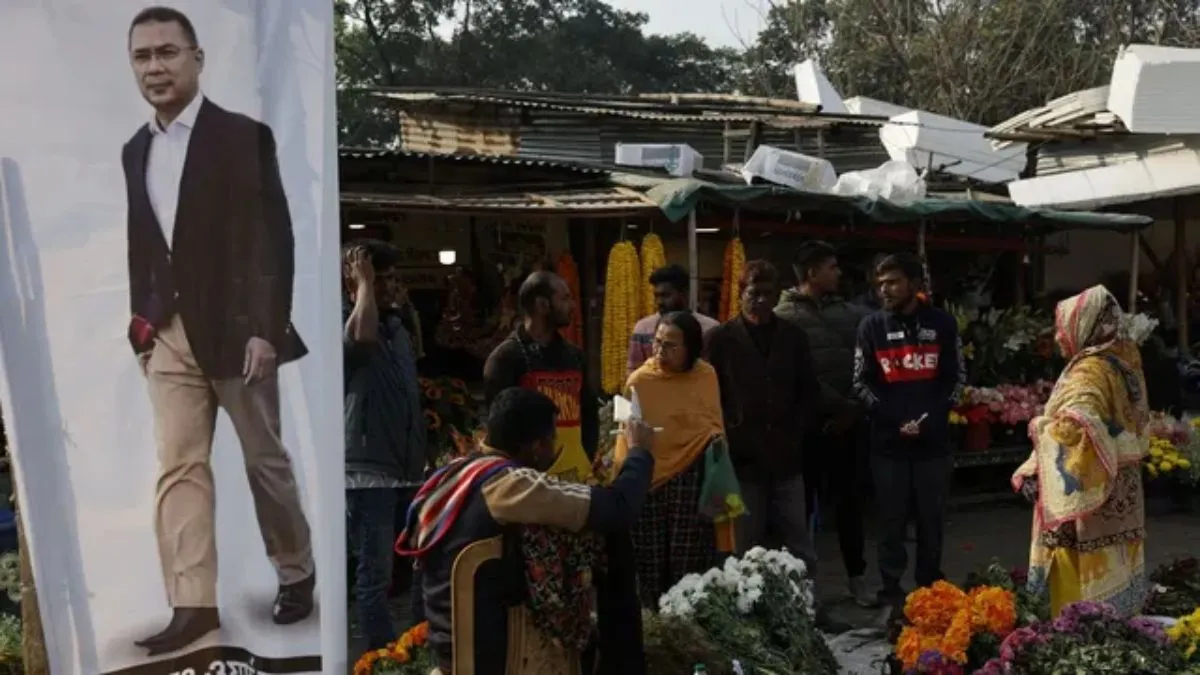
The results of the Bangladesh general elections have established the Bangladesh Nationalist Party (BNP) as the clear winner and the single largest party in parliament. The fact that Jamaat-e-Islami fell short of a majority marks a definitive shift in South Asian politics.
In the absence of the Awami League, this election has ushered in an entirely new political order, with Tarique Rahman, son of the late former Prime Minister Khaleda Zia, set to take office as the new Prime Minister.
Given the current geopolitical and economic climate, these results present India with a balanced opportunity rather than a setback. New Delhi appears ready to engage constructively with the incoming administration led by Tarique Rahman.
As the election results became clear, Prime Minister Narendra Modi extended his congratulations to Tarique Rahman, stating, “The people of Bangladesh have placed their trust in the leadership of Tarique Rahman. India will always stand by a democratic, progressive, and inclusive Bangladesh. I look forward to working with you to strengthen our multifaceted ties and advance our shared developmental goals.”
ALSO READ: On Camera, Massive Sinkhole Swallows Vehicles, Road In China's Shanghai; Video Goes Viral
Here are five key reasons why these results are manageable, and perhaps even favorable, for India:
1. Security Relief: Jamaat Falling Short Of Majority
While India’s past experiences with BNP-led governments have been complicated, Tarique Rahman’s party is a far more viable partner than Jamaat-e-Islami. Jamaat has a long history of pro-Pakistan leanings and ties to radical Islamist ideologies. A clear majority for them would have raised alarms regarding instability in India’s Northeast, the activation of extremist networks and cross-border infiltration.
Recommended For You
Although Jamaat adopted a softer tone toward India during this campaign, it has traditionally used anti-India sentiment as a political tool. Their failure to secure a majority suggests that Bangladesh’s electorate has not fully embraced ideological polarisation, sparing India from immediate security pressures.
2. Economic Realities Dictate Cooperation
Bangladesh is currently grappling with significant economic hurdles, including dwindling foreign exchange reserves, export pressures, and high inflation. The BNP government's primary focus will be stabilising the economy. Over the years, bilateral trade and infrastructure projects—such as energy cooperation, power exports, pipelines and port connectivity—have deeply integrated the two nations.
ALSO READ: Tarique Rahman: All About BNP Chief Poised To Become Bangladesh's New 'Male' Prime Minister?
With Indian companies having invested nearly USD 5 billion in Bangladesh, maintaining these projects is a practical necessity for the new government. Since the BNP manifesto did not take a confrontational stance toward India, it indicates they prioritise economic pragmatism over political friction.
3. Proactive Diplomatic Groundwork By India
New Delhi had spent recent months signaling its readiness to look beyond the Awami League era. Diplomatic channels with the BNP leadership were kept open through back-channel talks and balanced political messaging to ensure that a change in power wouldn't lead to a diplomatic collapse.
The strategic outreach was evident when External Affairs Minister S Jaishankar visited Dhaka following Khaleda Zia’s passing, and the Indian Parliament expressed its condolences. This groundwork makes it difficult for the new government to adopt an overtly anti-India stance, as a foundation for dialogue already exists.
4. Structural Interdependence And Connectivity
The relationship between India and Bangladesh is built on physical and economic structures that transcend politics. Bangladesh plays a vital role in connecting India’s Northeast through rail, inland waterways and road corridors.
ALSO READ: Pakistan Ex-PM Imran Khan Has Lost 85% Vision After 922 Days In Jail, Alleges Son Kasim Khan
Halting or reversing these connectivity projects would be economically detrimental to the BNP. On the contrary, advancing them allows the party to project a development-oriented image domestically. Practical governance will likely drive the new leadership to keep these vital links stable.
5. Strategic Balance In Changing Global Order
In the current era of Indo-Pacific competition and shifting global alliances, Bangladesh cannot afford to lean entirely toward one power bloc. To maintain stability, Dhaka needs reliable regional partners.
India remains a natural strategic ally in areas like energy security, maritime cooperation, and disaster management. As a key player in regional supply chain security, India’s support will remain essential for any administration in Dhaka looking to navigate global geopolitical pressures.
While the election results do not offer complete certainty, they are not a cause for grave concern. With Jamaat held back and the BNP showing a pragmatic streak, economic necessity may drive continued cooperation. However, with Jamaat now a potent opposition force, New Delhi must remain vigilant against potential anti-India rhetoric. India will need to apply "Neighborhood First" diplomacy with patience and alertness, similar to its approaches in Afghanistan, Maldives and Sri Lanka.