
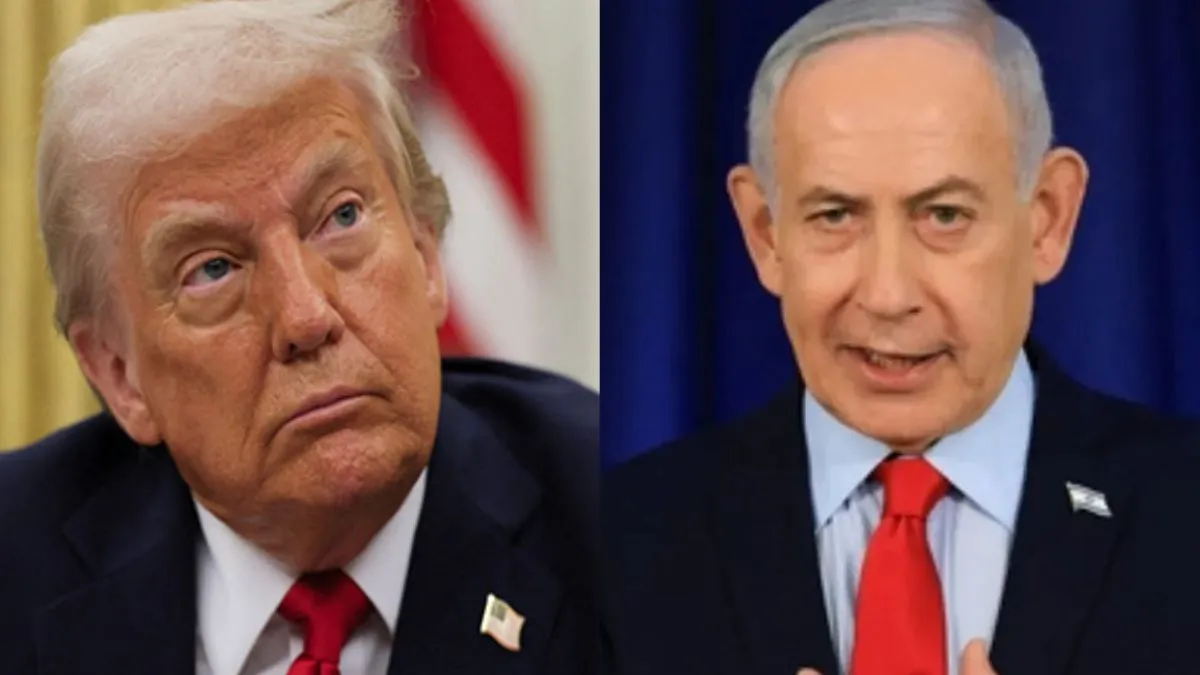
The ongoing conflict in the Middle East involving the United States, Israel and Iran has entered its fourth week. Amid intensified tensions, Israel and the United States have sent mixed signals about their upcoming military plans in the region. While US President Donald Trump on Saturday stated he might “wind down” operations, Israel’s Defence Minister Israel Katz announced that attacks on Iran will intensify in the coming week.
Israel Katz, speaking at a meeting with top military officers at IDF headquarters in Tel Aviv, said that strikes against Iran would increase significantly. He stressed that the operations would be carried out jointly by the IDF and US forces, targeting Iranian commanders and military infrastructure. Katz further emphasised that Israel remains committed to weakening Iran’s strategic capabilities. The Times of Israel, quoted Katz as saying: "This week, the intensity of the strikes that the IDF and the US military will carry out against the Iranian terror regime and the infrastructure it relies on will significantly escalate.”
Trump Hints at Winding Down
Israel’s Defence Minister’s statement appears to contradict Trump, who said that the US might begin “winding down” its military operations in the region. Trump indicated that he is not planning to deploy ground troops, while leaving the possibility of other actions. “We are getting very close to meeting our objectives as we consider winding down our great Military efforts in the Middle East,” he said in a post on Truth Social. On the possibility of sending ground troops, Trump said, "I’m not putting troops anywhere...If I were, I certainly wouldn’t tell you.”
Recommended For You
What’s Next In Iran War?
Since the beginning of the conflict on February 28, Trump warned that the US military will continue to act aggressively against Iran. He even hinted at sending more troops and warships to the region. However, his stance appeared to change on Saturday. Adding to it, the US lifted sanctions on Iranian oil to ease global prices, further confusing the picture. At the same time, the Pentagon has continued sending additional naval ships, aircraft, and Marine units to the region, contradicting the idea of de-escalation.
Meanwhile, more than 20 countries, including the United Arab Emirates, Bahrain, the United Kingdom, France, Germany, and Japan, have condemned Iran’s closure of the Strait of Hormuz. In a joint statement, the leaders have warned that Iran’s actions could impact people worldwide, “especially the most vulnerable."
ALSO READ: Trump Running Out Of Options? Experts Flag Concern After US Eases Sanctions On Iran Oil Amid War