
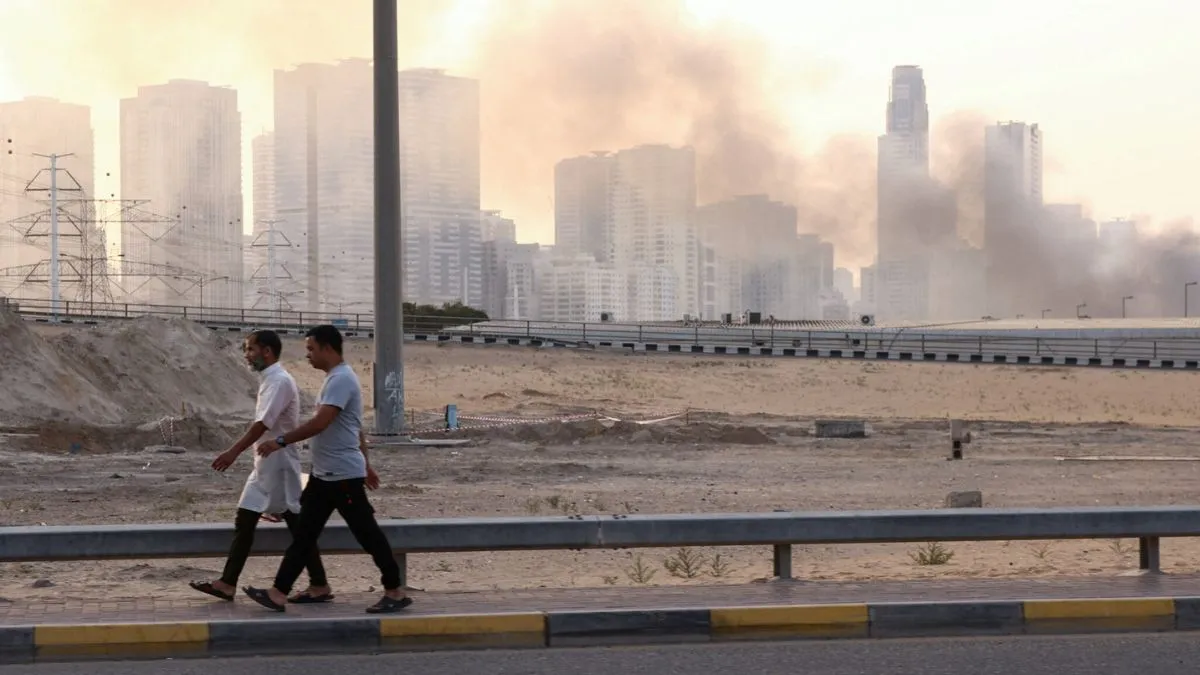
- UAE arrested 19 Indians for spreading war misinformation.
- Accused of inciting panic, undermining national stability.
- Violators face prison, hefty fines under cybercrime laws.
In a major action, the United Arab Emirates (UAE) has taken strong action against at least 19 Indians for spreading misinformation amid the ongoing US-Israeli war on Iran. Earlier last week, the authorities warned of taking action who are posting videos of the missile attacks. Although it is not clear how posting videos on social media could land anyone in legal troubles, it is obvious that the country’s most secure place image is at stake ever since the Iranian missiles and drones target residential areas.
According to a report by NDTV, the UAE authorities ordered the arrest of 35 individuals, including 19 Indians, for posting misleading or fabricated videos on social media platforms.
ALSO READ: UAE Issues Arrest Warrants Against 35 Over 'Misleading' War Videos; 19 Indians Among Accused
Why does UAE arrest Indian nationals?
On Saturday, ten people, including two Indians, were named and remanded in custody for an expedited trial. This was followed by 25 more arrests on Sunday, involving 17 Indians and others from various nationalities. The suspects are accused of circulating content that could incite panic, undermine national stability, or expose defensive capabilities.
What the tree criteria for arrest?
According to UAE Attorney-General Dr. Hamad Saif Al Shamsi, rigorous monitoring of digital platforms revealed the offenders divided into three groups. The first group shared authentic clips of missile interceptions in UAE airspace or related gatherings, but added misleading commentary, sound effects, or edits to exaggerate threats and sow anxiety.
Recommended For You
The second group disseminated AI-generated or recirculated footage from unrelated incidents, falsely presenting them as attacks within the UAE, often with synthetic explosions, manipulated flags, or dates for added credibility. The third group glorified Iran's military actions and leadership, promoting propaganda that harms UAE interests.
Some videos falsely depicted strikes on landmarks, large fires, or destruction of military sites, while others exploited sensitive events or even children's emotions to amplify fear.
The UAE emphasized that such acts violate cybercrime laws, punishable by at least one year in prison and fines starting from AED 100,000 (approximately Rs 22 lakh).
Why is UAE taking on posting social media videos of Iranian attack?
The UAE has sold itself to foreigners for years as a sunny, safe, tax-free oasis. That peaceful image was shattered on February 28 as Iranian weaponry rained down on Dubai, setting fire to a five-star resort, threatening the world's tallest building, and killing one person and injuring seven others at the airport in the capital city of Abu Dhabi.
The oil-rich federation of seven sheikhdoms has relied on its image as a place of serenity to lure wealthy tourists, businesspeople and future residents who want to live largely tax-free in luxury in the desert by the sea. Nearly 90 per cent of the estimated 11 million residents are foreigners.
The attacks in the past two weeks have exposed the danger and how fragile is US’s security umbrella for the region.