
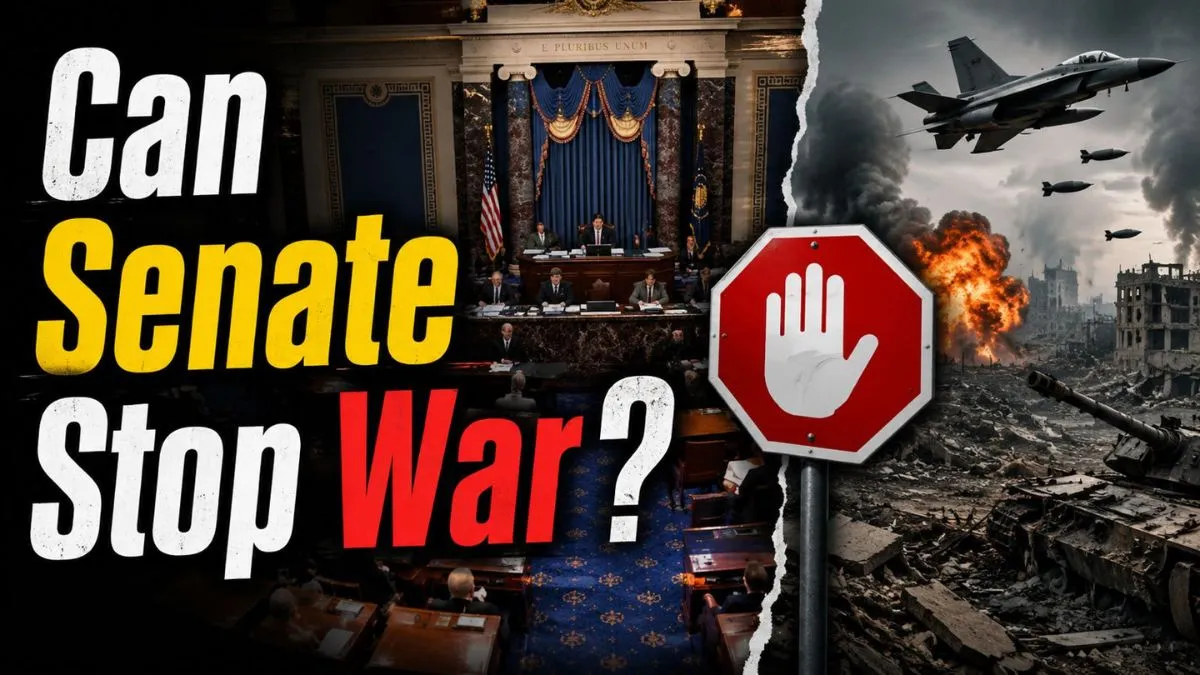
- Senate voted 50-48 to halt US military action.
- Resolution is symbolic, not legally binding to stop war.
- Warns administration to seek congressional approval for future hostilities.
The US Senate backed legislation on Tuesday directing US President Donald Trump to halt US military action against Iran, the latest rebuke of the Republican president from an increasingly restive Congress. The Senate voted 50-48 in favour of the war powers resolution, which passed the House of Representatives early this month, reflecting growing concern even among some of Trump's Republicans about the unpopular conflict that began on February 28.
It was the first time both chambers of Congress had passed a resolution directing a president to remove US armed forces from hostilities since the War Powers Resolution, more commonly known as the War Powers Act, was enacted in 1973.
What does voting in Senate means?
In the United States, voting in the Senate is the formal process by which the 100 members of the US Senate cast their votes to make official legislative decisions. Senators vote on a wide range of measures, including bills, nominations, treaties and resolutions. Depending on the issue and the rules at play, the Senate uses different voting methods.
Recommended For You

In Voice vote, the presiding officer asks those in favour to say "Aye" and those opposed to say "no". This is used for non-controversial matters.
ALSO READ: 'No Further Negotiations If…': Trump Claims Iran Agreed To Long-Term Nuclear Inspections
Second is Roll Call Vote. In this, each Senator asked to respond individually. This creates an official public record of how many members voted.
Does it mean to halt the war?
No, not legally or immediately. While the resolution explicitly directs the removal of US armed forces from hostilities with Iran, it does not instantly stop the conflict for two key reasons:

It is a symbolic rebuke, not a law: The measure was passed as a concurrent resolution. Under the 1973 War Powers Act, a concurrent resolution does not go to the President for a signature and does not carry the force of federal law.
A ceasefire is already underway: The vote occurred while the administration is actively shoring up a fragile ceasefire and negotiating a peace framework. Instead of halting active combat, the resolution functions as a powerful legislative warning demanding that the administration seek explicit congressional approval before resuming any future hostilities.
(With inputs from agency)