
- By Shivangi Sharma
- Tue, 18 Feb 2025 02:15 PM (IST)
- Source:JND
NASA's Curiosity rover has made a groundbreaking discovery that could change our understanding of Mars' past. The rover has identified symmetrical wave ripples in ancient lake deposits at Gale Crater, providing the most definitive evidence yet of liquid water once existing on the Martian surface. This discovery suggests that early Mars had climate conditions warm enough to support ice-free lakes, challenging previous theories that the planet was primarily cold and arid.
The ripples, found in two distinct geological layers within the Layered Sulfate Unit, were likely formed by the movement of shallow surface water. These wave patterns, which resemble those found in Earth's lakebeds, indicate that the ancient Martian lakes were open to the atmosphere and sustained by a stable climate.
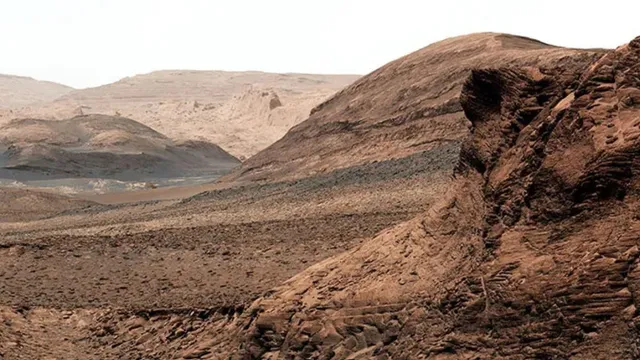
Scientists discovered these ripples in two locations within the Mirador Formation—at the base of the Amapari Member and within a sandstone lens of the Contigo Member. Both sets of ripples had a consistent wavelength of around 4.5 centimetres (1.7 inches), a clear sign that they were shaped by wind-driven waves moving sediment along the lake floor.-1739867964946.webp)
Billions of years ago, waves in a shallow Martian lake stirred sediment, forming rippled rocks—NASA's Curiosity rover's clearest evidence of water and waves on Mars. (Image credits: NASA)
The team determined that the lakes where these ripples formed were likely less than 2 meters (6.5 feet) deep. This suggests that Mars had standing bodies of liquid water exposed to the atmosphere, something previously thought to be extremely rare in the planet’s early history.
ALSO READ:KIIT Suicide Row: Lucknow Student Arrested After Death Of Nepali Batchmate At Bhubaneswar College
New Perspective on Martian Climate
The discovery, published in Science Advances on January 15, challenges long-held beliefs about Mars’ climate billions of years ago. Earlier studies suggested that if liquid water did exist on the surface, it was likely buried beneath ice or present only for short periods due to rapid evaporation. However, the presence of these ripples indicates longer-lasting bodies of open water, implying that Mars once had an atmosphere capable of maintaining liquid lakes for extended periods.
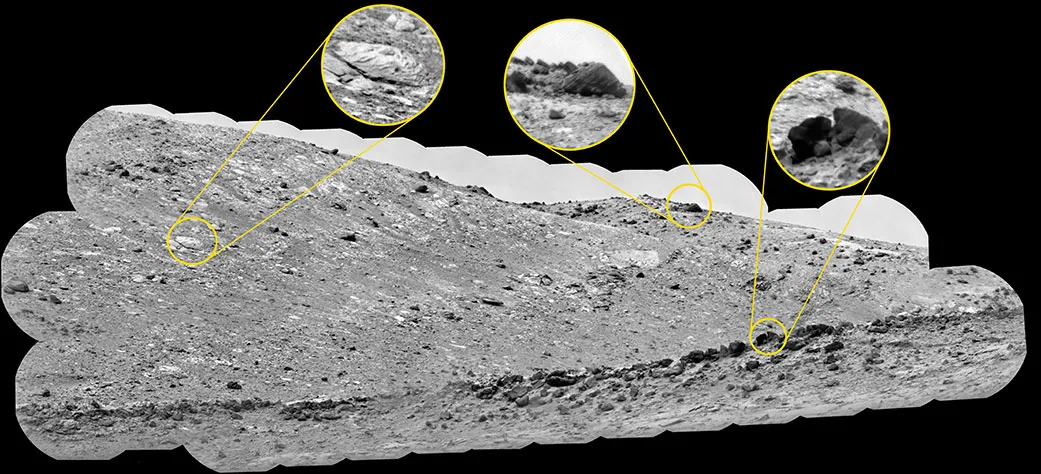
Curiosity's ChemCam spotted boulders in Gediz Vallis Ridge, believed to have been washed down from higher up Mount Sharp, an area Curiosity can't reach. (Image credits: NASA)
ALSO READ: Mahakumbh 2025: Ayodhya Divided Into Six Zones, 11 Sectors Due To Increased Footfall In Prayagraj
Curiosity’s Legacy And Future Discoveries
Since landing on Mars in August 2012, NASA’s Curiosity rover has been exploring Gale Crater, searching for signs of ancient habitability. This latest finding adds to a growing body of evidence suggesting that Mars was once much more Earth-like, with conditions that may have supported life.
These samples, collected over the course of Perseverance’s mission, are vital for understanding Mars' past environment and the potential for life. However, to unlock their full potential and seek definitive signs of life, NASA must bring them back to Earth, where advanced laboratories can analyse them in ways that are not yet possible on Mars. This mission could mark a pivotal moment in the search for extraterrestrial life.
With future missions planned, including the continued work of NASA's Perseverance rover and upcoming sample return missions, scientists hope to uncover more clues about Mars’ watery past—and perhaps even signs of ancient microbial life.