
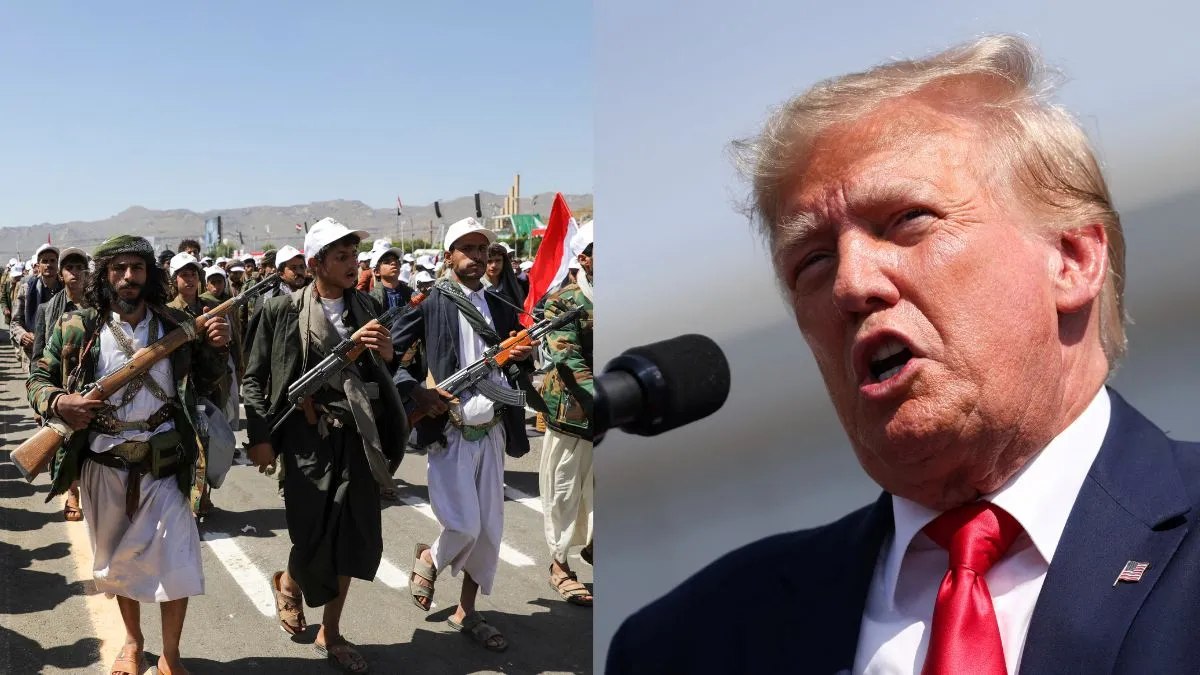
The United States, under President Donald Trump, has launched a series of large-scale airstrikes on Yemen’s Houthi rebels following their threats to resume attacks on Israeli-linked ships in the Red Sea. The strikes, which began on Saturday and extended into Sunday, targeted key Houthi strongholds in Sanaa and Saada, killing at least 24 people, as reported by the Houthi-affiliated Al Masirah TV.
At least nine civilians were killed in the US strikes on Yemen, according to the Houthi-run Health Ministry. The attacks mark Trump’s most significant military action of his second term so far. He warned the Houthis, declaring their time was up and threatening further devastating attacks if they continued their aggression.
Who Are Houthis?
The Houthis, officially known as Ansar Allah, are a Zaydi Shia Islamist political and military movement that originated in Yemen in the 1990s. The group primarily consists of Zaydi Shias, with its leadership stemming from the Houthi tribe, from which it derives its name. The Houthis emerged in opposition to Yemen’s government and later expanded their influence through a decade-long insurgency that culminated in their takeover of Sanaa in 2014, effectively deposing Yemen’s internationally recognised government.
Recommended For You
Since then, the Houthis have been engaged in a prolonged conflict against a Saudi-led coalition that intervened in 2015 to restore the ousted Yemeni government. Over the years, the Houthis have received military and logistical support from Iran, leading to increased regional tensions, particularly with Saudi Arabia and the United States.
Why Is US Targeting Houthis?
The recent US airstrikes come in response to Houthi aggression in the Red Sea, where they have been targeting merchant and military vessels linked to Israel, the United States, and the United Kingdom. The group claims its attacks are in retaliation for Israel’s blockade on Gaza, which has escalated since the onset of the Israel-Hamas war. The Houthis view their operations as part of a broader regional resistance against what they perceive as Western-backed aggression in the Middle East.
President Trump, in a statement, said that the Houthis’ attacks on international shipping amounted to “piracy, violence, and terrorism” and that the US military would respond with overwhelming force. Trump also warned Iran, demanding an end to its support for the Houthis, or else face consequences. The US military’s latest offensive marks an escalation in Washington’s efforts to curb Houthi influence and disrupt their military capabilities.
ALSO READ: Trump Administration Seeks To Limit Birthright Citizenship Again: What's At Stake? Explained
Impact Of US-Houthi Tensions
The ongoing US strikes against the Houthis highlight the broader geopolitical struggle in the Middle East, where Iran-backed militias are increasingly challenging US and allied interests. By striking Houthi positions, Washington aims to protect global trade routes in the Red Sea, a key passage for international shipping. However, the airstrikes have raised concerns about further instability in an already war-torn Yemen.
The Houthis, for their part, have vowed retaliation, with their leadership accusing the US and UK of “wicked aggression”. The group has warned of more attacks on Red Sea shipping lanes, signaling that tensions may escalate further in the coming weeks.
Trump, in a statement on his Truth Social platform, justified the strikes as necessary to protect American interests. “Funded by Iran, the Houthi thugs have fired missiles at US aircraft and targeted our troops and allies,” he wrote. He further warned Iran against continued support for the Houthis, stating, “Support for the Houthi terrorists must end IMMEDIATELY! Do NOT threaten the American people, their President, or worldwide shipping lanes.”
Today, I have ordered the United States Military to launch decisive and powerful Military action against the Houthi terrorists in Yemen. They have waged an unrelenting campaign of piracy, violence, and terrorism against American, and other, ships, aircraft, and drones.
— Donald J. Trump Posts From His Truth Social (@TrumpDailyPosts) March 15, 2025
Joe…
ALSO READ: UN Chief Warns Of Rising Anti-Muslim Bigotry, Urges Action Against Hate Speech