

Sheikh Hasina Extradition: The political scenario in India's neighbouring country, Bangladesh, has changed with the landslide victory of Tarique Rahman's Bangladesh Nationalist Party (BNP) in the just-concluded general election. As the democratic setup returned to Bangladesh, ending the chaotic rule of Muhammad Yunus, both sides, the BNP and Prime Minister Narendra Modi, showed intentions to mend the ties, derailed in the last couple of months. However, a million-dollar question remained unanswered about the future of the former Prime Minister Sheikh Hasina, who took refuge in India, following her removal due to student-led violent protests.
Hasina, who has been living in exile in New Delhi since her ouster, was sentenced to death in absentia by a special tribunal in November 2025 for crimes against humanity linked to the violent suppression of the 2024 uprising.
What BNP Said On Hasina?
Hours after storming into power in the general elections, the BNP reiterated its firm stance on seeking the extradition of Hasina from India to face trial. "The foreign minister has already persuaded the case for her extradition, and we also support it," Senior BNP leader Salahuddin Ahmed said.
Will Sheikh Hasian Be Extradited To Bangladesh?
It is unlikely that India will agree on Hasina's extradition. On November 17, 2025, the Ministry of External Affairs (MEA) released a statement on the issue. "India has noted the verdict announced by the "International Crimes Tribunal of Bangladesh” concerning former Prime Minister Sheikh Hasina. As a close neighbour, India remains committed to the best interests of the people of Bangladesh, including in peace, democracy, inclusion and stability in that country. We will always engage constructively with all stakeholders to that end," the statement read.
ALSO READ: BNP Renews Sheikh Hasina’s Extradition Demand, Will It Affect Ties With India
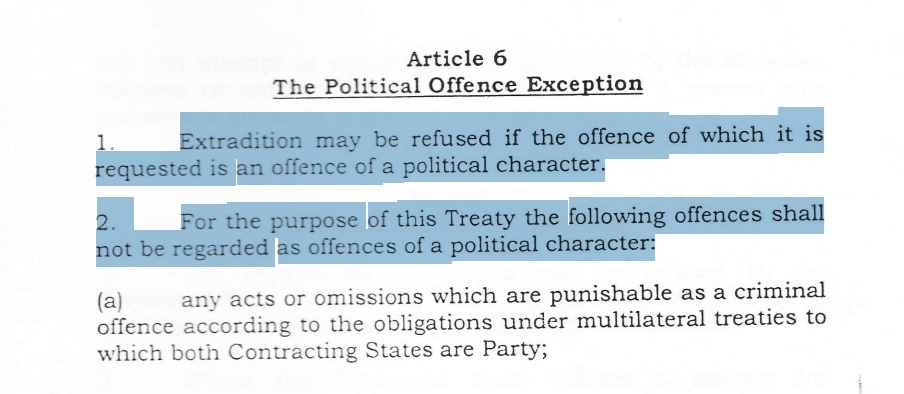
India Can Refuse Under the India-Bangladesh Extradition Treaty 2013
The India-Bangladesh Extradition Treaty 2013 provides New Delhi the grounds to refuse Hasina's extradition. Under the Article 6 of the treaty, the extradition may be refused if the offence of which it is requested is an offence of a political character.
According to the treaty, a person may not be extradited if: he satisfies the Requested State that it would, having regard all the circumstances, be unjust or oppressive to extradite him reason of: (i) the trivial nature of the offence of which he is accused or was convicted; or (ii) the passage of time since he is alleged to have committed it or to have become unlawfully at large, as the case may be ; or (iii) the faith in (b) the offence law. accusation against him not having been made the interests of justice.
Apart from the technical scope in the treaty, there are some other political and diplomatic reasons why India may not extradite her.
Here Are Some Other Key Reasons
- Hasina has been a long-time ally of India during her rule. She never allowed Pakistan and China's proxies to grow in Bangladesh.
- Handing Hasina over could threaten India's regional security and influence, as it would send a message that India compromised its moral standing to support a politician or ally who did not face a fair court trial in her country.
- Accepting the BNP's demand may trigger instability and radical influence in Bangladesh.
- The UN human rights office (OHCHR) opposed the death penalty in all circumstances. Being a member of the United Nations, India can say no to Dhaka, citing the UN's stand.
- In past, the experience with the BNP government under Khaleda Zia's leadership has not been so encouraging. Taking a cue, India could shy away from taking any drastic move.
- In future, Hasina's the Bangladesh Awami League may return to power. So, it would not be wise to seed negative thoughts with a top political power in the neighbouring country.