
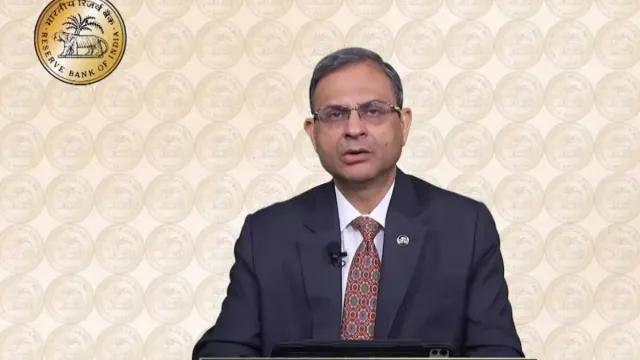
- RBI MPC hiked repo rate by 25 bps to 5.50%.
- Loans and EMIs will become costlier; FDs yield more.
- Indian economy resilient; GDP growth forecast upgraded to 7.1%.
RBI MPC October 2026: The Monetary Policy Committee (MPC) of the Reserve Bank of India (RBI) on Wednesday increased the repo rate by 25 bps, taking it to 5.50 per cent. This is the first hike in over 3.5 years after the central bank hiked the key lending rates in February 2023. According to the RBI, the repo rate has been hiked due to rising inflation, higher oil prices, and a weaker rupee.
Addressing the MPC, RBI Chairman Sanjay Malhotra said, "Global inflation is expected to rise. Trade uncertainty continues to linger. Global sentiment remains fragile. The impact of the Iran war could also disrupt trade and supply chains." However, assuring that the Indian economy is stable and expected to stay resilient, he added, "Rate cuts are off the table in the near term."
What Is Repo Rate?
When banks experience a temporary cash shortage or want to maintain liquidity requirements, they borrow money from the RBI at the same interest rate known as the repurchase option or repurchase agreement rate. Therefore, a repo rate is defined as the rate at which a country's central bank lends short-term funds to commercial banks.
To get the loan, banks are required to give their government bonds to the RBI as security. The collateral may be either gold or property papers. To buy back those bonds, the bank repays an extra amount to the RBI, which is calculated using the repo rate.
What Is Reverse Repo Rate?
Contrary to the repo rate, the reverse repo rate is the interest rate that the RBI gives to commercial banks when they park their surplus funds safely with the central bank. Following today's MPC hike to the repo rate, the traditional reverse repo rate remains fixed at 3.35 per cent.
Impact On Market:
The hike in the repo rate will have major impacts on:
1. Car or home loans will become expensive.
2. Your monthly EMIs will shoot up.
3. Customers investing in Fixed Deposits are likely to earn more on their savings as interest rates rise.
4. Companies will find it difficult to borrow money from lenders to expand their business.
5. Government bond yields went up to 7.27%, indicating that investors expect interest rates to remain high for a longer time.
What's Inflation And GDP Growth Prediction?
The Reserve Bank of India has also upgraded the real GDP growth forecast to 7.1% for FY 2026-27. Earlier, it was 6.7%. CPI inflation is projected at 5.2% from 5.0% amid ongoing geopolitical conflicts and higher global crude oil prices. The RBI expects retail inflation to peak near 6.0% in the third quarter before gradually moderating to 5.7% by the fourth quarter of the fiscal year.
The 63rd meeting of the Monetary Policy Committee (MPC) was held from October 5 to 7, 2026. The MPC has adopted a stance of calibrated tightening, moving away from its previous "neutral" footing.