
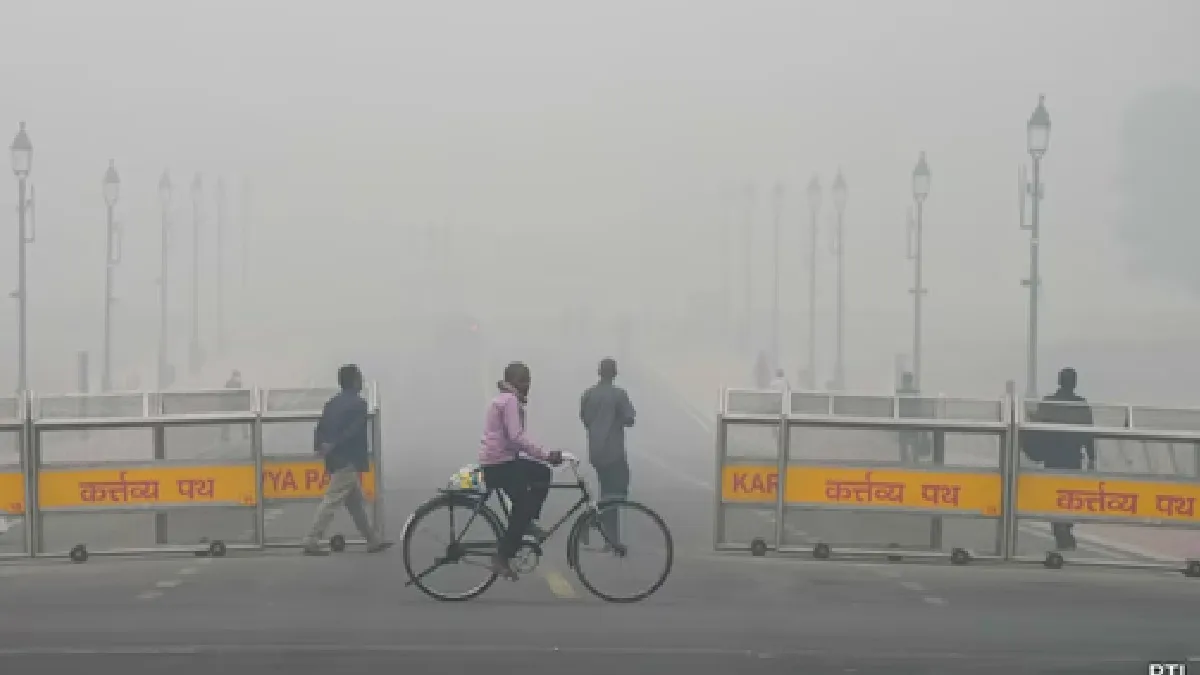
Delhi-NCR Pollution: The Centre for Science and Environment (CSE) on Saturday said that as much as 65 per cent of Delhi's air pollution in 2025 originated from outside the city, mainly from other NCR districts. The CSE, citing fresh data, stated that local sources accounted for the remaining 35 per cent.
Manoj Kumar N, an analyst from CREA, said transboundary pollution from NCR districts and neighbouring states plays a major role in Delhi's air pollution. Delhi's geographical location also makes it vulnerable, as northerly and north-westerly winds carry polluted air from surrounding regions into the city, he stated, adding that addressing Delhi's pollution crisis, therefore, requires coordinated, airshed-level action rather than city-specific measures alone.
Here Are The Highlights From The CSE Analysis
- Winter-period inputs from the Decision Support System indicated that pollution transported into the national capital outweighed emissions generated within the city during 2025.
- Winter-period source attribution figures showed that vehicular emissions accounted for nearly half of Delhi's local PM2.5 pollution, surpassing contributions from industry, construction and other combustion sources, even as transboundary pollution remained the dominant overall contributor.
- The data also showed a sharp reduction of about 10.6 per cent in the contribution of stubble burning to Delhi's PM2.5 levels during the 2025 winter season from the previous 2024 season.
- During the October 15 to November 30 crop-residue-burning period, stubble burning contributed an average of 4.9 per cent to PM2.5 pollution in 2025, compared with 15.5 per cent during the same period in 2024, the figures indicated.
- Daily figures showed that in 2025, the highest stubble burning contribution was recorded at 22.47 per cent on November 12, followed by 16.48 per cent on November 15 and 16.14 per cent on November 17. In 2024, the contribution peaked significantly higher, with the figures reading 37.52 per cent on November 15, 35.18 per cent on November 1 and 33.33 per cent on November 14.
Recommended For You
- For PM2.5 concentrations, the data showed that Bahadurgarh emerged as the largest NCR contributor in 2025, recording the highest concentrations during January, October, November and December, with an annual average PM2.5 level of about 173 micrograms per cubic metre.
ALSO READ: Smog Stories: Delhi Remains World's Most Polluted City; Is There Any Hope For Clear Air Ever?
- For PM10, the figures showed that Dharuhera in Haryana remained the largest external contributor in 2025, with an annual average concentration of around 278 micrograms per cubic metre, largely driven by elevated levels during October, November and December.
- Air quality category figures showed that Delhi's annual average AQI stood at 201 in 2025, with no 'good' air quality days recorded.
- The city logged 79 satisfactory days, 121 moderate days, 86 poor days, 71 very poor days and eight severe days during the year.
In comparison, the figures for 2024 showed 66 satisfactory days and 17 severe days, while the number of very poor days remained nearly unchanged at 70.
(With PTI inputs)