
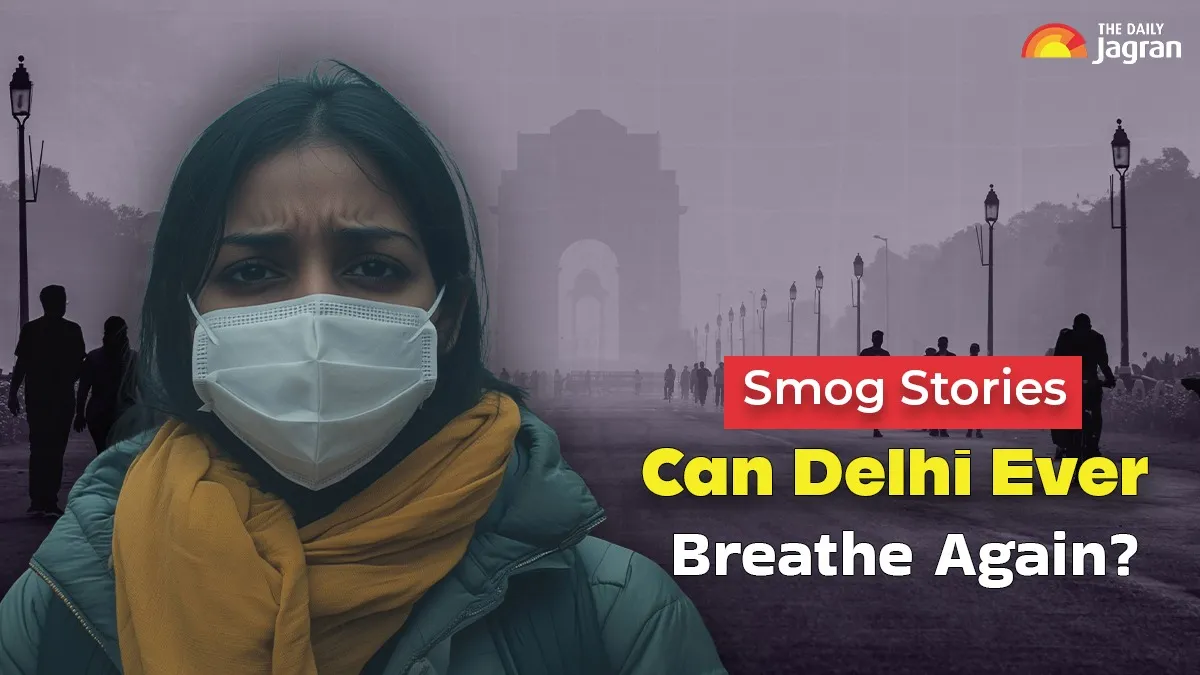
Smog Stories: Delhi's air quality remains a significant cause for concern even in the New Year, despite the Air Quality Index (AQI) improving slightly to the ‘Poor’ category from the ‘Very Poor’. Delhi’s air pollution menace peaks during the winter months, trapping toxic particles in the atmosphere and making the air unbreathable for residents. Schools close down, flights are delayed, hospitals see a rise in respiratory cases, and daily life slows down.
With health warnings issued for everyone, especially vulnerable groups such as children, the elderly, and those with pre-existing health conditions, it is clear that the city’s pollution crisis is far from over. Residents are still experiencing breathing discomfort, with most people opting for air purifiers, but for how long? This raises an important question: can Delhi's smog ever clear up permanently, or is it an unavoidable reality?

Does the Smog Ever Clear in the NCR Region?
Yes, it does, but usually only temporarily. Delhi’s air quality improves when strong winds blow pollutants away. Additionally, rain helps to wash dust and particles out of the air, and emergency pollution control measures, such as the GRAP stages, are enforced. However, these improvements typically last only a few days. Once the weather conditions change or pollution sources remain active, the smog returns.
Recommended For You
Experts suggest that reforestation and increased green cover could help reduce the effects of air pollution. If we examine the Air Quality Index (AQI) data over recent years, a clearer picture emerges while smog does clear at times during the year, the overall situation remains concerning.
Delhi recorded its best average air quality in eight years for the January to October period in 2025, excluding the pandemic year of 2020, according to data released by the CAQM. The average AQI stood at 170, improving from 184 in 2024 and 172 in 2023. This shows a steady decline since January 2018, when the average was 201.
World’s Most Polluted City: Delhi
New Delhi has remained at the top of the list for the world’s most polluted cities since 2021, with residents breathing unhealthy air. Greater Noida ranks second, followed by Noida, Ghaziabad, Faridabad, and at sixth is Gurgaon, according to aqi.in.

Expert Opinion: Can Delhi’s Smog Ever Clear Up?
The Daily Jagran spoke with Aakiz Farooq, an environmentalist and Climate and Energy Campaigner at Greenpeace India.
Talking about the primary factors contributing to the persistent smog in Delhi, especially during the colder months of recent years, he said, “Delhi sees high levels of air pollution due to several reasons, but the dominant factor is emissions from vehicles. This is something no one is talking about. Delhi has around 1.5 crore registered vehicles, the majority of which are private vehicles. The problem becomes more severe when we consider the growing number of SUVs in Indian cities. SUVs emit more CO2 compared to smaller sedan vehicles."

Discussing measures to reduce air pollution in Delhi over the next 5-10 years, he said, "One effective step would be to limit the rising number of cars. The government should introduce policies to restrict car use, like Beijing, which reduced pollution by doing the same."
"Our public transport system also needs improvement. The Delhi Metro is expanding, but it isn't used by everyone. The majority still rely on public buses, many of which are in poor condition. Delhi currently has around 5,000 buses, a sharp decline from 8,000 last year."

When asked about feasible technologies or solutions to reduce pollution in the coming years, he responded, "The government has focused on short-term measures, like water spraying and smog towers, but these don’t work. A dedicated budget is needed for long-term solutions: improving public transport, enhancing green spaces, protecting forests, and cutting fossil fuel subsidies. Money should be invested in transport, and pollution control for industries should be stricter."
He added that Delhi needs to rethink urban planning. "We've been concreting over the city in every way possible, destroying forests and green spaces. Over the years, Delhi has been designed to cater to private vehicles, corporations, and industries, not the people or its biodiversity. Delhi must focus on preserving green spaces and forests and invest more in public transport, especially buses."
ALSO READ: Smog Stories: How Delhi's Air Pollution Crisis Escalated After 2010 | Reason And Timeline
He stressed the importance of waste management. Delhi generates 11,342 tonnes of waste daily, but most ends up in landfills, adding to pollution. With a growing population, waste generation will only rise.
Conclusion
Delhi’s air pollution crisis is a persistent and growing challenge, one that demands urgent attention and sustained effort from all sectors of society. While temporary improvements can be achieved through weather conditions or emergency measures, it is only through long-term, comprehensive solutions that the city can hope to tackle this issue effectively. The government must take decisive action to improve public transport, enforce stricter pollution controls, and invest in green infrastructure. At the same time, industries must be held accountable for their emissions, and citizens must do their part in reducing their carbon footprint.
(This article is part of the series 'Smog Stories'. To read more articles in the series, click here)