

- By Akansha Pandey
- Sat, 10 Jan 2026 12:54 PM (IST)
- Source:Jagran News Network
The root cause of the contaminated drinking water problem in the capital is the decades-old pipelines buried underground. According to a Delhi Jal Board report, out of the capital's 15,600-kilometer-long pipeline network, 2,800 kilometers—or about 18 per cent—are more than 30 years old.
In several areas, the age of these pipelines has reached 50 to 80 years, causing the water reaching homes to frequently be contaminated. The Delhi High Court and the National Green Tribunal (NGT) have made strong comments on this issue multiple times.
Although Delhi depends on neighboring states for nearly 90 per cent of its drinking water needs, about 55 per cent of the water released from treatment plants does not reach consumers due to leakage, theft, and technical faults. In many places, water is becoming contaminated because sewer lines are laid alongside drinking water lines.
Court Reprimands And The Tanker Mafia's Gain
Cases regarding the supply of contaminated water in areas such as Yojana Vihar, Anand Vihar, and Janakpuri have reached the courts. While the government claims that 93 per cent of households have tap connections, unauthorised colonies like Sangam Vihar and Deoli, as well as slum clusters, still lack a regular water supply. Taking advantage of this, the tanker mafia is selling stolen water to the people.
 (Image: Gemini Generated)
Corruption, Funding Crisis And Maintenance Delays
In recent years, the situation worsened due to disputes between the Aam Aadmi Party government and the Central government, along with allegations of corruption within the Delhi Jal Board. In 2023-24, the Finance Department delayed the release of funds, which stalled maintenance work. Although funding has resumed following the formation of the new government, improvements on the ground remain slow.
Major Overhaul Begins After 14 Years
The Chandrawal and Wazirabad command area projects, proposed in 2011 to improve Delhi's dilapidated water network, remained stuck for 14 years due to delays in tenders and funding. Frustrated by administrative hurdles, the Asian Development Bank (ADB) had even withdrawn funding at one point. In 2025, funds were restored following the new government's initiative, and the tender process was completed.
Where The System Will Change
In Chandrawal Command Area (96 sq km):
- 1,044 km of new pipelines.
- 21 Underground Reservoirs (UGR).
- Areas covered include Karol Bagh, Patel Nagar, Model Town, Kashmere Gate, Paharganj and Jama Masjid.
In Wazirabad Command Area (123 sq km):
- 1,700 km of new pipelines.
- 14 Underground Reservoirs.
- Areas covered include Burari, Rohini, Jahangirpuri, and Pitampura.
What Has Been Done And What Is Planned
- In 2–3 years: 7,000 kilometers of pipelines will be replaced; this is the Phase-1 target.
- In 7–8 years: The overhaul of the entire Delhi water network will be completed.
- In the last 11 months, 262 new tube wells have become operational.
- 90 lakh gallons of additional water have been added to the daily supply.
- Work on 200 km of new pipelines has already begun.
- More than 1,300 District Metered Areas (DMA) will be created to stop water wastage.
Contaminated Samples And Increasing Wastage Due To ROs
In the water quality report from December 22–26, 100 out of 7,129 samples were found to be unsatisfactory. Poor quality samples were found in areas like Mansarovar Park, Palam DDA Flats, Dwarka Sector-13, Uttam Nagar, Burari, Jonapur, and Ghitorni.
Due to faults in the pipelines, people are relying on RO systems. There are about 80 lakh domestic ROs installed in Delhi, which are causing the wastage of more than 4 crore liters of drinking water daily.
ALSO READ: Haryana: Debt-Ridden Farmer Dies By Suicide In Ahmedpur Majra After Harassment By Lenders
Government Plans
- Rs 9,000 crore allocated for water and sewer in the 2025-26 budget.
- Agreement with IIT Kanpur to improve water management.
- Rs 734 crore allocated to 68 assembly constituencies.
AMRUT-1 Scheme: 200 km of pipelines replaced at a cost of Rs 800 crore.
AMRUT-2 Scheme: The network will be strengthened in unauthorized colonies and slums with Rs 2,880 crore.
While Delhi will have to depend on the 50–80-year-old pipelines buried underground for several more years, this overhaul, starting after a gap of 14 years, is considered a major step toward providing clean drinking water to the capital.
Understanding Delhi's Pipeline Crisis At A Glance
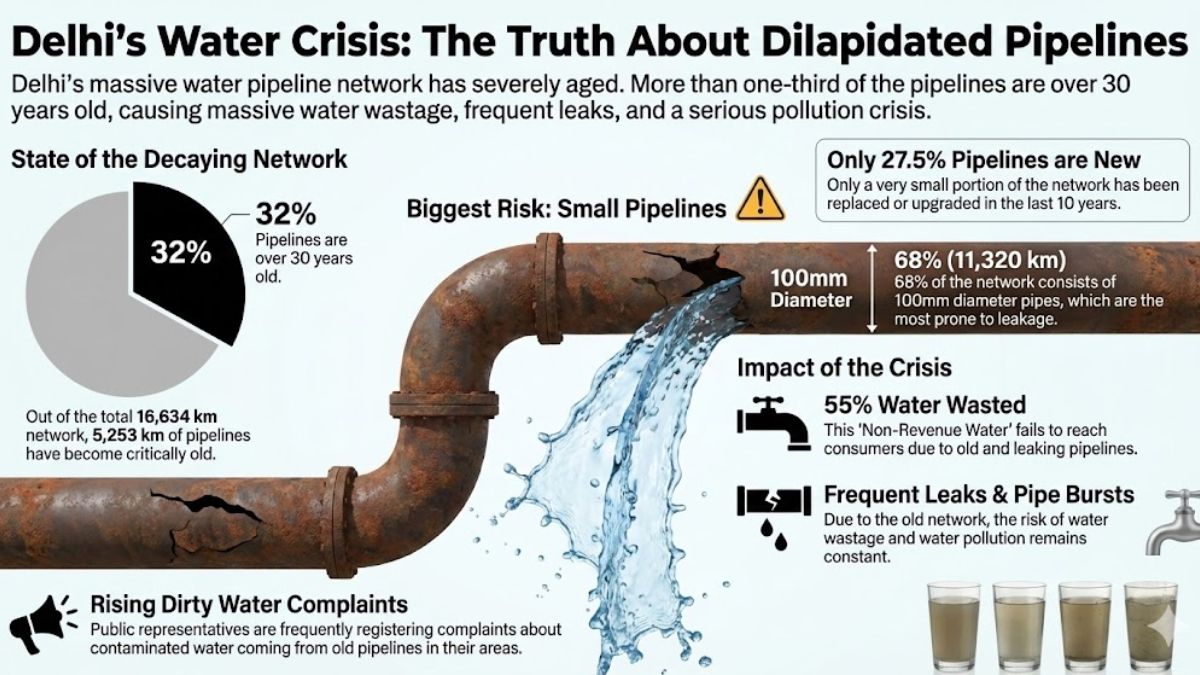
Network Spread: A total of 16,634 km of water pipeline network is spread across the city under the Delhi Jal Board.
Danger Of The Old System: About 5,253 km (approximately 32 per cent) of pipelines are more than 30 years old, indicating severe dilapidation in the system.
New vs. Old Pipelines: About 48 per cent of the network is over 20 years old, while only 27.5 per cent of the pipelines have been laid in the last 10 years.
Large Network Of Small Pipes: Pipelines with a 100 mm diameter span approximately 11,320 km—accounting for about 68 per cent of the entire network.
Which Pipes Are At Highest Risk: Of these 100 mm pipes, more than 3,350 km are over 30 years old, making them the biggest cause of leakage and dirty water.
Medium Age, Increasing Maintenance: About 4,058 km (24 per cent) of pipelines fall into the 10–20 years category, which will soon require heavy maintenance.
Large Diameter Pipes – Few but Crucial: Pipelines larger than 600 mm are few in number, but they are the main trunk lines—a fault in these can stall supply to large areas simultaneously.
The Ground Reality
Daily Leakage And Burst Pipes: Due to the dilapidated network, incidents of leakage and bursting pipes are frequent in the city, increasing water wastage and the risk of pollution.
Complaints From Representatives Regarding Dirty Water: MLAs have consistently registered complaints about dirty water in their areas, which have been directly linked to old pipelines.
Burden Of Neglect: The government states that this situation has arisen due to years of neglect, delays in decision-making, and failure by previous governments to upgrade on time.
Repair Plans Hanging In Limbo: Pipeline improvement projects for the Chandrawal and Wazirabad command areas remained stuck for years due to the repeated cancellation of tenders.
Biggest Loss - Non-Revenue Water: Due to old pipelines, up to 55 per cent of water in Delhi flows away without generating revenue, significantly reducing the amount of water that reaches actual consumers.