
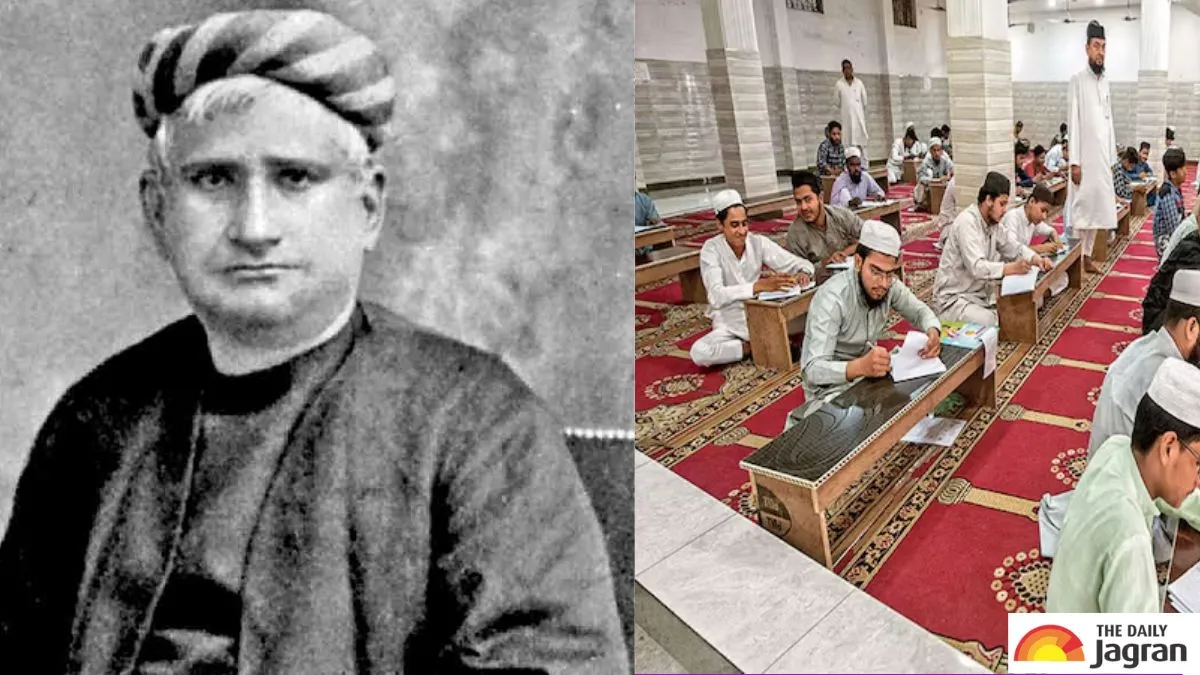
Vande Mataram In WB Madrasas: The newly formed BJP government in West Bengal, led by Chief Minister Suvendu Adhikari, has issued a notification making the singing of 'Vande Mataram' mandatory during morning prayers in all government-aided and private madrasas across the state.
Following its implementation in regular schools, the new BJP-led government in West Bengal has extended the mandate to all madrasas in the state. According to the official notification, it is now compulsory for all students and staff members to sing the national song, 'Vande Mataram', during morning prayer assemblies. This strict directive applies uniformly to both government-aided and non-government (private) madrasas.

Chief Minister Suvendu Adhikari's administration has taken this major step with the stated goal of strengthening the spirit of patriotism and national unity among students. However, the decision has already triggered criticism, with opposition parties and certain organiSations raising concerns. Critics argue that enforcing such mandates on religious educational institutions could potentially ignite societal controversies.
Recommended For You
Government's Mandate on Madrasas
The core outcome of this policy is the legal institutionalisation of 'Vande Mataram' across West Bengal's Islamic educational framework. Madrasas, which traditionally operate with a focus on religious schooling, must now restructure their daily morning assemblies to accommodate the state-mandated national song alongside their standard prayers.
Administrative Stance on National Unity
From the government's perspective, this move establishes a uniform code of national respect across all educational platforms, regardless of their religious affiliation. Chief Minister Suvendu Adhikari is positioning his administration as one that prioritizes strong, decisive actions aimed at integrating religious institutions into the mainstream national identity.
Rising Political and Social Opposition
The immediate fallout of the notification is a brewing socio-political debate within the state. Opposition leaders and minority organizations view the order as an unnecessary interference into the functioning of religious institutions, warning that pushing such mandates could deepen community divisions and lead to legal challenges.