

- By Sarju Saran Tiwari
- Thu, 02 Jul 2026 01:15 PM (IST)
- Source:JND
- Indus Waters Treaty was signed by India and Pakistan in 1960.
- Treaty faced challenges over hydroelectric projects; disputes escalated.
- India placed treaty in abeyance in 2025 after terror attack.
General Knowledge Special: The Indus Waters Treaty is one of the most important international agreements signed between India and Pakistan after Independence. Even after wars and diplomatic tensions, the treaty remained operational for decades and was often described as one of the world's most durable water-sharing agreements.
The topic has once again become important for current affairs and competitive examinations following recent disputes over hydroelectric projects and India's decision in 2025 to place the treaty in abeyance. Here is everything aspirants need to know about the agreement.
What Is the Indus Waters Treaty?
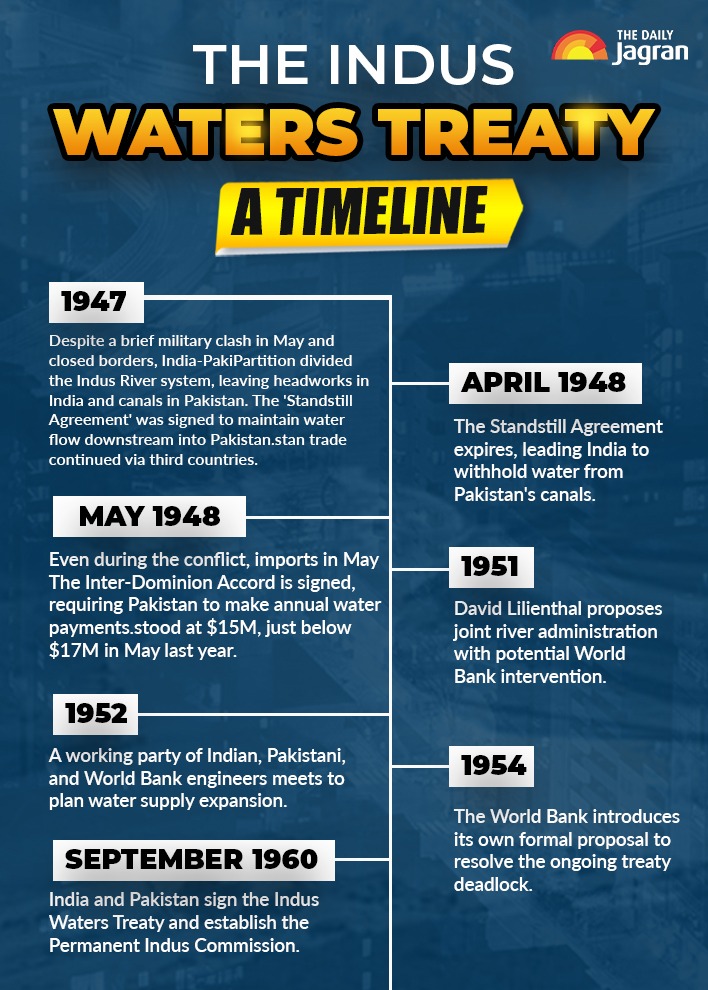
The Indus Waters Treaty was signed between India and Pakistan on September 19, 1960, with the World Bank acting as a mediator. The agreement defines the rights and responsibilities of both countries regarding the use of the waters of the Indus River system.
The treaty also established the Permanent Indus Commission to ensure regular communication between the two countries and to resolve disputes related to the implementation of the agreement.
Indus Waters Treaty: Chronology at a Glance
Which Rivers Were Allocated to India and Pakistan?
Under the treaty, Pakistan received control over the three western rivers: the Indus, Jhelum and Chenab. India was given control over the eastern rivers: Ravi, Beas and Sutlej.
Although the western rivers were allocated to Pakistan, India retained limited rights to use their waters for domestic purposes, irrigation and hydroelectric projects under specific treaty conditions.

How Has the Treaty Been Challenged in Recent Years?
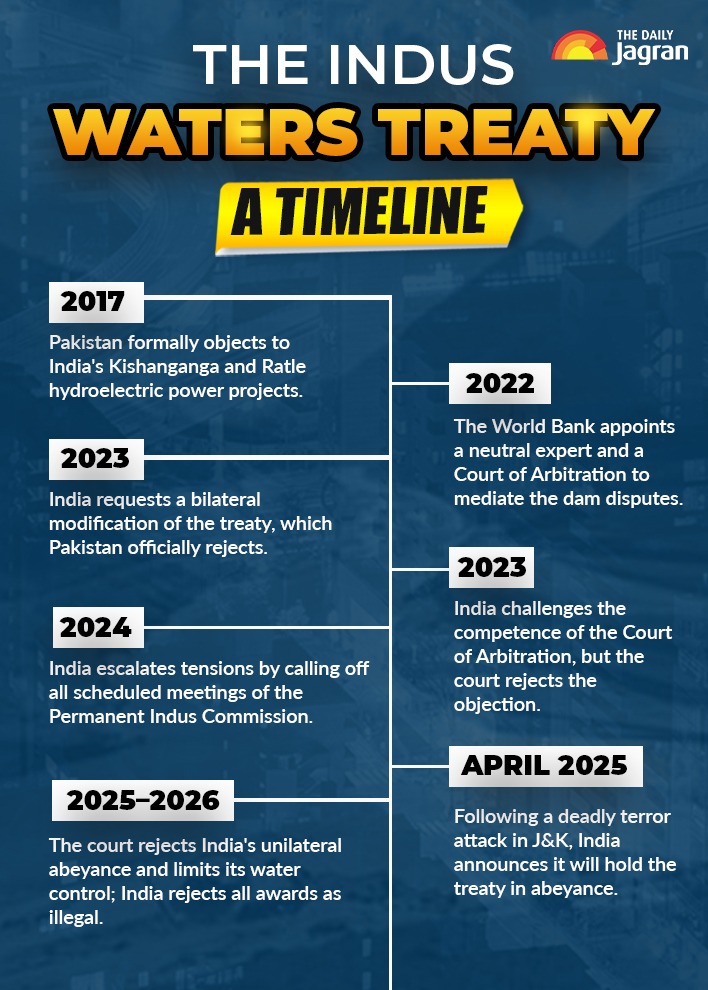
The treaty faced major challenges after Pakistan raised objections to India's Kishanganga and Ratle hydroelectric projects. The dispute eventually led to the involvement of both a neutral expert and an international court of arbitration in 2022.
The situation escalated further in 2023 when India sought modifications to the treaty, while Pakistan opposed the proposal. India also suspended meetings of the Permanent Indus Commission in 2024.
ALSO READ: VTU Announces Engineering Results Just Five Minutes After Exam Ends, Resets Own Record
What Happened in 2025 and Why Is It Important?
In April 2025, following a deadly terrorist attack on civilians in Pahalgam, Jammu and Kashmir, the Government of India announced that it would temporarily suspend the treaty. This marked the first major disruption to the agreement since it was signed in 1960.
This development drew global attention because the treaty had endured despite multiple wars and military tensions between India and Pakistan, and was widely regarded as one of the world's oldest and most successful water-sharing agreements.
Stay tuned to 'The Daily Jagran' for more such topics of general knowledge to enhance your understanding and improve your performance in examinations.