
Bhojshala Temple Case: Hindu organisations in Madhya Pradesh's Dhar district indulged in celebrations after their decades-old claim got a legal validation over the disputed Bhojshala Temple-Kamal Maula Mosque Complex. On Friday, the Madhya Pradesh High Court declared that the 11th-century monument belongs to the Hindu side, saying the ASI site is a temple dedicated to Goddess Saraswati. The court also said that the Muslim community may approach the state government for allotment of separate land in the district for the construction of a mosque.
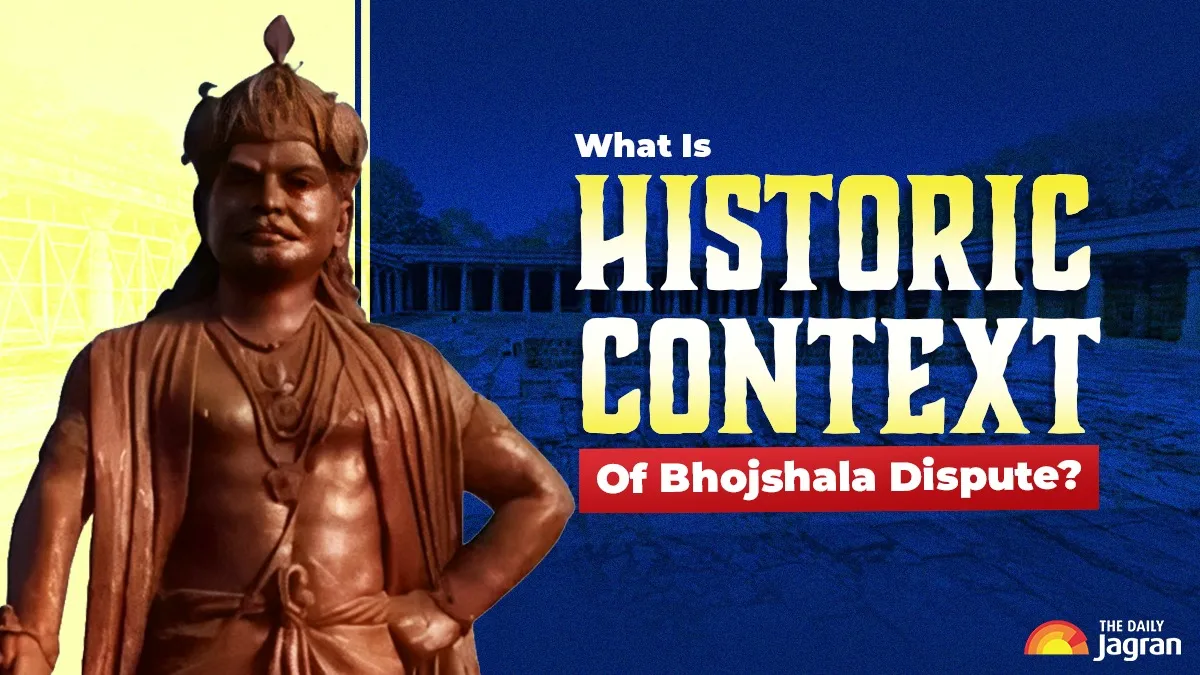
What Is The Historic Context Of The Dispute?
The emperor of the Paramara dynasty, Raja Bhoja (1000-1055 AD), was an ardent patron of learning and literature. He founded an education centre at Dhar, which subsequently came to be known as Bhojshala (Saraswati temple), where students from far used to come to get education.
According to the Dhar District website, remnants of the Bhojshala are still seen in the Kamal Maulana Mosque complex, which was turned into a mosque by the subsequent Muslim masters of Dhara.
#WATCH | Dhar, Madhya Pradesh | On Dhar-Bhojshala case, advocate Vishnu Shankar Jain says, "The Indore High Court has delivered a historic verdict, partially setting aside the ASI's order dated April 7, 2003. Furthermore, the Court has granted the Hindu side the right to worship… pic.twitter.com/gilTokeGJy
— ANI (@ANI) May 15, 2026
The slabs in the site contain two odes to the Kurmavtara or crocodile incarnation of Vishnu written in Prakrit, the district authorities said, adding that two sarpabandha pillar inscriptions, one containing the Sanskrit letters. These inscriptions are in the characters of the 11th-12th Century AD.
Recommended For You
Delhi Ruler Attacked Temple And Built Mosque
The shala (education centre), established probably by Bhoja in 1034 AD and patronised by his worthy successors, was converted into a mosque in the 14th Century AD. Around 1305 AD, Dhar was attacked by Ain-ul-Mulk Multani, governor of the Delhi Sultanate, Alauddin Khalji. The temple was damaged, and its pillars, stones, and materials were reused to build a mosque. Later, it was named Kamal Maula Mosque in memory of the Sufi saint Kamaluddin Chishti in 1331 AD. Dilawar Khan (1401 AD) and other rulers made further modifications in the fifteenth century.
ALSO READ: What Is Bhojshala-Kamal Maula Mosque Dispute? How ASI Claims Of Temple Remains Alters Ongoing Debate
The claim over site from Hindus and Muslims has been continued during and after British rule. In recent times, an ASI's order on April 7, 2003, permitted Hindus to worship at the complex every Tuesday and Muslims to offer namaz there every Friday, providing a window to the Hindu side to fight legally in the court. After 23 years, the Madhya Pradesh High Court on Friday declared the site a Hindu temple, turning down the Muslim side's claim.