
- By Yashashvi Tak
- Wed, 03 Dec 2025 01:13 PM (IST)
- Source:JND
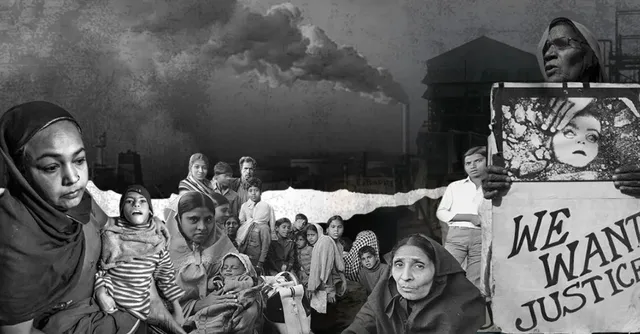
The Bhopal Gas Tragedy has now completed 41 years and every year on December 3rd, candles are lit at the memorial. December 1984, on the night between December 2nd and 3rd, the air in Bhopal was filled not with oxygen, but with death. That is why the night of December 3rd is not just a date on a calendar-it is a permanent stain on India’s largest administrative failure and corporate negligence, a stain that has remained untouched even after 41 years. That midnight, Union Carbide’s Methyl Isocyanate (MIC) gas claimed thousands of lives and shattered millions more.
Every year, leaders deliver speeches and rituals are performed, yet the streets of JP Nagar still carry the weight of unanswered grief. The people here still ask a haunting question: death came that night, but who is killing us slowly while we remain alive? The 41st anniversary of the Bhopal Gas Tragedy reminds us that this is not just a historic disaster-it's an ongoing crime. Until justice, healing, and accountability are secured, that night will continue to breathe through Bhopal’s air.
Today, the question stands stark: has the tragedy become history, or is Bhopal still inhaling the same poison with every breath? The story of 1984 is also the pain of 2025. In JP Nagar, just steps away from the factory, the air still carries toxic particles. People here haven’t aged simply with time, the gas forced premature aging upon them.
Seventy-year-old Nafisa B. gasps for air after only a few steps. The gas stole her husband and three children. She receives Rs 1,200 in gas relief and survives by running a small shop. On the same street, 66-year-old Abdul Hafeez begins coughing even while speaking. Once a painter, he now struggles to move his limbs. He recalls the horror of that night: “Doctors declared my 14-year-old niece dead. I picked her from a pile of bodies, and then her fingers trembled, she was alive. I can still see that tremble.”
Sixty-year-old Shahida Bi’s life looks like the ruins of a war. Her young son died in her lap calling, “Amma… Amma.” The gas’s long-term effects later caused her husband’s cancer, and now she herself battles multiple illnesses. For her, the endless hospital visits are the biggest ordeal.
The Bhopal Memorial Hospital was built in the name of the victims, but they allege, “They don’t give medicines here, only waiting.” Even today, most victims must rely on expensive private treatment because government hospitals suffer from medicine shortages, long queues, and a lack of doctors. The only consistent response given to their suffering is: “This is the gas effect. It will continue. Life will continue like this.”
The toxicity has seeped into the blood and genes of the third generation. Children are being born with deformities, cancers, brain damage, and developmental delays. While a healthy child begins walking by nine to twelve months, children from gas-affected families often take a year and a half. Miscarriages remain high, and infant mortality is several times above normal levels, findings supported by the National Institute for Research in Environmental Health.
Scientific studies show that MIC is genotoxic, directly attacking DNA and chromosomes. The earliest study in 1986 revealed severe chromosomal damage in victims. Scientists say its effects persist across generations, and even the third generation of Bhopal shows clear symptoms.
Bhopal’s People Still Say:
“We died that night; only the date changed. Our bodies don’t work. Our eyes burn. Our lungs tire crossing a room. For us, December 3, 1984 is not a memory, it is every day. Governments changed, leaders changed, statements changed, but even today no real remedy has been found for the pain of Bhopal’s gas victims.”