
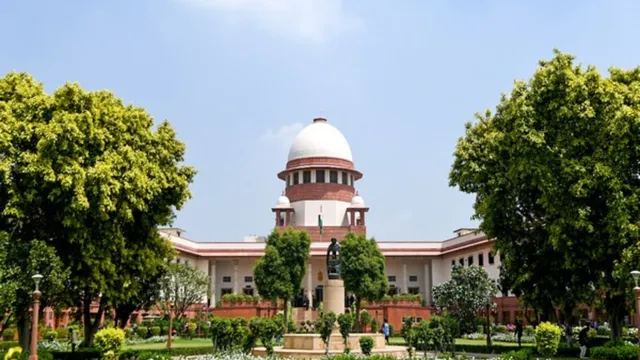
The Centre on Thursday filed an affidavit in the Supreme Court opposing the petitions that have called for the criminalisation of marital rape in India. It said that the matters relating to the marital rape will have very far-reaching socio-legal implications in the country. The Union government also added that the matter needs a comprehensive approach rather than a strictly legal approach.
"While exercising such judicial review on such subjects (marital rape), it is to be appreciated that the present question is not only a constitutional question, but essentially a social question on which the Parliament, after being apprised and being aware of all sides of the opinion on the present issue, has taken a position," said centre in the apex court.
Centre files affidavit and informs Supreme Court that matters relating to marital rape will have very far-reaching socio-legal implications in the country and therefore, needs a comprehensive approach rather than a strictly legal approach.
— ANI (@ANI) October 3, 2024
Centre submits that "while exercising… pic.twitter.com/JluWUhj0V0
The Centre in apex court said that after being apprised and being aware of all the sides of the opinion on the present issue has decided to retain Exception 2 to Section 375 of IPC in 2013 while amending the said section in the year 2013.
Recommended For You
"In the fast-growing and ever-changing social and family structure, misuse of the amended provisions can also not be ruled out, as it would be difficult and challenging for a person to prove whether consent was there or not," Centre to Supreme court as quoted by news agency ANI.
The affidavit said a husband certainly does not have any fundamental right to violate the consent of the wife, however, attracting the crime in the nature of "rape" as recognised in India to the institution of marriage can be arguably considered to be excessively harsh and therefore, disproportionate.
It also said that the question involved in the petitions may not be treated merely as a question concerning constitutional validity of a statutory provision as the subject matter has and will have very far-reaching socio-legal implications in the country.
"Therefore, it is respectfully submitted that if the legislature decides to exempt, from the rigour of such a charge, and such a label, husbands, vis-a-vis their wives, given the intelligible differentia that exists in a marital relationship vis-a-vis other relationships, the said decision and discretion should be respected and not interfered with especially when a separate suitably tailored penal remedy is provided by the Legislature," it said.
A bench headed by Chief Justice D Y Chandrachud is seized of various pleas on the issue. The top court on January 16, 2023 sought the Centre's response on a clutch of petitions assailing the IPC provision, which provides protection to a husband against prosecution for forcible sexual intercourse if the wife is an adult.
Later, it also issued a notice to the Centre on a similar plea challenging the BNS provision on the issue.
ALSO READ: 'Willing To Work:' Chinese Ambassador Calls For Better Bilateral Relations With India
The BNS, Bharatiya Nagarik Suraksha Sanhita and the Bharatiya Sakshya Adhiniyam came into effect from July 1, replacing the IPC, Code of Criminal Procedure (CrPC) and the Evidence Act, respectively.
(With input from agencies)