
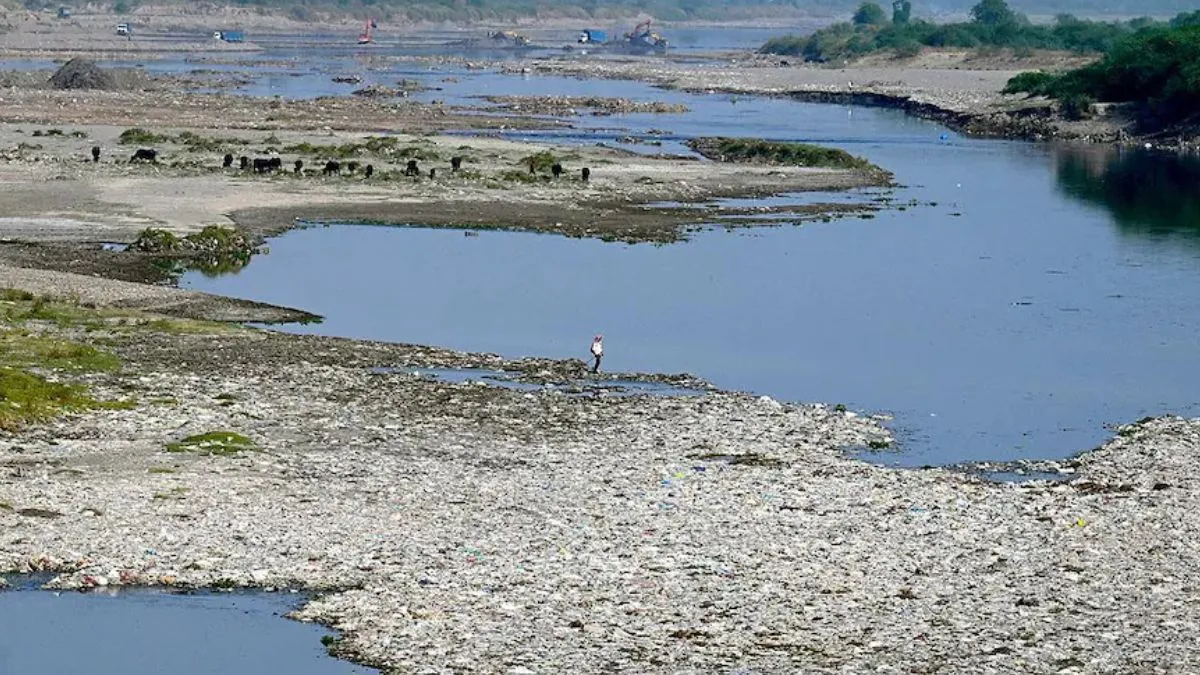
Delhi residents are facing a water shortage amid intense heatwave after the Yamuna water levels have dipped in the tail-end areas. The Delhi Jal Board officials said that the reduction of raw water in the Yamuna has led to disruptions at the Wazirabad and Chandrawal water treatment plants (WTPs).
The residents have complained that they have not received any prior advisory before the water shortage.
Crisis Widens Amid Heatwave
Wazirabad WTP supplies approximately 134MGD (million gallons per day) water to parts of north and central Delhi, while Chandrawal WTP produces 98MGD, which is supplied to north, northwest and central Delhi. The supply disruption has affected the residents severely as the heatwave conditions persist in the city. Delhi’s estimated water demand is 1,250MGD, with the DJB supplying 1,002MGD. The gap widens during the peak summer months (May-July), when demand increases while raw water availability decreases.
The major areas affected by the shortage are parts of Central Delhi, Patel Nagar J Block, West Patel Nagar, parts of Dwarka, Ambica Vihar Society, Paschim Vihar, Ramesh Enclave, and Sudarshan Park, which were severely hit.
The authorities said that talks are going on with Haryana to release additional water upstream Hathnikund to cope with the shortage. The national capital receives majority of its raw water from neighbouring UP, Haryana, and Punjab.
What Did The Officials Say?
A senior DJB official said that, due to a shortage of raw water in the river channel, the levels have fallen below 670 ft. “The water levels in the Yamuna are hovering around 669.8ft. The water supply from Wazirabad is 25% down, while the Chandrawal supply has been decreased by around 10 per cent,” Hindustan Times quoted an official as saying.
Recommended For You
A second Jal Board official, who did not wish to be named, said that due to depletion of pond level at Wazirabad, city authorities are trying to divert raw water from the Carrier Lined Canal (Munak) towards Wazirabad. “If the water level continues to go down, the water production will be severely impacted. We will have to deploy specialised pumps, along with boats, to suck water from the pondage area,” the official said.