

- By Akansha Pandey
- Sat, 21 Feb 2026 03:14 PM (IST)
- Source:JND
The 'Namo Bharat' project, a cornerstone of modern, high-speed, and sustainable transit in the National Capital Region (NCR), is entering its final phase. Designed for a top speed of 180 kmph and an operational speed of 160 kmph, this high-frequency rail system aims to make travel between Delhi and its satellite cities faster, safer and significantly more comfortable.
The project carries a total investment of Rs 30,274 crore, backed by major international lenders including the Asian Development Bank (USD 1 billion), the New Development Bank (USD 500 million) and the Asian Infrastructure Investment Bank (USD 500 million).
-1771666588097.jpg)
Funding And Timeline
The financial structure involves a 20 per cent stake from the Central Government, while the Delhi and Uttar Pradesh governments contribute 3.22 per cent and 16.78 per cent, respectively. Since its foundation stone was laid on March 8, 2019, the project has seen rapid progress:
October 20, 2023: The 17 km primary section between Sahibabad and Duhai Depot was inaugurated.
March And August 2024: Service extended to Modinagar North and subsequently to Meerut South.
January 5, 2025: Prime Minister Narendra Modi inaugurated the 13 km stretch between Sahibabad and New Ashok Nagar, marking the train's arrival in Delhi.
February 22, 2026: The corridor is set for full completion with the opening of the final 5 km section (New Ashok Nagar to Sarai Kale Khan) and the 21 km stretch (Meerut South to Modipuram).
Corridor Specifications At A Glance
Total Length: 82.15 km (14 km in Delhi, 68 km in UP).
Infrastructure: 70 km elevated and 12 km underground.
Depots: Two maintenance hubs at Duhai and Modipuram.
Stations: 16 state-of-the-art stations.
Fare Structure
The distance-based fare system caters to two travel classes:
Standard Class: Rs 20 to Rs 150.
Premium Class: Rs 30 to Rs 225.
Example: A trip from New Ashok Nagar to Meerut South costs Rs 150 (Standard) or Rs 225 (Premium).
Passenger Experience And Amenities
Each Namo Bharat train features ergonomic 2x2 seating, overhead luggage racks and laptop or mobile charging points at every seat. To enhance safety and comfort, the trains are equipped with:
- Large double-glazed tempered safety windows.
- Dynamic route maps, infotainment displays and emergency communication systems.
- CCTV surveillance, fire or smoke detectors and fire extinguishers.
- Selective "push-button" door opening to optimise climate control.
- A dedicated Premium coach (first coach) and a reserved coach for women in every train.
ALSO READ: PNB Fraud Case: ED Likely To Seek Fugitive Status For Mehul Choksi’s Son And Wife In Charge Sheet
Meerut Metro: A Unique Hybrid System
In a first for India, the Meerut Metro will operate on the same tracks as the Namo Bharat trains.
Speed: With an operational speed of 120 kmph, it will be India’s fastest metro.
Coverage: 13 stations over 23 km. Four stations (Meerut South, Shatabdi Nagar, Begumpul, and Modipuram) will serve as interchange points for both Namo Bharat and Metro services.
Sustainability And 'Make In India'
The project is a flagship for green energy, incorporating:
Energy Efficiency: Regenerative braking (saving 30 per cent energy) and a 110 MW solar power plan.
Green Ratings: Sahibabad and Guldhar stations have achieved Net Zero Energy ratings from IGBC.
Manufacturing: Under the 'Make in India' initiative, all trainsets are manufactured at Alstom’s Savli plant in Gujarat. This includes 30 trains for Namo Bharat and 10 for the Meerut Metro.
Focus On Sarai Kale Khan Hub
- Sarai Kale Khan is set to become one of India's largest multi-modal hubs.
- It will eventually link the Delhi-Meerut line with proposed routes to Karnal and Alwar.
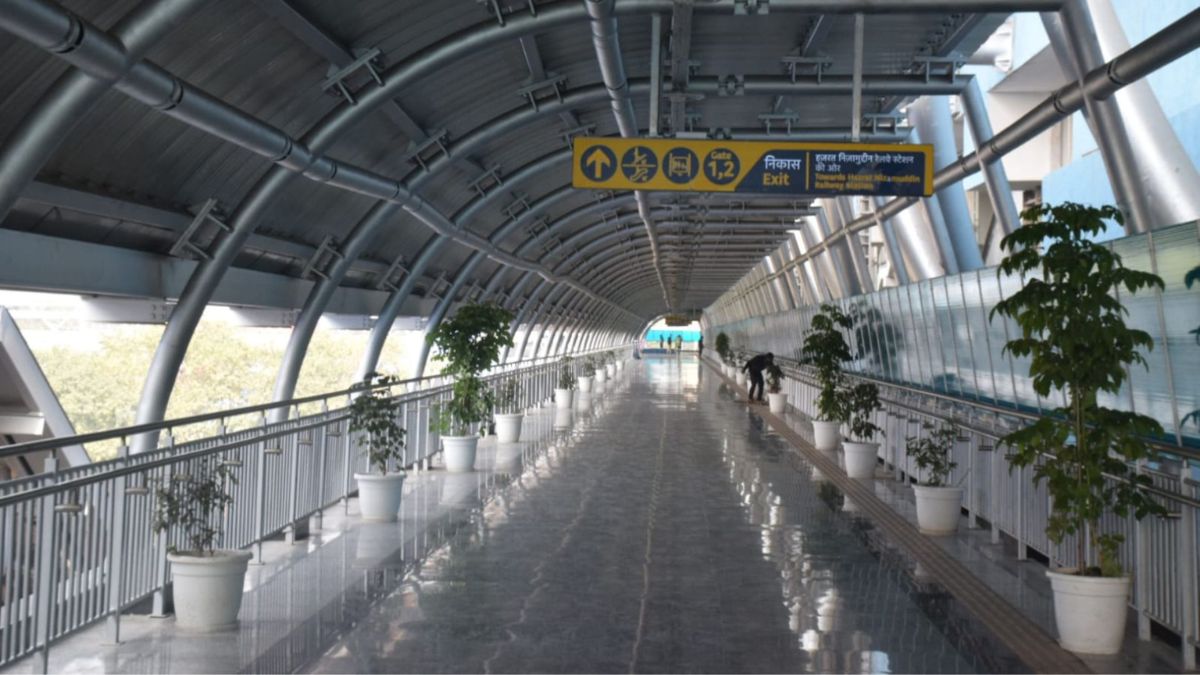
- The station features 14 lifts, 18 escalators and a 280-meter foot-over-bridge (with six travelators) connecting it directly to the Hazrat Nizamuddin Railway Station and the Pink Line Metro.
Outpacing Global Capitals: London And Hong Kong
With the integration of Namo Bharat and the Delhi Metro, the capital's mass transit network will span 743 km. This exceeds the lengths of renowned systems like the London Crossrail, Hong Kong MTR and Paris RER.
A key feature is Multi-Modal Integration, connecting stations with airports, railway terminals, ISBTs, and expressways. Namo Bharat serves as the regional backbone, while the Delhi Metro acts as a feeder service, ensuring seamless last-mile connectivity.