
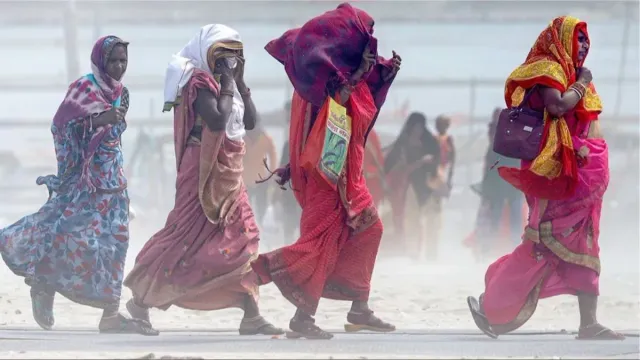
The Centre has included heatwaves in India's list of notified natural disasters, allowing states to access disaster response and mitigation funds for heat-related relief and prevention. Minister of State for Home Affairs Nityanand Rai informed the Lok Sabha that the Ministry of Home Affairs (MHA) has included heatwaves and lightning in the list of notified natural calamities under the operational guidelines for the administration of the State Disaster Response Fund (SDRF) and National Disaster Response Fund (NDRF).
The decision was taken on the recommendations of the 16th Finance Commission and will apply during the 2026-31 award period. Rai said a policy framework for providing relief assistance through the SDRF and NDRF is now in place. Heatwave mitigation projects will also be eligible for funding under disaster mitigation funds.
The government gave the information in a written response to a Lok Sabha question by MP Anoop Pradhan Valmiki on whether it planned to declare heatwaves a natural disaster under the National Disaster Management Act. Until now, heatwaves were not among the 12 categories of notified disasters, which included cyclone, drought, earthquake, fire, flood, tsunami, hailstorm, landslide, avalanche, cloudburst, pest attack and frost/cold wave.
Recommended For You
States could use up to 10 per cent of their annual SDRF allocation for relief related to disasters that were considered "local disasters". The inclusion of heatwaves in the notified list will give states wider access to disaster response funds to deal with their impact.
Greenpeace India welcomed the inclusion of heatwaves in the list of notified disasters, calling access to disaster funds a "critical victory". "Unlocking disaster funds is a critical victory, but money on paper needs to reach the person collapsing on the pavement. We cannot measure heat disasters by thermometer readings alone," Aakiz Farooq, Senior Campaigner at Greenpeace India, said.
Farooq said the impact of heatwaves should also be assessed through missed wages, heatstroke-related emergency visits and income lost by outdoor workers who are unable to work during extreme temperatures.
"The financial burden of this crisis cannot fall solely on public coffers. It is time to expand the pool of adaptation funds by making the polluters pay; holding the major fossil fuel corporations driving global temperatures accountable for the heat crisis they created," Farooq said.
20 Heatstroke Deaths, 4,853 Cases Reported Since March
The announcement comes as government data showed that 20 people have died due to heatstroke and 4,853 cases have been reported across the country since March 1 this year. Maharashtra recorded the highest number of confirmed heatstroke deaths at 11, followed by Andhra Pradesh with four. Telangana and Odisha reported two deaths each, while Tamil Nadu recorded one.
Telangana reported the highest number of heatstroke cases at 915, followed by West Bengal with 733, Chhattisgarh with 660, Andhra Pradesh with 540 and Jharkhand with 409. Delhi recorded 32 heatstroke cases and no deaths, according to the data tabled in the Lok Sabha.