
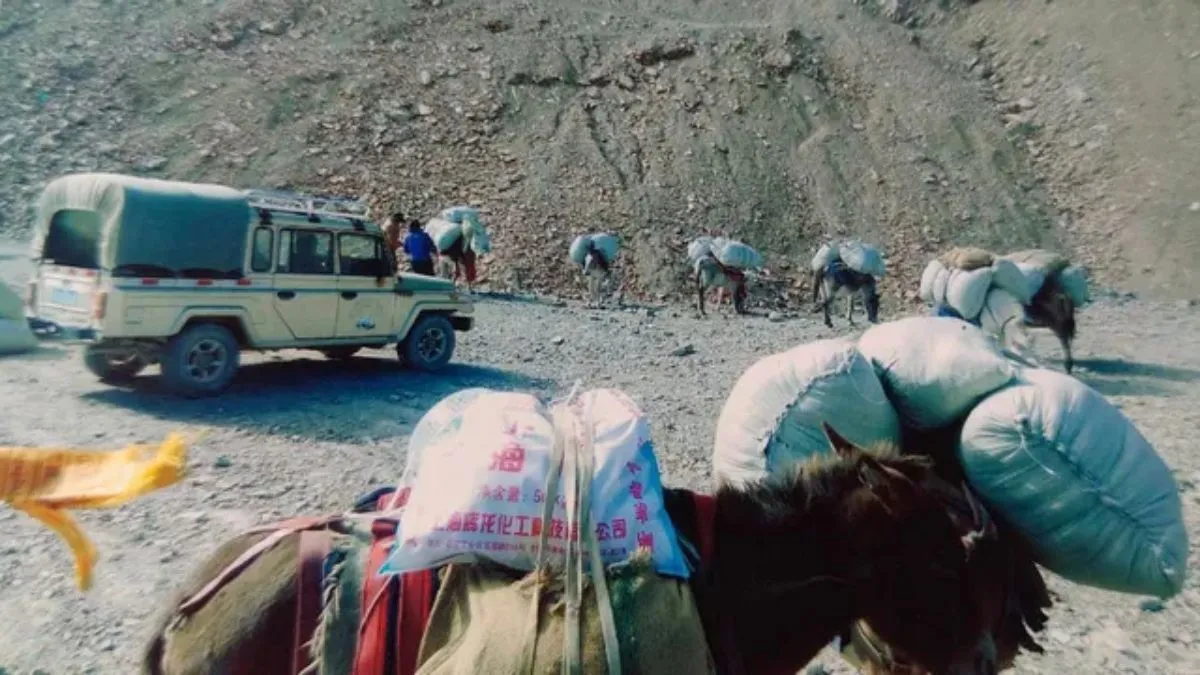
The centuries-old landscape of Indo-China border trade is undergoing a historic shift. The traditional sound of horses and mules navigating treacherous Himalayan trails is being replaced by the horns of modern vehicles. Following the strengthening of the road network up to the Lipulekh Pass, Indian traders can now transport goods directly from Dharchula to the Tibet border via motorised transport.
This infrastructural breakthrough is expected to revolutionise trade dynamics. Previously, traders endured days of arduous travel on foot or with pack animals. Now, the journey to the Indian trade hub of Gunji, which once required three to four overnight halts, can be completed in just 4 to 5 hours. Beyond saving time, this transition will drastically reduce logistics costs and allow merchants to carry significantly larger volumes of inventory.
The seasonal trade period is projected to span from June through September, with officials noting that the window could be extended if weather conditions remain favorable. This year, authorities foresee a significant increase in participation, driven primarily by the enhanced road infrastructure leading to the high-altitude pass.
Recommended For You
ALSO READ: PM Modi Creates History, Becomes Longest-Serving Head Of Govt
A Brief History Of Trade Route
Border trade in this region has faced significant interruptions over the decades:
1962: Trade was suspended following the Indo-China war and geopolitical changes in Tibet.
1992: Land-based border trade resumed after a 30-year hiatus, growing steadily until 2019.
2020: The COVID-19 pandemic halted operations. Coincidentally, major road construction was completed during this period, though traders have been unable to utilise it due to the ongoing closure.
With the current session approaching, there are strong indications that trade will finally resume, allowing merchants to use the new road for the first time.
ALSO READ: Who Is Running Iran? Mojtaba Khamenei’s Public Absence Sparks 'Command Crisis' Rumours
New Infrastructure At Taklakot
The bilateral trade relies on two primary hubs: Gunji in India and Taklakot in Tibet. Historically, Indian traders have traveled to the Taklakot mart, while Chinese traders have rarely crossed into India.
For the upcoming season, a new marketplace has been constructed in Taklakot. Both Indian and Nepalese traders are expected to operate from this modernised facility once the border officially reopens.
Impact On Trading Community
More than 400 local traders participate in this seasonal border commerce. However, the six-year hiatus since 2019 has resulted in significant financial strain.
Stalled Inventory: Many traders left their unsold goods in Taklakot warehouses at the end of the 2019 season, expecting to return in 2020.
Economic Loss: Due to the prolonged closure, much of that stock is now likely expired or damaged, leading to heavy losses for the Indian merchant community.
ALSO READ: British Airways Flies Dead Woman For 13 Hours, Passengers Left Distressed As Bad Odour Fills Flight
Despite these setbacks, the prospect of resuming trade via the new highway has brought a sense of optimism to the border region, promising a new era of international commercial relations.