
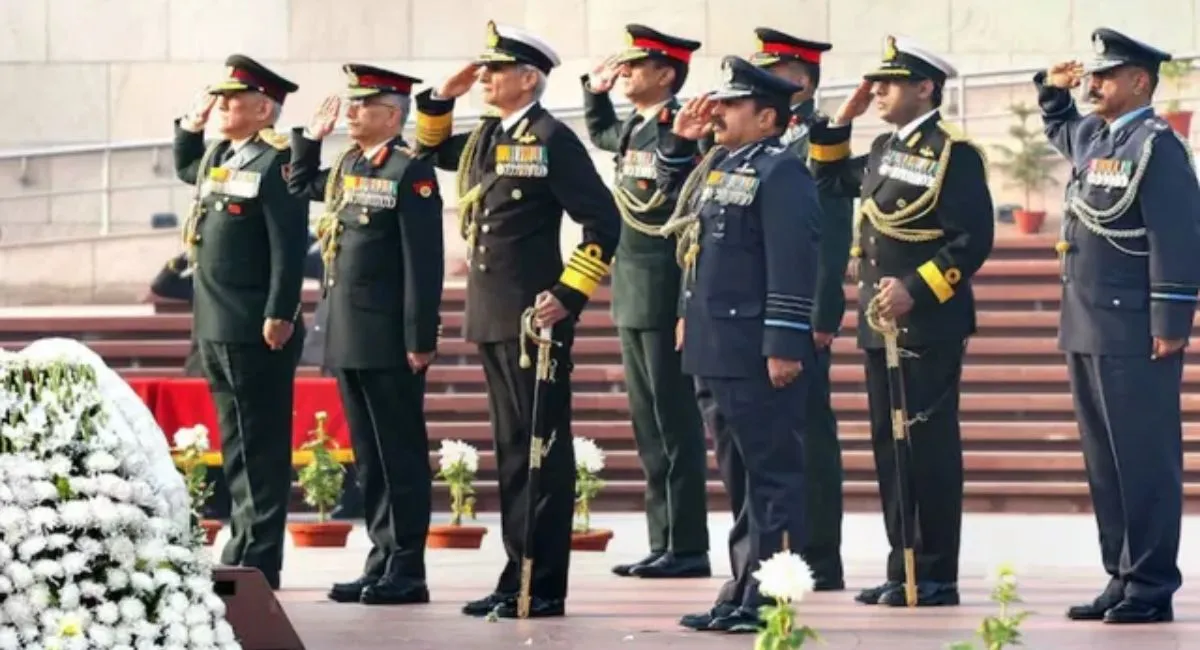
The Indian Army has introduced major changes to its dress code, moving away from several colonial-era traditions. The reforms are part of the newly released 174-page Army Uniforms-2026 manual, the first comprehensive update in eight years.
According to the manual, the changes have been made to reflect India's evolving national identity while preserving the Army's dignity, efficiency, and traditions.
Key Changes in the New Dress Code
Bandi Jacket Introduced
For the first time, officers are allowed to wear a closed-neck bandi jacket as part of formal attire. The jacket can be worn over a full-sleeved shirt, with or without a neck hook, and must be in a sober, solid colour paired with matching formal trousers and closed shoes.
Ceremonial Pouch Belts Removed
The Army has discontinued the use of pouch belts with Mess Dress No. 5 and No. 6, which are worn at formal state functions, banquets, and official receptions. However, certain regiments may continue using them during ceremonial regimental events.
Sword No Longer Mandatory
Reviewing officers will no longer be required to carry a ceremonial sword during parades, making the practice optional.
New Winter Uniform
A new winter dress, designated as "3B," has been introduced for soldiers of all ranks. It includes an Angola shirt, a battle jacket, and a beret.
New Guidelines on Appearance and Grooming
The manual also lays down updated rules on grooming, tattoos, body piercings, and personal appearance.
- Tattoos and body piercings remain prohibited.
- Bracelets are not allowed while in uniform, except for sacred threads worn during worship.
- Religious symbols or insignia cannot be displayed, though Sikh personnel are exempt.
- Moustaches must not exceed 12 cm in length.
- Use of deodorants and perfumes while in uniform is prohibited, although after-shave lotion is permitted.
Dress Code for Women Officers
Women officers may wear plain-coloured sarees or kurta-salwar with straight ankle-length pants. Sleeveless kurtas and casual lower garments such as palazzos and cigarette pants are not permitted.
Strict cosmetic guidelines have also been retained:
- Lipstick, coloured nail polish, bindis, and nose pins are prohibited.
- Sindoor is allowed but must remain visible when wearing a beret or peaked cap.
ALSO READ: Delhi: Kalkaji Restaurant Fire Triggers 3 LPG Cylinder Blasts; Elderly Woman Rescued | Video
Recommended For You
Colonial-Era Terminology Removed
The manual also removes outdated colonial-era terms, including references such as "Royal." In the foreword, Adjutant General Lieutenant General VPS Kaushik described the reforms as a step towards eliminating vestiges of colonial practices and aligning military traditions with contemporary Indian values.
The move is part of a broader indigenisation push that gained momentum after Prime Minister Narendra Modi urged the armed forces to shed colonial customs and adopt more Indian-centric practices in doctrine, procedures, and traditions.