
- MP to procure 60% summer Moong at MSP.
- Procurement slot booking extended by ten days.
- E-token system for fertilizer distribution suspended.
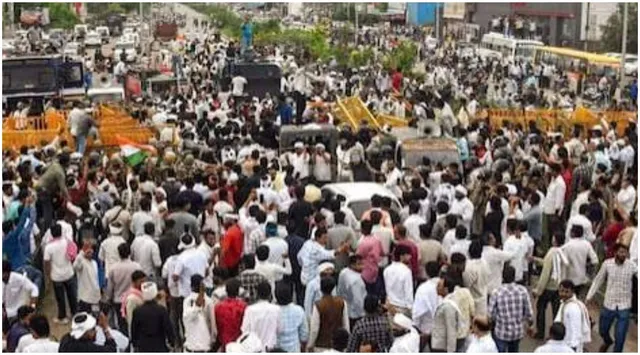
State Bureau, Bhopal: In a breakthrough, the Madhya Pradesh government and agitating farmers have reached an agreement on the procurement of summer Moong crop. The government has decided to purchase 60 per cent of the total produce at the minimum support price instead of the existing norm of 25 per cent under the Price Support Scheme (PSS).
A high-level committee has been formed to review the entire system. Agriculture Minister Adal Singh Kansana, Cooperation Minister Vishwas Sarang, and OBC Welfare Minister Krishna Gaur, along with senior officials, were present at the meeting with representatives of farmers' organisations.
Moong purchase limit increased
After meeting with farmer representatives, Kansana stated that under the Government of India's PSS, a maximum of 25 per cent of total production is permitted to be purchased at the minimum support price. Based on this, the decision was initially made to purchase 25 per cent of each eligible farmer's produce. Considering farmer demand and ground conditions, the government has now decided to purchase up to 60 per cent of each eligible farmer's Moong bean produce at the MSP.
Recommended For You
Slot booking, earning period also extended
In major Moong bean-producing districts like Narmadapuram, Harda, and Sehore, this will average approximately three quintals per acre.
For farmers' convenience, the slot booking deadline has been extended from July 30 to August 10. The procurement deadline has also been extended from August 10 to August 20, so that more farmers can participate in the procurement process.
The system of fertiliser distribution through e-token has been postponed
The government has also fulfilled another major demand of farmers by suspending the e-token system. On the instructions of Chief Minister Dr Mohan Yadav, a high-level committee will be formed under the chairmanship of the Agriculture Production Commissioner to review the e-token system and make recommendations based on which improvements will be made. Until then, the old system of fertiliser distribution will continue.