
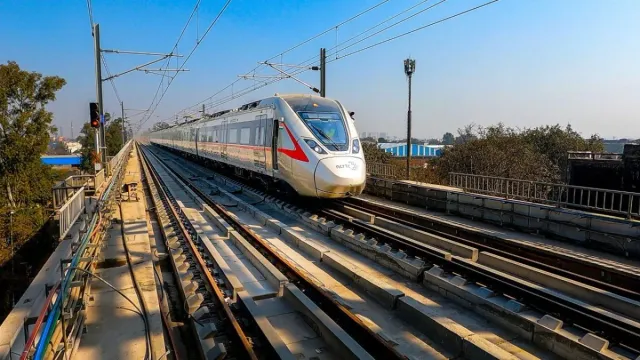
Haryana Chief Minister Nayab Singh Saini announced in the Assembly on Wednesday that the final alignment of the 64-km-long Namo Bharat RRTS corridor connecting Gurugram to Faridabad and Noida-Greater Noida has been approved. This project will bring relief to a large number of people travelling in the NCR region. In particular, the project will prove to be a game-changer for residents of Gurugram, Faridabad, and Noida.
Key Features Of Project
Total Length: approximately 64 kilometres
Haryana Portion: 52 km (majority of the corridor is in Haryana)
Agency: National Capital Region Transport Corporation (NCRTC)
Next Steps: Detailed Project Report (DPR) to be prepared soon; necessary instructions issued to NCRTC
Proposed Rute In Gurugram
In Gurugram, this corridor will serve as an RRTS-cum-Metro section (approximately 14.5 km), starting from IFFCO Chowk and going up to Gwal Pahari, where there will be a connection with the Yellow Line of Delhi Metro.
It will pass through these roads:
-IFFCO Chowk (Starting Point)
-Sector 29
-Millennium City Centre
-Sector 52
-Sector 57
-Sector 61/Wazirabad area
-Gwal Pahari (Termination and Delhi Metro Yellow Line Interchange)
This route will connect with the existing Rapid Metro and Gurugram Metro, ensuring smooth travel for passengers.
Proposed Route In Faridabad
The corridor will pass through major areas in Faridabad and will connect with the Violet Line of Delhi Metro.
It will pass through these roads:
-Sainik Colony
-New Faridabad
-NIT
-Bata Chowk
-Sector 12-15 (Delhi Metro Violet Line Connection)
This corridor will significantly reduce travel time between these major cities in the NCR, relieve traffic congestion, and boost economic development. The approval came after a meeting held on February 24, 2026. Construction is expected to begin in December 2026 and is targeted to be completed in approximately 4.5 years.