- Surat-Bilimora section's electrical systems now energised.
- First bullet train operations planned for Surat-Vapi.
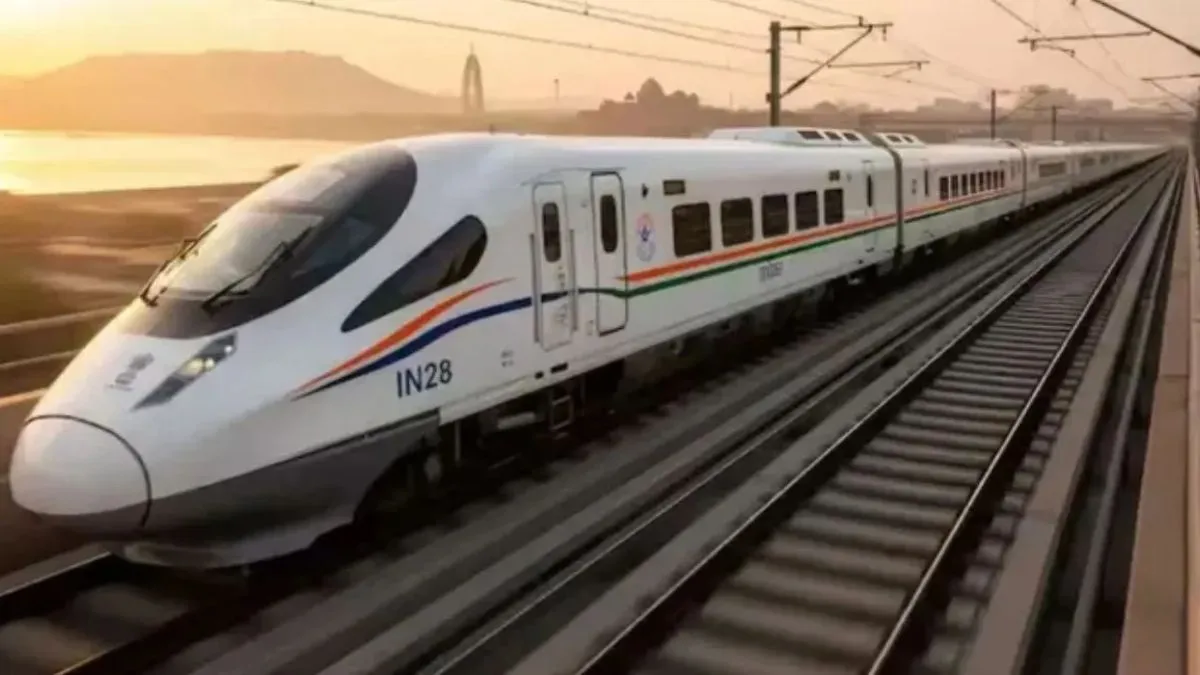
- Indigenous BEML B28 trainsets to lead operations.
India's bullet train rail ambitions have entered a decisive new phase, transitioning from construction to electrical energisation. With overhead electrical systems energised on the initial stretch and domestic train production underway, the country's first bullet train service is on track for a phased rollout starting in 2027.
Railway Minister Ashwini Vaishnaw said that passenger operations will commence on the Surat-Vapi section in Gujarat before expanding across the full 508-km Mumbai-Ahmedabad corridor. In a critical milestone on November 20, engineers energised the overhead electrical equipment along the 50-km Surat-Bilimora segment, clearing the path for upcoming track trials and safety testing.
Surat-Vapi Stretch Earmarked For Initial Passenger Operations
The initial passenger operations will cover roughly 100 km in Gujarat, connecting three key stations: Surat, Bilimora, and Vapi. While authorities originally planned to launch operations on the shorter 50-km Surat-Bilimora stretch, the scope was expanded to Vapi to maximise regional connectivity during the initial phase.
Recommended For You
This stretch forms part of the broader 508-km Mumbai-Ahmedabad High-Speed Rail (MAHSR) corridor being built by the National High-Speed Rail Corporation Limited (NHSRCL). Once fully operational, the route will feature 12 stations across Maharashtra and Gujarat: Mumbai, Thane, Virar, Boisar, Vapi, Bilimora, Surat, Bharuch, Vadodara, Anand, Ahmedabad, and Sabarmati.
Indigenous Trainsets To Lead Operations
In a major push for domestic manufacturing, the first trainsets will be built locally rather than imported from Japan. State-owned BEML is designing, manufacturing, and commissioning two eight-coach high-speed trainsets, called the B28, at its Bengaluru facility.
Stretching approximately 202 metres in length, each B28 trainset will accommodate around 557 passengers across seven standard-class coaches and one executive-class coach.
Designed with aerodynamic features to minimise air resistance and cabin noise, the trains will offer reclining and rotatable seats, wide panoramic windows, onboard infotainment, charging ports, dedicated luggage racks, and accessible facilities for passengers with reduced mobility.
Speed And Travel Time
The indigenous trainsets are engineered for a maximum test speed of 280 kmph, while their planned commercial operating speed is 249 kmph. However, the broader Mumbai-Ahmedabad corridor is built to support speeds of 350 kmph, with commercial speed planned at 320 kmph once the full system is commissioned with the appropriate rolling stock.
Once the entire corridor is operational, the journey between Mumbai and Ahmedabad is expected to take approximately 1 hour and 58 minutes, a significant reduction from the seven to eight hours currently required by road.
ALSO READ: Bengaluru-Pune Bullet Train Likely To Be Next High-Speed Corridor, Railway Minister Drops Big Hint
What's Next?
With overhead electrical equipment now energised on the Surat-Bilimora section, the project is shifting focus toward systems integration and rigorous testing. Over the coming months, NHSRCL will oversee the rollout of the first completed B28 trainset, followed by high-speed track trials and mandatory safety certifications. While commercial ticketing remains over a year away, the energisation of the tracks marks the official countdown to India's high-speed rail era.