
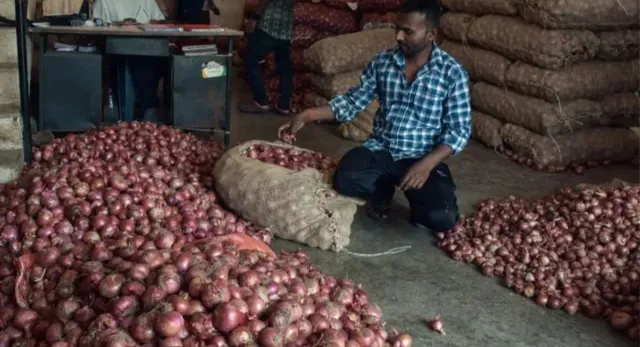
- 30% of government's onion buffer stock damaged by spoilage.
- Kanda Express dispatches 500 tonnes to Delhi to ease shortage.
- Delayed Kharif crop and early sales worsen future supply outlook.
Around 30 per cent of the 1.2 lakh tonnes of summer onions procured this year have already been damaged due to rotting and sprouting, raising concerns over a possible supply shortage and price rise. Amid the crisis, the central government’s special onion train, Kanda Express, carrying 500 tonnes of onions from the buffer stock, departed from Lasalgaon for Delhi at around 3:30 pm on Wednesday.
A senior NAFED official attributed the worsening situation to unseasonal rains during the harvesting season, which affected onion quality, reduced shelf life, and made long-term storage difficult. While normally around 20 per cent of stored onions are lost annually, officials estimate that wastage could rise to nearly 40 per cent this year.
ALSO READ: Government To Sell Onions In Delhi At 36% Discount; 'Kanda Express' Arrives Wednesday
Kanda Express Dispatched To Delhi Amid Rising Prices
Railway officials said the onion train was originally scheduled to leave on Tuesday but was delayed by nearly a day due to delays in grading and sorting. Lasalgaon station manager Pritish Dubey said the train, carrying around 500 tonnes of onions, is expected to reach Delhi within 24 hours.
Recommended For You
The Centre launched the Kanda Express initiative after retail onion prices climbed to Rs 50-65 per kg in several cities. Along with rail transport, government agencies NAFED and NCCF are also moving onions by road to improve supplies.
NAFED transported 30 tonnes of onions to Delhi by truck on Tuesday night, while NCCF sent another 30 tonnes on Wednesday evening. Similar onion trains are reportedly being planned for Kolkata and Chennai.
The Consumer Affairs Ministry has announced that onions transported under the initiative will be sold at a subsidised rate of Rs 35 per kg through NAFED, NCCF and Kendriya Bhandar outlets in Delhi. Future supplies will also be sent to cities including Chennai, Ernakulam, Madurai and Guwahati.
Buffer Stock Under Pressure
The government had aimed to procure 2 lakh tonnes of summer onions this year, but NAFED and NCCF managed to purchase only 1.2 lakh tonnes. Officials said over 90 per cent of the buffer stock is expected to come from the Nashik region, which contributes a major share of onion procurement.
“Stored onions are depleting rapidly, and around 30 per cent of procured onions have already been lost due to spoilage,” a NAFED official said.
Usually, farmers begin releasing stored onions into markets from September. However, this year, many farmers started selling their produce in June and July to avoid spoilage losses.
Stock Levels Raise Concerns
Nashik, India’s largest onion-producing district, has storage capacity of around 24 lakh tonnes. However, agriculture officials said farmers currently have only about 25 per cent of their stored stock remaining.
Officials warned that if spoilage continues at the current rate, existing stocks may run out before fresh arrivals begin.
Delay In Kharif Crop Adds To Worries
The delayed Kharif onion crop has further increased concerns over supply. Due to weak rainfall during the sowing season, only 370 hectares have been planted so far, compared with the district’s average of 30,000 hectares under Kharif onion cultivation.
Normally, nearly half of the sowing process is completed by this time, but this year progress stands at just around 1 per cent.
Fresh Kharif onions are expected to reach markets only by mid-November, with regular arrivals likely from early December. Traders fear a supply shortage in October if existing stocks decline further.
ALSO READ: Sugar Prices Fall By Rs 15 As Supplies Rise; Onion Prices Also Ease | Check New Rates
Next Five Months Crucial For Onion Supply
Currently, markets are dependent on summer onions harvested in March and April. These varieties usually last six to seven months and are stored by farmers for gradual release throughout the year.
Officials said no major fresh onion supply is expected until the Kharif crop arrives, making stored onions the primary source for wholesale and retail markets.
Traders have warned that disruption in the storage cycle due to high spoilage rates and early depletion of stocks could further tighten supplies and put additional pressure on onion prices in the coming months.