
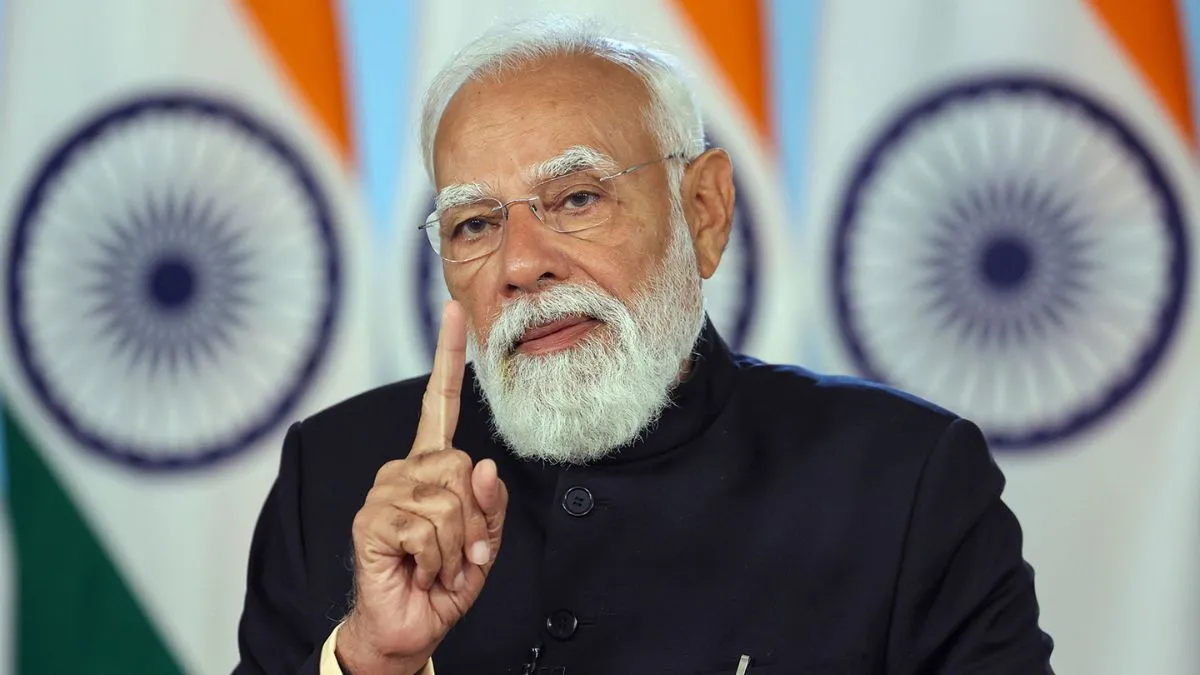
Prime Minister Narendra modi called his government's "Reform Express" which is benefitting common citizens in a big way. PM Modi on Sunday said his top three reform priorities for the next decade would focus on continued structural reforms, fostering deeper innovation, and further simplifying governance.
In an interview with PTI, Modi also stated that, by nature, he is never fully satisfied. He believes public life requires a certain constructive restlessness, a constant drive to do more, improve more quickly, and serve better.
When asked whether he was satisfied with the progress made on reforms, Modi responded with a focus on continuous improvement.
Asked to prioritise three economic reforms for the next decade, Modi explained, "Our direction is clear, rather than limiting it to a fixed number. First, we will continue structural reforms that enhance competitiveness and productivity. Second, we will deepen innovation in technology, manufacturing, and services. Third, we will simplify governance further so that citizens and businesses can operate with greater ease and trust."
He continued, "Often, there is a limited understanding of the word 'reforms', seeing it as only pertaining to the economy and industry. But reforms in the social sector are equally important."
On the progress made by the "Reform Express", he said, "I must say that, by temperament, I am never fully satisfied. I believe public life demands a certain constructive restlessness, a constant urge to do more, to improve faster, to serve better. So yes, there is always a strong desire to achieve more for our people and take our country forward."
Recommended For You
PM Modi also stressed the importance of recognising the scale of the progress achieved through the "Reform Express".
"Reform is the commitment of this government, something we have demonstrated in both letter and spirit. I am proud to say that we have moved from incremental adjustments to systemic transformation," he said.
He cited several examples of successful reforms, including the Goods and Services Tax (GST), which, with its two-slab structure, has eased the financial burdens on households, micro, small, and medium-sized enterprises (MSMEs), and labour-intensive sectors.
"We have redefined what constitutes small companies, which has helped reduce compliance costs. The FDI reform, allowing 100 per cent FDI in insurance, has led to better choices for people, particularly the middle class," he added.
The Prime Minister further noted that several outdated laws have now been abolished.
"Previously, there were no ministries specifically focused on developing crucial sectors such as skill development, fisheries, cooperatives, and AYUSH. We have changed that, and now each of these sectors is thriving," he said.