
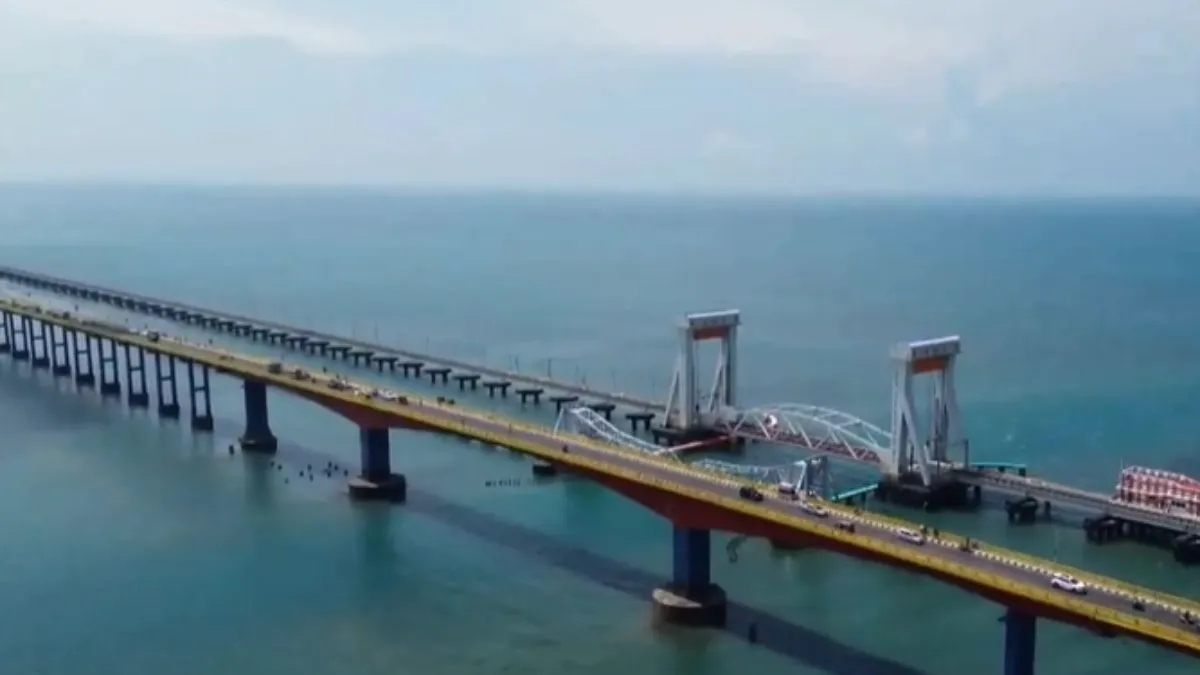
Rameswaram Pamban Railway Bridge: Rameswaram Pamban Bridge: Rameswaram’s highly anticipated Pamban Railway Bridge, India’s first vertical lift sea bridge, has been completed and is set to begin operations by April. The modern structure will restore rail connectivity between Rameswaram Island and the mainland, significantly improving transportation in the region.
The new Pamban Bridge replaces the historic British-era structure that was commissioned in 1914. Unlike the old bridge, which had a manually operated horizontal opening system, the new bridge features advanced vertical lift technology, allowing smoother passage for trains and ships.
ALSO READ: MK Stalin-Led Delimitation Meeting Passes Resolution, Next Meet In Hyderabad; Check Top Demands
Enhanced Speed And Connectivity
The 2.10-km-long bridge is the first vertical lift span railway sea bridge in both India and Asia. It is built to accommodate faster train movement, with express and mail trains now able to travel at 75 km/h, compared to just 10 km/h on the previous bridge.
Recommended For You
With operations expected to begin soon, the bridge will enable 17 trains, including passenger and express services, to travel daily between Rameswaram and the mainland, boosting regional connectivity.
#WATCH | Rameswaram, Tamil Nadu: The new Pamban Railway Bridge, connecting Rameswaram Island with the mainland, has been completed. India’s first vertical lift sea bridge is expected to be operational by April, restoring rail connectivity and improving transportation in the… pic.twitter.com/eCZs4GxXVA
— ANI (@ANI) March 23, 2025
Vertical Lift Mechanism Using Electromagnetic Technology
A key feature of the bridge is its 72.5-metre-long navigational span, which can be lifted vertically to allow ships to pass. The electromagnetic lifting system replaces the manual operation used in the old structure. The entire process takes about 5 minutes and 30 seconds, lifting the span to a height of 17 metres.
This new mechanism makes ship movement more efficient while ensuring minimal disruption to railway traffic. The lift span itself weighs 660 metric tonnes, supported by four towers with a combined weight of 1,450 metric tonnes.
Built for Durability and Safety
To withstand the harsh coastal environment, the bridge is built with 336 stainless steel piles, ensuring resistance to corrosion. The Railway Design and Standards Organisation (RDSO) has mandated the use of stainless steel for structures near the sea to enhance durability.
Moreover, the bridge is designed to withstand wind speeds of up to 58 km/h. If wind speeds exceed this limit, an automatic safety mechanism halts train movement until conditions stabilise.
Challenges Faced During Construction
The construction of the new Pamban Bridge began in February 2019 and faced several challenges, including harsh weather conditions, strong coastal winds and the Covid-19 pandemic, which delayed progress. Highly skilled welding techniques were required to assemble the bridge components, with welders trained and certified by the Welding Research Institute, Tamil Nadu.
Additionally, all bridge segments were fabricated 60 km away from the coastline to maintain material quality and painted with rust-resistant coatings for extra protection.
Awaiting Official Inauguration
The Commission of Railway Safety (CRS) approved the bridge for commercial operations in November last year. With all necessary clearances in place, the official inauguration is awaited before trains can begin using the new structure.
Once opened, the bridge will play a crucial role in connecting Rameswaram to the mainland, enhancing rail connectivity and boosting economic activities in the region.