
-1766419972605.webp)
- By Shibra Arshad
- Mon, 22 Dec 2025 09:43 PM (IST)
- Source:JND
Smog Stories: Delhi is choking again, with a major part of it constantly recording the air quality (AQI) in the ‘severe’ category (above 400). Bad air quality is a major threat to human health as it has various adverse effects on a person’s physical and mental wellbeing. Figures presented in Parliament show a notable rise in respiratory patients requiring hospital admission in 2024. The trend raises urgent questions about Delhi's preparedness, public health capacity, and the real human cost of prolonged exposure to polluted air.
Poor air damages the respiratory system, increases the risk of heart disease, weakens the immune system, impairs brain health and affects cognitive functioning. Among all these health impacts, bad air quality has a rapid and direct impact on lung health as it is considered one of the major triggering factors for respiratory ailments and associated diseases. A year-wise data on cases of respiratory illness requiring hospitalisation registers a sharp increase in such cases when compared to the previous year.
Govt Data Shows Upstick In Respiratory Patients Requiring Hospitalisation
Government data shared by the Ministry of Health and Family Welfare in the Rajya Sabha reveals a worrying rise in respiratory illnesses severe enough to require hospital admission. The Health Ministry reported an increase in the number of Acute Respiratory Illness (ARI) cases referred to emergency departments across six central government hospitals in Delhi. These include AIIMS, Safdarjung Hospital, LHMC Group of Hospitals, RML Hospital, NITRD Hospital, and VPCI Hospital.
The data shows that while the total number of ARI cases reported in emergency departments dipped slightly in 2024 compared to 2023, the number of patients requiring hospitalisation rose sharply. In 2024, a total of 68,411 ARI cases were reported, of which 10,819 patients were admitted. This marks an increase of over 1,000 hospital admissions compared to 2023, when 9,727 patients required admission out of 69,293 reported cases.
Year | Number of Acute Respiratory Illness (ARI) cases reported to the Emergency Department | Number of Cases of Respiratory Illnesses Requiring Hospital Admission |
2022 | 67054 | 9878 |
2023 | 69293 | 9727 |
2024 | 68411 | 10819 |
The Connection Between Air Pollution And Respiratory Health
The Indian Council of Medical Research (ICMR) has announced that it has conducted a multisite study to document the acute effects of increased air pollution on respiratory morbidity. It was conducted at five sites, involving a total of 33,213 (12.6 per cent) of the total Emergency Room patients. The analysis shows that an increase in pollution levels was associated with an increase in the number of patients attending emergency rooms.
Health effects of air pollution are a synergistic manifestation of factors which include food habits, occupational habits, socio-economic status, medical history, immunity, heredity, etc.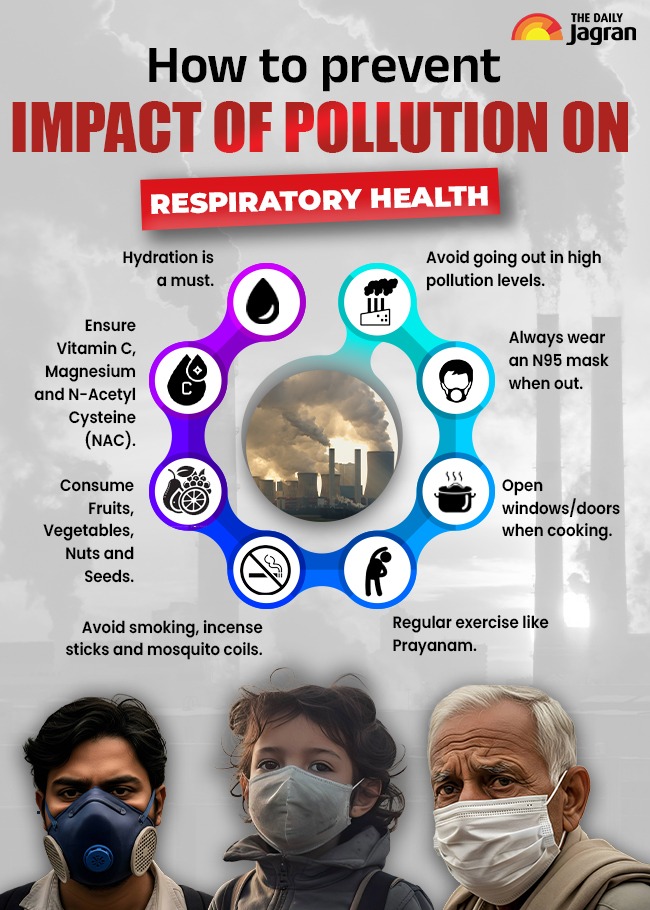
How Does Air Pollution Affect Respiratory Health
While the government is reluctant to accept that poor air quality has damaging consequences for respiratory health, with one of its ministers arguing against it, studies establish a direct connection between poor air quality and worsening lung health.
A paper by The Clean Breathing Institute says the effect of air pollution on respiratory health ranges from minor upper respiratory irritation to chronic respiratory and heart disease, lung cancer, and acute respiratory infections; air pollution can also aggravate pre-existing heart and lung disease. Short- and long-term exposures have been linked with premature mortality and reduced life expectancy.
ALSO READ: Smog Stories: How Much Green Cover Does Delhi Have? Is The Greenery Enough To Beat The ‘Toxic’ Air?
The pollutants that most strongly harm breathing health are particulate matter (tiny particles), ozone, nitrogen dioxide, sulphur dioxide, and carbon monoxide.
Particulate matter is often used as the main sign of air pollution. It is grouped by particle size:
Coarse particles (PM10–2.5): These are between 2.5 and 10 micrometres in size.
Fine particles (PM2.5): These are smaller than 2.5 micrometres and can reach deep inside the lungs.
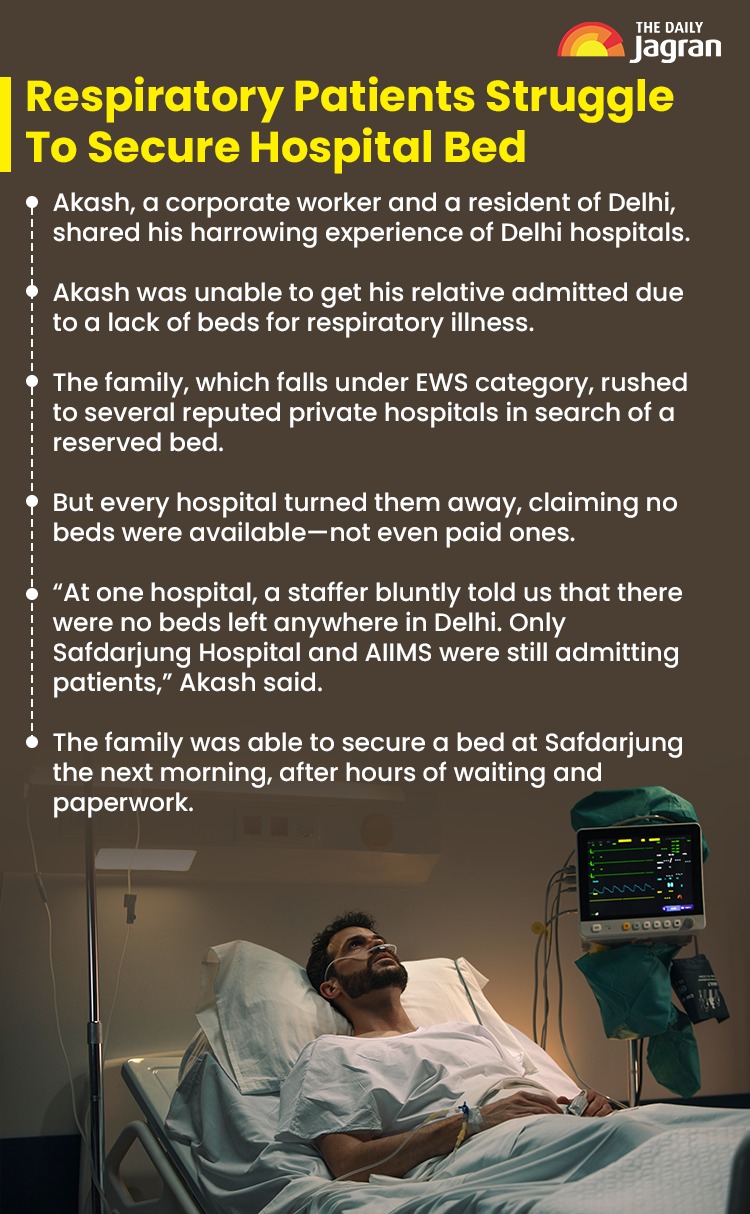
Doctors Suggest Pneumococcal Vaccine Among Other Preventive Measures
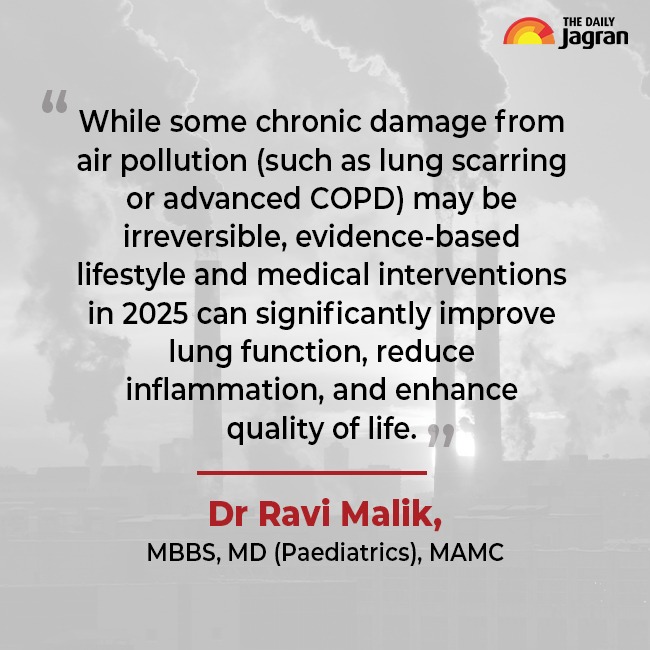
To understand what a patient or caretaker should do after lungs are already affected, we reached out to Dr Ravi Malik, who is the founder and Medical Director of Malik Radix Healthcare (MRHC). Explaining the severity of pollution impact on the lungs, Dr Malik said, “Some chronic damage from air pollution (such as lung scarring or advanced COPD) may be irreversible, but preventive measures can be incorporated in early stages.”
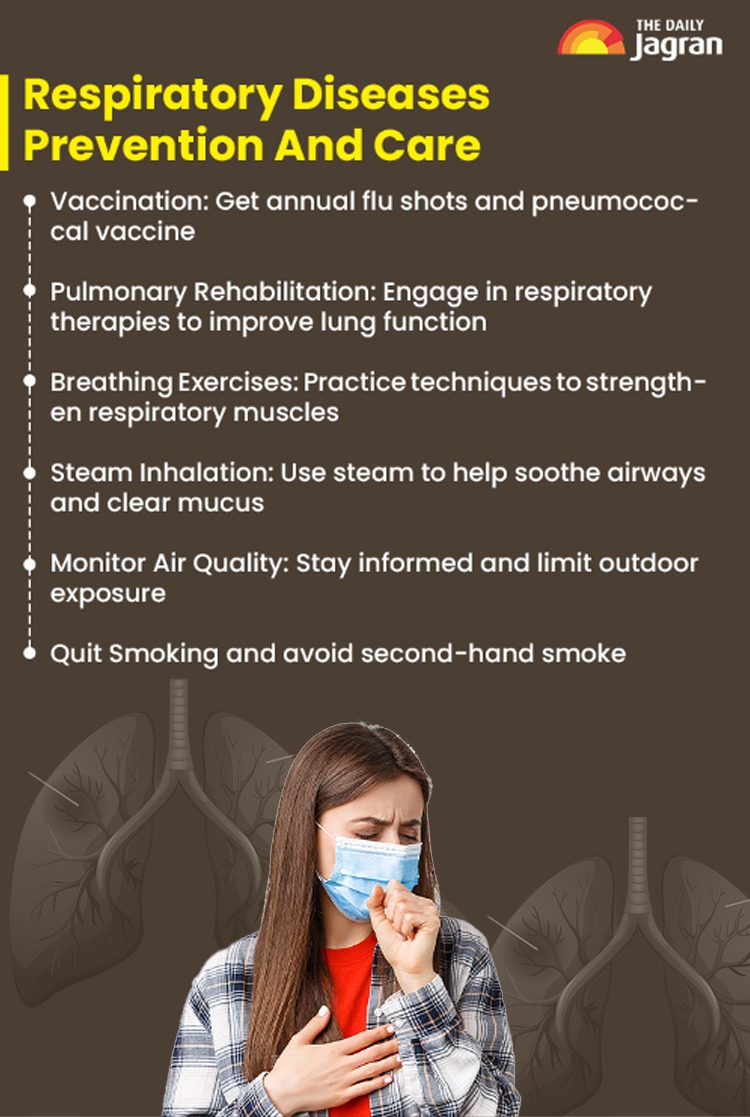
Dr Malik recommended specialised respiratory therapies like pulmonary rehabilitation, breathing exercises and steam inhalation to protect lungs from air pollution.
“Keep abreast of flu shots every year, as well as the pneumococcal vaccine. Preventing secondary infections is a must since they are capable of causing rapid deterioration of already fragile lung tissue,” Dr Malik told The Daily Jagran.
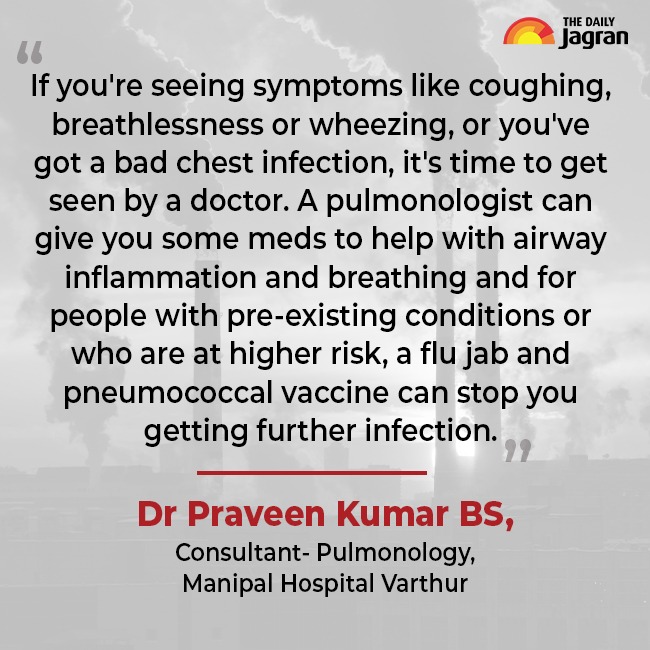
Sharing insights on lifestyle changes that can be incorporated to reduce the impact of poor air on respiratory health, Dr Praveen BS, who is a Pulmonology Consultant at Manipal Hospital Varthur, advised to quit smoking and to “get out of places with second-hand smoke, for a start”
(This article is part of the series 'Smog Stories'. To read more articles in the series, click here)