
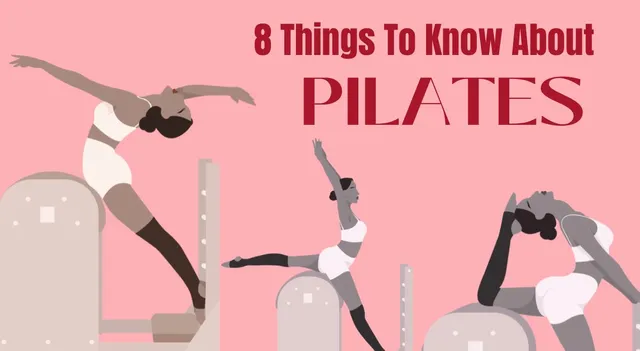
Pilates has become popular among fitness enthusiasts who seek a balanced, sustainable approach to movement. Usually associated with long, lean muscles and improved posture, Pilates is misunderstood by many people as a quick weight loss trend or a stretching routine. It is, however, a lot more than that, an effective yet low-impact workout that builds core strength and enhances flexibility, along with supporting overall body conditioning.

But the question is, can it actually help in losing those extra pounds, or is its real value in toning and functional fitness? To know the basics of Pilates, The Daily Jagran turned to Aman Puri, Fitness Expert and Founder of Steadfast Nutrition.
1. Can Pilates help with weight loss, or is it more focused on toning and flexibility?
Pilates is a low-impact exercise for strengthening muscles and improving flexibility and balance, Mr Puri noted. “It focuses on repetitive exercises to exert muscles to improve endurance and strength. While Pilates can help burn a few calories, it may not be as effective for weight loss as high-intensity training. Having said that, Pilates does assist in weight loss to an extent by helping lose body fat, building lean muscles, and toning the body. It also improves metabolism, which promotes calorie burning. To achieve significant weight loss, it is recommended to combine Pilates with cardio or strength exercises and a calorie-restricted diet,” he added.

Equipment For Pilates Workouts (Image Credits: Canva)
2. Do you need any special equipment, or can it be done at home?
Pilates can easily be performed at home, Puri pointed out. “You just need an exercise mat for precise and controlled movements. However, to achieve a high level of precision or intensity, you may require a Pilates machine (reformer) and the support of trained personnel to practice safely. Optional props like resistance bands, a Pilates ring, or a stability ball can be used for improving strength and resistance intensity,” he explained.
3. What’s the ideal time of day to practice Pilates?
According to Mr Puri, there is no ideal or specific time for doing Pilates. One can set up a great morning routine, but one can also perform it in the evening to loosen stiff muscles. Pilates is best performed on an empty stomach. Since it involves bending, twisting, and core muscle engagement, performing it immediately after heavy meals may cause bloating or acid reflux.
4. Are there any myths about Pilates that you’d like to debunk?
“The most common misconception is that Pilates is meant only for women," Puri said. “The fact is that exercise is never gender-specific, so it is very important to understand that Pilates can be done by both men and women to strengthen and tone muscles. Another prevailing myth is that Pilates is very easy to perform. However, in reality, it is not an easy exercise since it requires twisting and bending movements targeting core muscles. Thirdly, people incorrectly perceive that Pilates is only needed after injury or rehab. The fact is that it can help anyone improve muscle endurance and flexibility. It can be performed by anyone to improve strength, stability, and posture.”
4 Things to Know Before Starting Pilates:
The fitness expert mentioned four things to know before starting Pilates:
1. Pilates may look easy, but it isn’t so. Don’t underestimate the stretching and movements. Movements look easy, but one should avoid making sudden movements.
2. Always try to focus on controlled and restricted movements. Pilates is more about correct form than intensity.
3. Correct breathing helps improve control, while endurance helps manage focus and promote relaxation. Exhalation helps activate the core, while inhalation helps improve the duration of holding time.
4. Expert guidance is important, especially if you’re using reformer Pilates equipment. Without equipment, Pilates requires correct posture and movements to avoid injuries.