

- By Bornika Das
- Thu, 12 Jun 2025 07:18 PM (IST)
- Source:JND
Air India Crash: The Air India plane (AI171), which was bound to London, carrying at least 242 passengers on board, crashed in the Meghaninagar locality near the Sardar Vallabhbhai International Airport in Gujarat's Ahmedabad. The plane reportedly crashed into the residential quarters of BJ Medical College in Ahmedabad's Meghaninagar area shortly after its take-off from the Ahmedabad airport. The plane was headed to London's Gatwick airport. The causes and specifics of the Air India plane crash are still awaited; it has reignited nationwide attention on the importance of in-flight safety procedures during air travel. Although air travel is considered the safest mode of transportation, emergencies can occur in rare cases. Thus, understanding the in-flight safety procedures in unexpected situations like turbulence, emergency landings and crashes is extremely crucial.
The incident has sparked an important conversation: What to do in case of an in-flight emergency? In the wake of the Air India crash, travellers are urged to become more attentive during safety demonstrations and to take personal responsibility for in-flight safety. Understanding each safety procedure can contribute to survival in the unlikely event of a mishap. Here are the key in-flight safety procedures every passenger should know.
How To Stay Safe During Flight Emergency
Stay Seated And Buckle Up
Most turbulence-related injuries occur when passengers are not wearing their seatbelts. It is important to always fasten the seatbelt, even when the seatbelt sign is off, to avoid being injured during unexpected turbulence.
Follow Crew Instructions
Understanding safety demonstrations is extremely important and passengers often do not pay heed to them. Flight attendants are trained for turbulence-related scenarios. If the seatbelt sign turns on, immediately fasten the seatbelt, secure loose items and remain seated.
Avoid Walking Around The Cabin
If the passenger is in the restroom when turbulence hits, return to the seat as soon as possible and fasten the seatbelt. If they are unable to do so, hold onto a secure surface, like the walls or a seatback, for stability.
Stow Loose Items
Airlines always ask their passengers to secure their bags in the bins above or under their seats. Loose belongings, including laptops, cups and bags, can become dangerous during turbulence.
Brace For Impact In Severe Cases
If flight attendants instruct you to do so, adopt the brace position:
Bend forward with your head down.
Place your hands over your head and tuck them behind your neck.
Keep your feet flat on the floor and close together.
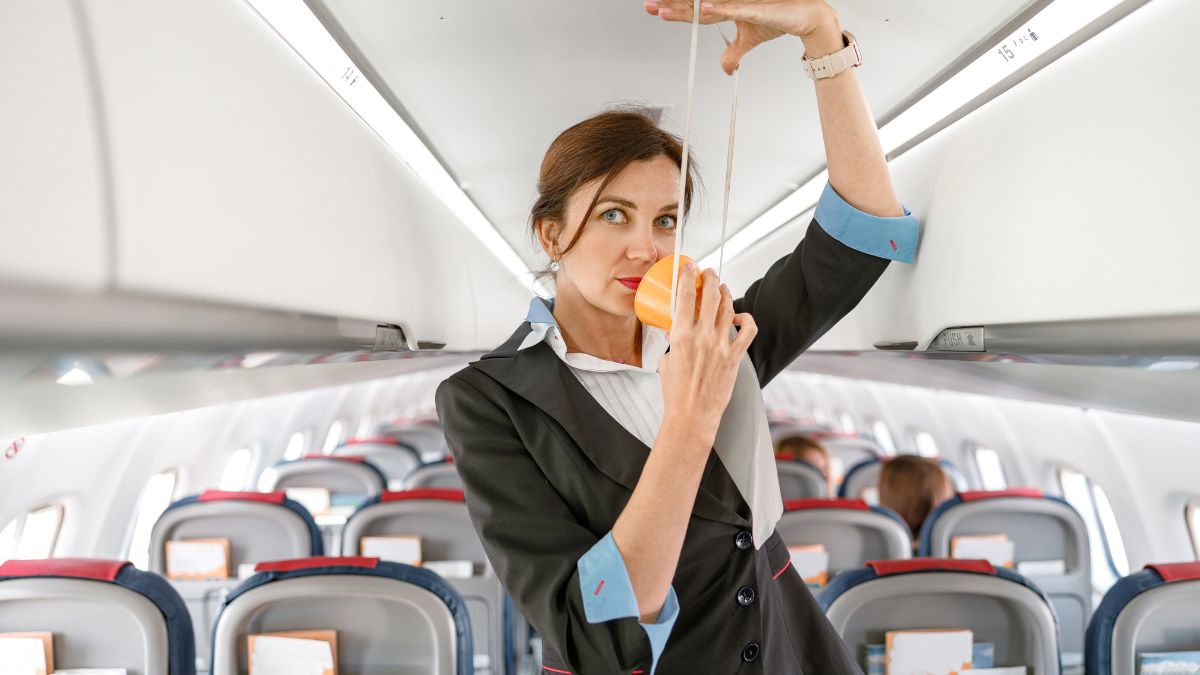
Safety Procedures During Emergency Landing In Flight (Image Credits: Canva
Safety Procedures For An Emergency Landing
Listen To Announcements
In case of an emergency landing, the captain and crew will provide instructions. It is important to be attentive to the safety briefings and follow directions immediately.
Assume The Brace Position
Flight attendants may instruct passengers to adopt the brace position before landing:
If you’re in an economy seat, place your feet flat on the floor, bend forward and place your head against the seat in front of you.
If there is no seat in front, rest your arms on your knees and put your head down.
Hold your ankles or place your hands behind your neck for added protection.
Secure Oxygen Masks
Opt for oxygen masks required:
If the cabin loses pressure, oxygen masks will drop from overhead compartments.
Secure your mask before assisting others.
Breathe normally and leave the mask on until instructed otherwise.
Identify Emergency Exit
Before the flight takes off, it is important to know the nearest emergency exit. If an emergency landing occurs, use these exits only when instructed by the crew.
Evacuation Procedures
Follow the instructions of the crew and leave all baggage behind, as carrying personal belongings slows down the evacuation process.
Move quickly but calmly toward the exits.
If the exit is to be made onto water, put on the life vest inside the aircraft and inflate it after exiting to avoid restricting movement.
Protect Yourself From Smoke And Fire
Stay low and cover your nose and mouth with a cloth to avoid inhaling smoke.
If available, use emergency lights along the aisle to guide you to an exit.