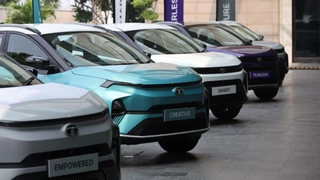
The EV industry in India has witnessed significant growth over the recent years, driven by factors such as growing environmental awareness, rising fuel prices, etc. Government support in the form of tax benefits, subsidies, and other incentives has also made EVs more financially attractive to the masses, leading to a significant increase in their adoption.
ALSO READ: Mahindra XUV700 Facelift And BE.05 Electric SUV Spotted Testing Together; Details
The FAME (Faster Adoption and Manufacturing Electric Vehicles) scheme has played a pivotal role in driving the demand of EVs in the country by offering upfront incentives to consumers on purchases. The subsequent FAME II scheme, launched in April 2019 with an outlay of Rs 10,000 crore for a three-year period, was extended up to March 2024. To continue supporting the purchase of electric two and three-wheelers, the government has introduced the Electric Mobility Promotion Scheme (EMPS), 2024, which will be in effect until July this year.
Talking exclusively to Jagran English about the promotion of adoption of EVs by the government, Yogesh Bhatia, MD and CEO of Lohia Machinery Limited (LML) said, “Moving forward, in order to further bolster the adoption of EVs in the country, the industry is calling for continued government support, including the extension of the FAME II scheme. Industry stakeholders believe that continuing this scheme would be a crucial step for the development of the industry, as it will sustain consumer interest, drive up demand and promote widespread adoption. This will ultimately expedite the transition towards sustainable mobility and solidify India's position as a prominent player in the global EV market.”
“While the FAME scheme is essential to stimulate consumer demand for EVs, PLI scheme is necessary to encourage domestic EV manufacturing, which can further lead to cost reductions and decreased dependence on imports. The industry believes that the co-existence of both the schemes could prove to be beneficial in fostering overall growth of the industry,” he further added.
Moreover, in order to enhance the competitiveness of India's EV industry on a global scale, Bhatia said, “There is a growing expectation for increased collaboration with international players, that could facilitate the flow of technology and investment from neighbouring countries. By fostering partnerships with countries that are leaders in EV technology, such as China and Japan, India can leverage their expertise to accelerate the development of its own EV industry. Furthermore, attracting foreign direct investment (FDI) into the EV sector through policies and incentives will help in establishing a robust supply chain and manufacturing ecosystem in the country. Thus, by allowing technology and investment flow from neighbouring countries, India can drive greater innovation in sustainable transportation and gain recognition in the global EV industry.”
He also said, “The Central government has recently approved an EV policy to promote India as a prime manufacturing hub for EVs and attract investments from renowned global EV manufacturers. Experts in the industry anticipate that the implementation of this policy would facilitate access to latest global technologies, support the Make in India initiative, strengthen the EV ecosystem and promote enhanced EV adoption.”
ALSO READ: BMW 1 Series 2025 Makes Global Debut; Here's What's New In Fifth-Generation Hatchback
The EV sector has become one of the fastest-growing segments in India's automobile industry. EV penetration has increased from 4.8 per cent in 2022 to 6.3 per cent now, with sales up over 45 per cent this year and a projected 66 per cent increase for 2024. This momentum is crucial and needs to be maintained. Continued government support is essential for sustaining and accelerating this growth, fostering a robust EV ecosystem and helping India achieve its sustainability goals.