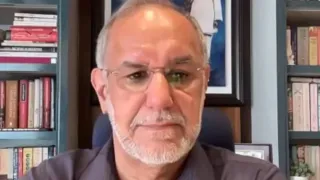
Navdeep Suri, a former diplomat who served as India's High Commissioner to Australia and Ambassador to the United Arab Emirates and Egypt, has raised serious questions about the Special Intensive Revision process for electoral roll revision.
Sharing his experience on X, he accused the Election Commission of India of lacking transparency and clear information in the system.
Proof of citizenship demanded
Navdeep Suri said that during the SIR process in Punjab, he went to the Booth Level Officer (BLO) and submitted his voter ID and Aadhaar card, where he was assured that everything was correct.
However, a volunteer later informed him that his information did not match the voter list from 2003. Following this, the BLO issued him a notice, asking him to produce documents proving his Indian citizenship.
Struggle after representing India
The former ambassador said he was posted abroad in 2003 and was therefore not present in India. He was then asked for his passport as proof of citizenship.
Expressing his displeasure over the process, Navdeep Suri wrote, "I happen to have documents other than voter ID and Aadhaar card. But can’t help asking: If I have trouble establishing my citizenship after representing India in three countries, what’s the fate of the common citizen?"
Documents being sought to link with old records
It is noteworthy that under the SIR process initiated by the poll body, voters who were not registered in the voter list of 2002 or 2003 are being asked to provide documents linking them to the old records for verification.
ALSO READ: ECI Revises SIR Schedule In Delhi And Maharashtra; When Will The Final Voter List Be Published?
Earlier, it included 11 fixed documents, but after the intervention of the Supreme Court, Aadhaar card was also added to it.
The courts have also clarified that the Commission's powers to amend the electoral rolls cannot be unlimited and it must function under the principles of transparency and natural justice.