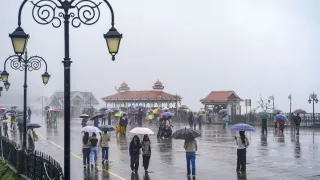
State Bureau, Shimla: According to the latest forecast issued by the Meteorological Centre Shimla, there is a possibility of cloudy sky and light rain in Shimla city and surrounding areas on Sunday. Moderate to heavy rain at one or two places is likely in Mandi, Kangra, Bilaspur, Hamirpur, Chamba and Solan districts of the state. Light rain is expected in Shimla, Kullu, Una and Sirmaur districts.
Showers To Continue Till August 22
The monsoon has once again become active in the state. The Meteorological Department has forecast heavy rain in various parts of the state for the next several days. Heavy rain is also expected at various locations on August 17. According to the Meteorological Department, very heavy rain is also possible in the state on August 18 and 19. After this, heavy rain is likely to continue in many locations from August 20 to 22.
In terms of temperature, the minimum temperature across the state was two to five degrees Celsius above normal. The lowest minimum temperature was recorded at 11.8 degrees Celsius in Kukumseri, while the maximum temperature was 32.6 degrees Celsius in Una.
Dharamsala Gets Highest Rainfall
During the last 24 hours, the highest rainfall in the state was recorded in Dharamshala at 112.6 mm and Palampur at 55 mm.
ALSO READ: Weather Update: Delhi, UP On Heavy Rain Alert As Arunachal Floods Worsen, 5 Army Personnel Missing
Flood, Landslide Warning
The Meteorological Center, Shimla, has warned that there is a risk of landslides and mudslides on slopes. Flash floods and rising water levels are expected in rivers and streams. Low-lying areas may be flooded and vulnerable structures may be partially damaged. Slippery roads and low visibility are expected to cause accidents and traffic jams.
The administration has warned people to avoid areas prone to landslides, mudflows, and flooding. Avoid areas experiencing significant waterlogging. Maintain a safe distance from rivers, streams, and ravines. Follow speed limits and traffic advisories while driving. Monitor local authorities and weather alerts.