In India, individuals seeking higher education and high-paying salaries often look toward opportunities abroad, which explains the significant Indian population in countries like the US. However, strict visa regulations, increasing bank loans and changing international policies have begun to stall this trend, particularly among students.
Declining Numbers Of Indian Students Going Abroad
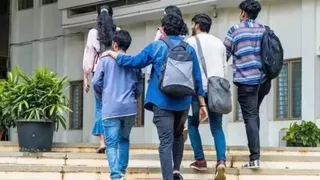
The number of Indian students heading overseas for higher studies has seen a continuous decline for three consecutive years. This data was presented in the Rajya Sabha by Sukanta Majumdar, the Minister of State for Education, in response to a written inquiry.
According to figures from the Ministry of Education:
- In 2023, over 9.08 lakh students went abroad.
- In 2024, this number dropped to 7.7 lakh.
- In 2025, it fell further to 6.26 lakh.
This represents an approximately 31 per cent decrease over the three-year period. For comparison, 4.44 lakh students went abroad in 2021 and 7.5 lakh in 2022, marking a post-pandemic recovery that has since slowed down. These statistics are based on data from the Bureau of Immigration under the Ministry of Home Affairs.
Majumdar noted that studying abroad is a matter of personal choice and depends on various factors such as financial capacity, availability of bank loans, international networking and eligibility for specific academic branches.
Domestic Reforms And Role Of Diaspora
The government views a successful and influential Indian diaspora as a national asset and aims to utilise their expertise and knowledge. Under the National Education Policy (NEP) 2020, several steps have been taken to strengthen the domestic higher education system. These include:
- Upgrading infrastructure and strengthening accreditation.
- Promoting research, innovation and digital education initiatives.
- Allowing foreign universities to open campuses in India to provide global-quality education locally.
- So far, 14 foreign institutions have received approval, with five specifically cleared to operate in Gujarat's GIFT City.
ALSO READ: Who Is 'Maruti Man' Of India? IAS Officer Who Quit His Job To Build Country's Own Car Brand
Policy Shifts In Host Countries
Beyond personal choices and domestic improvements, significant policy changes in popular destinations between 2023 and 2025 have impacted student flow:
Canada: In 2024, Canada imposed caps on new study permits and tightened scrutiny on private colleges and post-graduate work pathways. Financial proof requirements were increased, and processing delays or higher rejection rates created uncertainty regarding the return on investment for Indian students.
Australia: To curb unsustainable migration, Australia introduced enrollment caps, stricter English-language requirements and rigorous financial documentation rules. Increased scrutiny on course changes and work regulations has made the process riskier for cost-conscious families.
United Kingdom: Since 2024, the UK has prohibited most international students, except those in research postgraduate programs, from bringing dependents. Additionally, increased salary thresholds for work visas and a stricter political tone regarding net migration have altered the perspective of prospective students.
United States: While the US remains a top destination, high rejection rates in certain visa categories, long wait times for appointments in India and ongoing debates over H-1B visa reforms have contributed to an atmosphere of uncertainty.