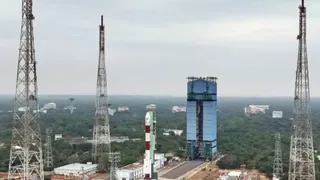
The Indian Space Research Organisation (ISRO) on Monday launched the PSLV-C62 mission from Andhra Pradesh's Sriharikota. The rocket carried the EOS-N1 or the Anvesha satellite, along with 15 co-passenger satellites, into orbit. The ISRO began the countdown for the mission on Sunday as India's most reliable and successful launch vehicle is set for its 64th flight. The authority stated that the scientists will restart the fourth stage of the rocket two hours after launch. The mission is being carried out by NewSpace India Limited and is set to show India’s rise in the global small-satellite launch market.
The Anvesha satellite, developed by the Defence Research and Development Organisation (DRDO), is capable of providing cutting-edge images from orbit. The satellite's inputs will help the army to detect the enemy positions and make the strategy accordingly.
Apart from this, the scientists will also be able to monitor crop health and detect mineral deposits due to its super detailed pictures. The mission is also set to provide limelight to India’s private space sector, as Hyderabad-based Dhruva Space is contributing seven satellites.
The PSLV has completed several key missions, including Chandrayaan-1, the Mars Orbiter Mission, and Aditya-L1. While providing details, Jawaharlal Nehru Planetarium Director BR Guruprasad stated that the PSLV is one of the most reliable launch vehicles in the world, adding that it will carry the satellite a couple of hundred kilometers above the Earth’s surface.
“Tomorrow, January 12, 2026, marks India’s first launch of the year. The PSLV is among the most reliable launch vehicles in the world and has earlier carried missions such as Chandrayaan-1, Mangalyaan and Aditya-L1,” Guruprasad was quoted as saying by ANI.
ALSO READ: Karur Stampede Case: TVK Chief Vijay Leaves For Delhi, To Be Questioned By CBI Today | Watch
“This will be the 64th PSLV launch. The vehicle will carry the Anvesha EOS-N1 satellite into a polar sun-synchronous orbit, roughly a couple of hundred kilometres above the Earth’s surface,” he added.